adidas Adizero Adios Pro Evo 3 Review: Under 100 Grams
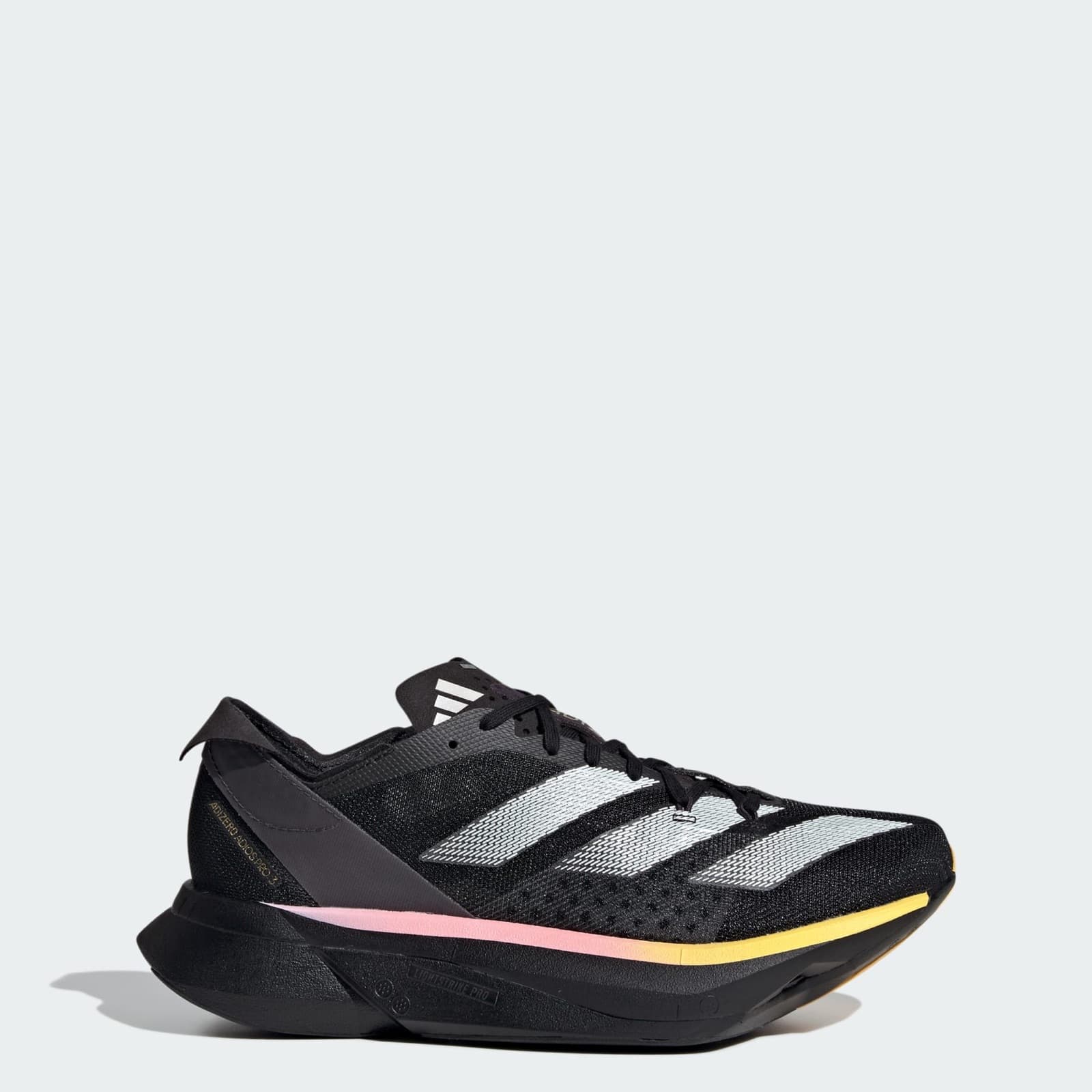
Running shoe weights have been creeping downwards for a decade. The adidas Adizero Adios Pro Evo 3 kicked the door off its hinges. Announced in late April 2026 and put on Sabastian Sawe's feet at the London Marathon that same weekend, it is the first race-legal marathon shoe to land under 100 grams while still carrying a full 39 mm stack. It went out as a tightly limited drop on 25 April, with a wider release lined up for the autumn marathon season. Here is the intel on what adidas actually built, and the three things that will stop most runners buying it.
The need-to-know: a race shoe, and only a race shoe
The adidas Adizero Adios Pro Evo 3 sits above the Adizero Adios Pro 4 as the halo product of the range, not as its replacement. Availability has been the defining feature: the April drop sold through adidas directly and a handful of specialist stores across the UK and Europe, with a broader autumn release timed to the European marathon calendar. It comes in one width, it is priced at the very top of the super-shoe market, and adidas is explicit that this is a shoe for race day rather than for training volume. The brand claims three years of development behind it, with work split between the labs in Herzogenaurach and altitude camps in Kenya and Ethiopia. Treat it as a piece of racing equipment with a short life, not a shoe you rotate through winter.
Key specs, verified
The published figures alongside independent lab measurement:
- Weight: roughly 98 g brand-stated, 99 g on RunRepeat's scale — around 29 to 30 per cent lighter than the Adizero Adios Pro Evo 2
- Midsole: next-generation Lightstrike Pro Evo, adidas's lightest foam, described as close to half the density of the previous Evo compound
- Stack (brand): 39 mm heel, 36 mm forefoot; lab measurement returned 38.1 mm and 32.2 mm at World Athletics reading points
- Drop: 3 mm stated, 5.9 mm measured in the lab
- Structure: a redesigned carbon element adidas calls ENERGYRIM, integrated into the midsole rather than sitting as a flat plate
- Outsole: Continental rubber in the forefoot, replacing the sprayed liquid rubber of the Evo 2
- Upper: ultralight woven shell adidas says was inspired by kitesurfing sails
- Fit: narrow, tapered toebox; reviewers report it running slightly small
- Intended use: half marathon and marathon racing for midfoot and forefoot strikers
What changed from the Evo 2
Three things, and they compound. The foam is the big one: the reformulated Lightstrike Pro Evo is dramatically lighter per unit of volume, which is the only reason a 39 mm stack can exist under 100 grams at all. Second, the carbon. The Evo 2 used a conventional plate approach; the adidas Adizero Adios Pro Evo 3 integrates ENERGYRIM into the midsole geometry, which lab testing found delivers plate-like stiffness without plate-like mass. Third, the outsole. Liquid rubber kept weight down on the Evo 2 but wore quickly and gripped inconsistently. Continental rubber in the forefoot is a meaningful traction upgrade for wet European autumn racing. adidas also claims a running economy improvement of a little over one and a half per cent against the previous generation.
What the Adizero Adios Pro Evo 3 nails
Weight-to-cushioning, which is the whole point. Lab readings put shock absorption at 153 in the heel and 142 in the forefoot against a category average nearer 131 — genuinely protective numbers from a shoe that weighs less than a bag of crisps. Energy return measured 76.8 per cent at the heel and 80.2 per cent at the forefoot, with the better figure at the front, exactly where this shoe wants you landing. The forefoot rocker is aggressive enough that the shoe rolls you through toe-off with very little conscious effort, and reviewers consistently describe the sensation as closer to running in a sock with springs than in a conventional racer. On feel alone, nothing else in the adidas range comes near it.
Where the Adizero Adios Pro Evo 3 trips up
Fit, durability and supply. The toebox is narrow and the whole upper is restrictive by design, because every gram of material was interrogated — several reviews flag it as the single biggest barrier, and there is no wide option to escape into. Heel strikers are effectively excluded: the geometry and the forefoot-biased foam are built around a midfoot or forefoot landing, and the shoe punishes anything else. Abrasion testing rated both the toebox and the outsole poorly, which is expected in a shoe this light but still means a short racing life measured in a handful of marathons. And then there is the money, which sits far above even flagship super-shoe territory. This is the most expensive mainstream racing shoe adidas has ever sold.
Buy it if, skip it if
Buy the adidas Adizero Adios Pro Evo 3 if you are chasing a marathon personal best, you land midfoot or forefoot, you have a narrow-to-average foot and you can accept a shoe that is essentially a consumable. Buy it if you already loved the Evo 2 and found the liquid-rubber outsole the weak link. Skip it if you heel strike, if your forefoot is broad, or if you want a race shoe that also survives your Tuesday tempo sessions. Skip it, too, if you are a mid-pack runner — the marginal gains here are real but small, and there is a strong argument that the same money buys a race shoe plus a super trainer plus a year of race entries.
Worth considering instead
Within adidas, the Adizero Adios Pro 4 is the sensible marathon choice: carbon Energy Rods 2.0, a softer Lightstrike Pro midsole, a far more forgiving fit and a shoe you can actually buy on a normal week. The Adizero Takumi Sen 11 is the pick for 5K to half marathon, with dual Lightstrike Pro layers and a sharper rocker than its predecessor. The Adizero Evo SL takes the same non-compression-moulded foam philosophy into a plate-free super trainer that handles tempo work and long runs. Outside the brand, the ASICS Metaspeed Sky Tokyo is the closest rival on weight and feel with a more accommodating fit, while the Saucony Endorphin Elite 3 offers a softer landing for runners who find adidas racers unforgiving.
Pros
- First race-legal marathon shoe under 100 grams with a full 39 mm stack
- Shock absorption and energy return both measure well above category averages
- Reformulated Lightstrike Pro Evo foam is roughly half the density of the previous compound
- ENERGYRIM delivers plate-like stiffness without the mass of a conventional plate
- Continental forefoot rubber is a real traction upgrade over the Evo 2's liquid rubber
- Aggressive forefoot rocker makes turnover feel effortless at pace
Cons
- Narrow, restrictive fit with no wide option
- Geometry actively unsuited to heel strikers
- Toebox and outsole both scored poorly for abrasion resistance
- Availability has been limited and unpredictable across Europe
- Sits well above even flagship super-shoe pricing
Comparison
adidas Adizero Adios Pro 4
The practical marathon racer: carbon Energy Rods 2.0, a plusher Lightstrike Pro midsole and a fit most feet can live with. Easier to buy and far easier to run in.
adidas Adizero Takumi Sen 11
Built for 5K to half marathon with dual Lightstrike Pro layers, glass-fibre EnergyRods and a sharper rocker. The better choice if your racing is short and fast.
ASICS Metaspeed Sky Tokyo
The nearest rival on weight at roughly 163 g in the lab, with a medium-width fit and a wide option, making it the sane alternative for feet the Evo 3 pinches.
Saucony Endorphin Elite 3
Heavier at about 210 g but noticeably softer underfoot and more forgiving on landing, which suits runners who find adidas racing geometry too firm and too directive.
FAQ
Yes. The 39 mm stack sits at the World Athletics limit for road racing, and independent lab measurement at the official reading points came in slightly under that figure, so it is compliant for road events.
The adidas Adizero Adios Pro Evo 3 is a genuine engineering milestone rather than a marketing one: sub-100 grams, a legal stack, and lab numbers that do not collapse under the weight saving. It is also narrow, fragile, hard to find and priced for a very small audience. If you race marathons off a midfoot strike and want the lightest legal shoe made, this is it. Everyone else is better served by the Adios Pro 4.