Foldable Phones in 2026: Are They Finally Worth It?
For six years the answer to this question was a polite no. Foldables were heavier than normal phones, creased down the middle, priced like laptops and fragile in ways nobody would accept from a slab. In 2026 two of those four objections stopped being true, one got worse for Samsung and better for Honor, and the last one got worse for everyone. The result is the first year where buying a folding phone in Europe is a reasonable decision rather than an enthusiast's indulgence. Mostly.
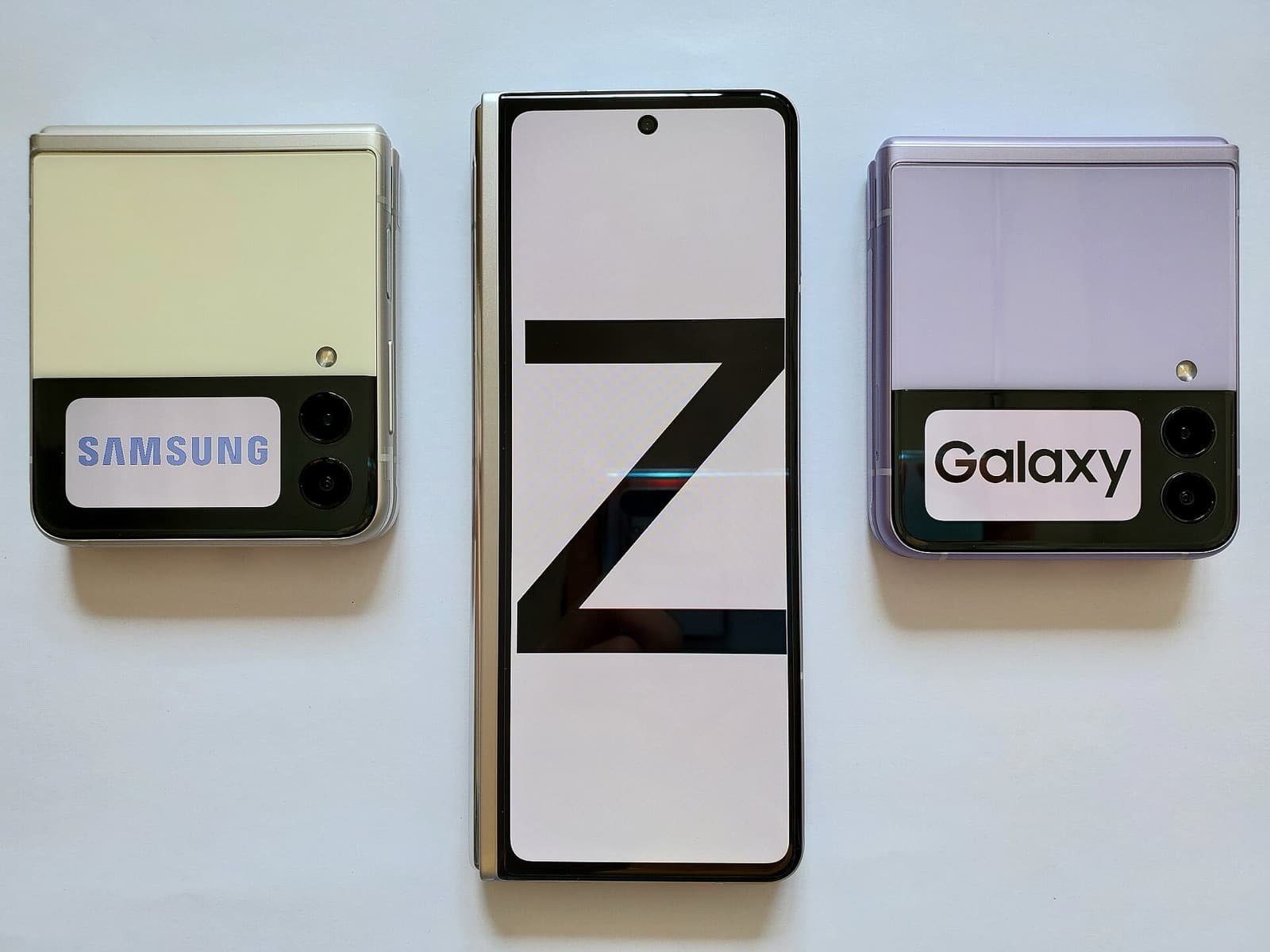
The barrier that finally fell: weight
The old bargain was simple and bad: carry a heavier phone, get a bigger screen. Samsung broke it on 7 August 2026. The Samsung Galaxy Z Fold 8, the new passport-shaped model, weighs 201g, which undercuts every contemporary book-style foldable, and those cluster between roughly 217g and 226g. More strikingly it undercuts conventional flagship slabs, including Samsung's own Galaxy S26 Ultra. Several reviewers made the same observation independently: this is a foldable that weighs less than the normal phone it replaces. The Samsung Galaxy Z Fold 8 Ultra holds at 215g, matching the Z Fold 7, and the clamshell Samsung Galaxy Z Flip 8 comes in at 180g.
How Samsung got there, and what it cost
Physics does not offer free lunches. Samsung reached 201g partly by shrinking the inner display to 7.6 inches, where rivals run between 7.95 and 8.12 inches, and by changing its proportions to 4:3. It also thickened the display stack to 45 microns on the standard model and 60 on the wide one, and added Flex Titanium, a titanium-alloy film that stiffens the panel, improves durability and makes the crease the least visible Samsung has shipped. The 4.5mm unfolded thickness is the other headline number. The cost shows up in the camera count: the wide Samsung Galaxy Z Fold 8 carries only two rear lenses and no telephoto at all.
Durability is where the market split
This is the year foldable durability stopped being a single story. The Honor Magic V6, on sale across Europe since early July 2026, became the first folding phone to claim both IP68 and IP69 certification, built around a steel hinge rated at 2,800 MPa with what Honor calls AI-assisted bionic cushioning, plus a 5,600-layer coating on the outer display. Samsung's foldables remain at IP48: strong against water, weak against dust and grit. iFixit's teardown of the Samsung Galaxy Z Fold 8 was blunt about a fragile inner screen, a delicate hinge and impractical dust protection. If you work outdoors, the gap between those two ratings is the whole decision.
Screen shape became a choice, not a given
The most interesting change in 2026 is that book-style foldables stopped agreeing on what shape they should be. The Samsung Galaxy Z Fold 8 opens to 4:3, which is excellent for documents, reading and web pages and poor for video, where you get thick black bars. The Samsung Galaxy Z Fold 8 Ultra keeps the taller design with a 21:9 cover screen that behaves like a normal phone closed and an 8.0-inch panel reaching 3,000 nits open. Reviewers were divided in a healthy way: one found the new shape made the form factor click for the first time, another noted the standard model has the same usable screen area as the Ultra but suits films less.
What foldables still cost you
Plenty. Neither Samsung foldable supports the S Pen, which reviewers flagged because rival foldables now accept an active stylus on both screens. Neither gets the Privacy Display from the S26 Ultra. The wide Samsung Galaxy Z Fold 8 loses Flex Mode, the half-folded posture that is one of the form factor's few genuinely unique tricks. Prices went up across the board in a year of memory-cost inflation, with the Honor Magic V6 launching at one of the highest figures a foldable has carried in Europe. And availability is still uneven: the Oppo Find N6, one of the thinnest and best-reviewed book-style foldables, is not sold in the UK, the EU or the US at all.
Who should buy one now
Buy a foldable in 2026 if you read long documents, run two apps side by side, or have wanted a small tablet without carrying two devices, and if weight was the thing that stopped you. The Samsung Galaxy Z Fold 8 is the answer for those people. Buy the Honor Magic V6 if you want the largest battery, fastest charging, longest zoom and a phone that can survive dust. Buy the Samsung Galaxy Z Flip 8 if the appeal is a phone that gets smaller rather than bigger. Do not buy one if video is your main use, if you need stylus input, or if you routinely work in grit.
What is cooling off
The novelty premium, mainly. Foldables are no longer priced as curiosities and no longer reviewed as experiments, which means they now get judged against ordinary flagships and sometimes lose. Demand tells the same story from the other side: Samsung reportedly saw roughly triple the pre-order interest for the wide Samsung Galaxy Z Fold 8 compared with the Z Fold 7, broke records in Korea and had to order additional production, with several colours delayed. The form factor is no longer a niche. What is cooling is the idea that folding glass alone justifies the outlay. In 2026 it has to earn it on weight, battery and durability like everything else.
Pros
Cons
Comparison
Samsung Galaxy Z Fold 8
The 201g passport-shaped foldable with a 7.6-inch 4:3 inner screen, Flex Titanium, 4,800mAh and 45W charging. The lightest book-style foldable in Europe, but IP48 and without a telephoto camera.
Honor Magic V6
The durability answer: IP68 and IP69 ratings, a 2,800 MPa steel hinge, a 6,660mAh battery, 80W wired and 66W wireless charging, a 64MP periscope and a 7.95-inch inner panel at 5,000 nits.
Samsung Galaxy Z Fold 8 Ultra
The traditional shape kept alive at 215g, with a 21:9 cover screen, an 8.0-inch 3,000-nit inner display, a 200MP main camera and dual-path charging. The pick if you fold for photography.
Samsung Galaxy Z Flip 8
The clamshell alternative at 180g, launched the same day on the same Snapdragon 8 Elite Gen 5 with a 6.9-inch main display. For people who want a smaller phone rather than a bigger screen.
Oppo Find N6
One of the thinnest book-style foldables made, with an 8.12-inch inner display and strong cameras, but not sold in the UK, the EU or the US. The clearest illustration of Europe's availability problem.
FAQ
Not necessarily any more. At 201g the Samsung Galaxy Z Fold 8 is lighter than Samsung's own Galaxy S26 Ultra and lighter than every rival book-style foldable, which sit between roughly 217g and 226g. That is the single biggest change the form factor made this year.
The honest 2026 answer is a qualified yes. A foldable that weighs less than a flagship slab and creases less than any before it removes the two objections that mattered most, and Honor has shown the category can survive dust and water properly. What remains is the outlay, the missing stylus, the mediocre video shape and a European market with fewer choices than it deserves.