Best Running Shoes Right Now in the UK and Europe
Every brand now sells four versions of the same shoe with a different suffix, which is why choosing one has become genuinely hard. So here is a shortlist rather than a catalogue: eight shoes on sale across the UK and Europe right now, each with a specific job and a verified set of numbers. One all-rounder, one race shoe, two bouncy daily trainers, two dependable workhorses, one long-run specialist and one lightweight. No scores, no prices, and an honest note at the end about what to leave on the shelf.
How we would choose
Start with the run you do most, not the run you aspire to. If four of your five weekly sessions are easy, buy for easy. Then check three numbers: stack height tells you how much protection you get, drop tells you which muscles do the work, and weight tells you how the shoe will feel at the end of an hour. Anything above 35 mm at the heel is a cushioned shoe; anything under 250 grams is light. After that, fit decides everything — most European brands run narrow, and no amount of foam technology rescues a shoe that pinches. Finally, be honest about foam. Superfoams are lighter and bouncier but wear out faster, so a cheap EVA trainer often ends up better value if you run a lot and race rarely.
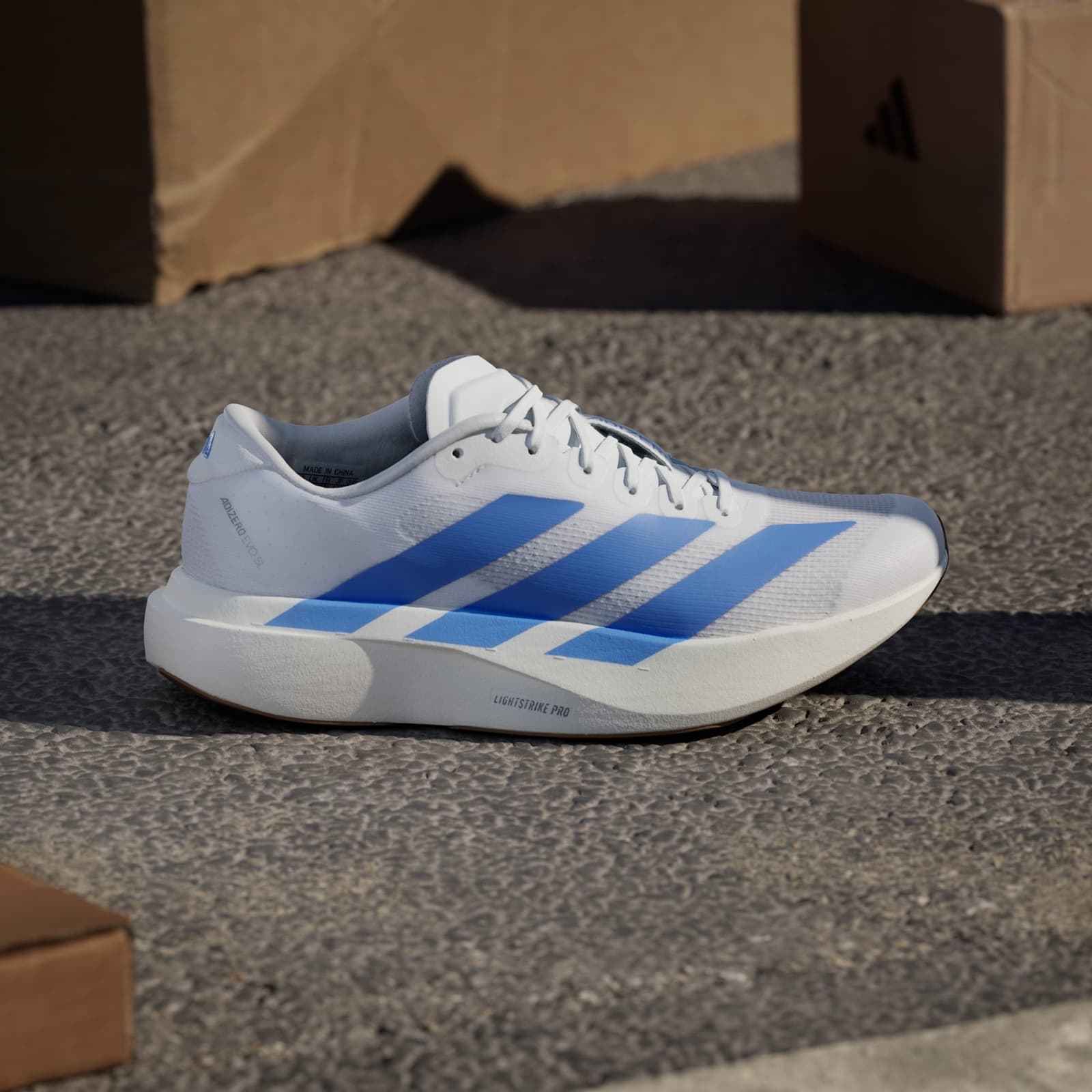
The all-rounder: adidas Adizero Evo SL
If you only buy one shoe this year, this is the one that makes the strongest case. The adidas Adizero Evo SL takes the non-compression-moulded Lightstrike Pro foam from adidas's racing line and puts it into a plate-free trainer, which means it is light enough for intervals and cushioned enough for long runs. At roughly 224 g in a UK 8.5, with a 39 mm heel and a 6 mm drop, it sits in the sweet spot between a super trainer and a daily workhorse. Reviewers repeatedly rate it among the best shoes of the past year on comfort, cushioning and ride. The knocks are consistent too: the tongue slides sideways when you run, and the midfoot is wide enough that narrow feet lose some lockdown. adidas also sells an EXO version with a reinforced exoskeleton upper if that bothers you.
Race day: On Cloudboom Strike 2
The On Cloudboom Strike 2 is the most convincing racing shoe On has built, and it went on general sale across Europe on 30 July 2026. It weighs around 191 g with a 40 mm heel, a 35 mm forefoot and a 5 mm drop, wrapped around a curved carbon Speedboard and a new CloudTec Sphere midsole that lets the foam deform sideways as well as vertically. The Helion HF compound is roughly 15 per cent lighter than the foam in the original Cloudboom Strike. There is also a LightSpray version with a robot-sprayed, laceless upper that drops the total to about 158 g, which makes it one of the lightest super shoes you can buy in a European shop. Try the LightSpray on first — there are no laces to adjust if the shape does not suit you.
The bouncy daily trainers: ASICS Novablast 6 and New Balance FuelCell Rebel v5
Both of these deliver energy without a plate. The ASICS Novablast 6 runs around 253 g for men and 215 g for women on a tall 41.5 mm platform with an 8 mm drop, and the big change this generation is a cored-out forefoot filled with A-TPU, which makes the front of the shoe genuinely explosive while the rear stays predictable. ASICS also swapped the forefoot outsole rubber for a softer, stickier compound, fixing the wet-weather traction that plagued earlier versions — worth knowing in a British winter. The New Balance FuelCell Rebel v5 goes lighter at about 225 g for men and 180 g for women, with 35 mm at the heel, 29 mm at the forefoot and a 6 mm drop. It gained five millimetres of foam this generation, pushing it from pure tempo shoe towards genuine daily use.
The workhorses: Brooks Ghost 18, Saucony Ride 19 and Puma Velocity Nitro 4
Unglamorous, dependable, and the right answer for most people. The Brooks Ghost 18 is the shoe to buy if you are new to running: DNA Loft v3 foam, a 36 mm heel, a 10 mm drop and roughly 289 g for men. It feels stiff for the first couple of runs and the knit upper runs warm, but nothing else is this consistently comfortable. The Saucony Ride 19 covers similar ground at about 255 g with a reformulated PWRRUN+ midsole that is softer and livelier than before, and it handles the odd tempo session without complaint. The Puma Velocity Nitro 4 is the value pick at around 247 g, with a wider toebox than the previous version and the best wet-weather outsole in this list — Pumagrip is the reason people reach for it when it rains.
Long runs: Salomon Aero Glide 4
Salomon is still treated as a trail brand, which is why the Salomon Aero Glide 4 is the most overlooked road shoe in Europe. Lab measurement found a generous 43.2 mm heel and 31.5 mm forefoot — considerably more than the category average — with energy return of 72.2 per cent at the heel and 73.2 per cent at the forefoot, which puts it in super-trainer territory. Shock absorption came in at 152 in the heel against a 131 average. All of that arrives at roughly 255 g, which is genuinely light for the stack, and on a wide 121.7 mm landing base with supportive sidewalls that keep a tall shoe stable. One caveat: outsole durability rated below average in abrasion testing, so it wears faster than the rest of this list.
What to skip, and what to wait for
Skip the top-tier carbon racers unless you actually race. The adidas Adizero Adios Pro Evo 3 is a remarkable object at under 100 grams, but it is narrow, fragile, hard to buy and aimed at people chasing a personal best rather than a parkrun. Skip any shoe whose stated drop you have not checked against independent measurement, because the gap between box figures and lab figures is now routinely three millimetres or more. And skip the impulse to buy a max-stack shoe because it looks protective — tall shoes suit long, slow efforts and feel unwieldy for anything fast. If you can wait, autumn is when European retailers clear the previous generation of the Ghost, Ride and Velocity, and those shoes lose very little year to year.
Comparison
adidas Adizero Evo SL
The best single-shoe answer here. Full Lightstrike Pro superfoam, a 39 mm heel, a 6 mm drop and roughly 224 g, with no plate, so it covers easy days, long runs and speedwork equally well.
On Cloudboom Strike 2
The race-day pick: about 191 g, a 40 mm heel, a 5 mm drop, a curved carbon Speedboard and the new CloudTec Sphere midsole. A LightSpray version drops it to roughly 158 g.
ASICS Novablast 6
A tall, bouncy daily trainer at around 253 g with a 41.5 mm platform and an 8 mm drop. The cored-out A-TPU forefoot adds pop, and the new forefoot rubber fixes wet-weather grip.
Puma Velocity Nitro 4
The value choice at roughly 247 g, with a 36 mm heel, a 10 mm drop and a roomier toebox than the previous version. Pumagrip remains the most confident wet-road outsole here.
Saucony Ride 19
Uncomplicated and dependable at about 255 g, with a 36 mm heel, an 8 mm drop and a softer, livelier PWRRUN+ midsole. Handles easy miles, long runs and the occasional tempo.
Brooks Ghost 18
The beginner's shoe, at roughly 289 g with DNA Loft v3 foam, a 36 mm heel and a 10 mm drop. Stiff for the first few runs and warm in summer, but endlessly comfortable.
Salomon Aero Glide 4
The long-run specialist: a 43.2 mm heel measured in the lab, above-average shock absorption and energy return over 72 per cent, at about 255 g. Outsole durability is the weak point.
New Balance FuelCell Rebel v5
Light and nimble at roughly 225 g for men and 180 g for women, with a 35 mm heel and a 6 mm drop. Five millimetres more foam than the v4 makes it a genuine daily option.
FAQ
One, if you run three times a week at similar paces. Two if you race or do structured speedwork, splitting the job between a cushioned daily trainer and something lighter, which also lets each pair dry out between runs.
If you want one shoe and one decision, buy the adidas Adizero Evo SL. If you run in the rain, the Puma Velocity Nitro 4. If you are new to this, the Brooks Ghost 18. If your week is built around a long run, the Salomon Aero Glide 4. And save the On Cloudboom Strike 2 for the days that actually count.