Best Smartphones Right Now in the UK and Europe (2026)
Autumn 2026 is an awkward, excellent moment to buy a phone in Europe. Samsung's flagship has had six months to settle, Apple's has been on sale for a matter of days, Honor has quietly built the most durable foldable anyone sells here, and Nothing decided to skip its flagship entirely and put the good stuff in the mid-range. Add a continent-wide energy label that finally tells you how long a battery lasts and you have more useful information than ever. Here are the eight worth your attention.
How we would choose
Four criteria, weighted for European buyers. First, update policy, because a phone you keep for six years is cheaper and greener than two phones you keep for three; Samsung and Fairphone lead, Nothing trails. Second, the EU energy label, mandatory since 20 June 2025, which shows battery endurance in charge cycles, a repairability rating and ingress protection on the box rather than in a press release. Third, whether the phone is actually sold and supported here, which rules out several excellent handsets that never leave Asia. Fourth, what the phone is genuinely for: reach, endurance, size or simple longevity. Nothing on this list is a bad phone. They are good at different things.
The best all-rounder: Samsung Galaxy S26 Ultra
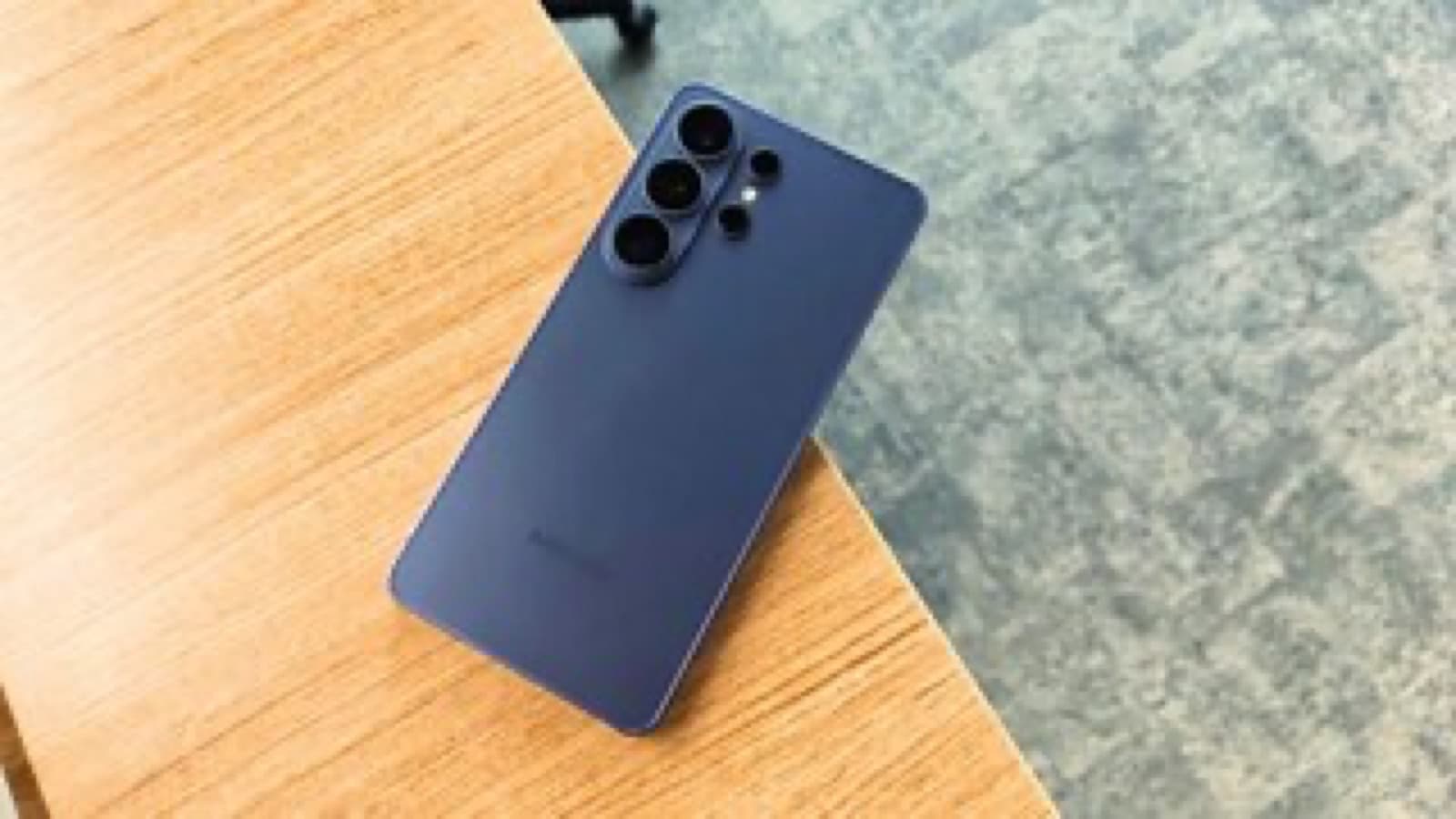
The Samsung Galaxy S26 Ultra has been on sale since 11 March 2026 and remains the most complete Android phone in Europe. The Privacy Display, which narrows the screen's viewing angle at panel level and can be scoped to individual apps, is the only genuinely new smartphone feature this year that you will use every day. Around it sits a 200MP main camera that now opens to f/1.4, a 5x periscope at f/2.9, 60W charging, the S Pen in its silo and a seven-year update commitment running to 2033. It is heavy and the 3x telephoto is still only 10MP, but nothing else covers this much ground.
The iPhone, with a caveat: iPhone 18 Pro Max
The iPhone 18 Pro Max was unveiled on 9 September 2026 and reaches shops on 18 September, which means nobody outside Apple has tested it. What is confirmed is interesting: the first physical variable aperture in an iPhone, a 2nm A20 Pro that Apple rates at up to 40 per cent faster than the A19 Pro, a shrunken Dynamic Island that stacks three Live Activities, and Apple's own C2 modem in every market except the United States. European units come in physical-SIM and eSIM versions with slightly different battery capacities. If you buy iPhones, buy this one. Just wait for the independent numbers if you can.
The foldables worth folding
Two very different answers. The Samsung Galaxy Z Fold 8, on sale since 7 August 2026, is the passport-shaped one: 201g, lighter than every rival and lighter than most conventional flagships, with a 7.6-inch 4:3 inner screen that is superb for reading and poor for film. It has no telephoto and an IP48 rating. The Honor Magic V6, in European shops since 1 July 2026, goes the other way: 219g, a 7.95-inch inner panel, a 64MP periscope, a 6,660mAh battery with 80W wired charging, and the first IP68 and IP69 ratings on a folding phone. Lightness or hardiness. Pick your religion.
For photographers and for wallets
The Xiaomi 17 Ultra reached Europe in March 2026 after a Barcelona launch and is the camera phone of the year here: a one-inch-type main sensor, a 200MP telephoto with continuous optical zoom between 75mm and 100mm, a 50MP ultra-wide, a 6,000mAh battery in global trim and 100W charging. At the other end, the Nothing Phone (4a) Pro puts a 50MP 3.5x periscope and a 144Hz panel into a metal unibody for upper-mid-range money, and the Samsung Galaxy S26 FE, which landed on 4 September 2026, brings Samsung's seven-year update policy down to a far friendlier outlay. Three very different definitions of value.
The one you will still own in 2033: Fairphone 6+
The Fairphone 6+ arrived on 18 August 2026 and it is the only phone here designed around the assumption that you will open it. Twelve modules come out with an ordinary screwdriver, including the 4,415mAh battery, spares are sold directly, and the warranty runs five years with six major Android updates and security patches to 2033. The Snapdragon 7s Gen 4 and 12GB of RAM are mid-range, the camera is competent rather than clever and the IP55 rating means splashes only. But if you dislike replacing phones, and if the EU's incoming battery rules appeal to you, this is already living in 2027.
What to skip and what to wait for
Skip the standard Samsung Galaxy S26 and S26+ if you are in Europe and care about silicon consistency, because they carry the Exynos 2600 here while North America, China and Japan get Snapdragon; the Samsung Galaxy S26 Ultra avoids the split entirely. Skip any foldable if you need serious dust resistance and are not buying the Honor Magic V6. Wait if you are tempted by Xiaomi's next flagship, widely reported as arriving late in 2026, or if you want independent measurements of the iPhone 18 Pro Max rather than Apple's own figures. And wait if your current phone still gets updates, because that is the greenest upgrade of all.
Pros
Cons
Comparison
Samsung Galaxy S26 Ultra
The Samsung Galaxy S26 Ultra is the best all-round Android phone sold in Europe: Privacy Display, a 200MP f/1.4 main camera, a 5x f/2.9 periscope, 60W charging, the S Pen and seven years of updates. Heavy, and the 3x lens is dated.
iPhone 18 Pro Max
The iPhone 18 Pro Max brings the first physical variable aperture to an iPhone, a 2nm A20 Pro chip and Apple's C2 modem outside the US. On sale from 18 September 2026, so treat every performance figure as a manufacturer claim for now.
Samsung Galaxy Z Fold 8
At 201g the Samsung Galaxy Z Fold 8 is the lightest book-style foldable in Europe, with a passport-shaped 7.6-inch 4:3 inner screen and seven years of updates. No telephoto camera, no Flex Mode and only an IP48 rating.
Honor Magic V6
The Honor Magic V6 is the durable foldable: IP68 and IP69 ratings, a 6,660mAh battery, 80W wired and 66W wireless charging, and a 64MP periscope. On sale across the UK, Germany, France, Spain and Italy since early July 2026.
Xiaomi 17 Ultra
The Xiaomi 17 Ultra is the camera pick, with a one-inch-type main sensor, a 200MP continuous-zoom telephoto covering 75mm to 100mm, a 6,000mAh global battery and 100W charging. Software support is shorter than Samsung's.
Nothing Phone (4a) Pro
The Nothing Phone (4a) Pro delivers a 50MP 3.5x periscope, a 6.83-inch 144Hz AMOLED and a metal unibody for upper-mid-range money. No wireless charging, and only three major Android updates against seven elsewhere.
Samsung Galaxy S26 FE
Released on 4 September 2026, the Samsung Galaxy S26 FE brings Samsung's seven-year update commitment and a 50MP main camera with a 3x telephoto to a much lower outlay. Exynos 2500 silicon and a USB-C 2.0 port are the compromises.
Fairphone 6+
The Fairphone 6+ has twelve user-replaceable modules, a removable 4,415mAh battery, a five-year warranty and updates to 2033. Mid-range performance, a basic ultra-wide and IP55 only, but unmatched if you intend to keep it.
FAQ
The Fairphone 6+ commits to six major Android upgrades and security patches to 2033 alongside a five-year warranty. Samsung's Galaxy S26 Ultra, Galaxy Z Fold 8 and Galaxy S26 FE all carry seven-year commitments, which is the longest from a mainstream manufacturer selling in Europe.
If you want one phone that does everything, buy the Samsung Galaxy S26 Ultra. If you want a screen that unfolds, choose between the featherweight Samsung Galaxy Z Fold 8 and the indestructible Honor Magic V6. If you want the best camera, the Xiaomi 17 Ultra. If you want to spend less, the Nothing Phone (4a) Pro or the Samsung Galaxy S26 FE. And if you never want to do this again, the Fairphone 6+.