The Best Winter Coats Right Now in the UK and Europe
A European winter is not one problem, it is three. There is cold, which wants insulation. There is rain, which wants a membrane. And there is the daily reality of standing on a platform for eleven minutes, which wants a coat you can bear to be seen in. Very few jackets solve all three, and the ones that try usually compromise somewhere expensive. Here are seven coats currently on sale across the UK and Europe, sorted by which of those problems they are actually built to solve, with the fill powers and fabrics that back the claims up.
How we would choose
Start with insulation type, because it decides everything else. Down has the best warmth-to-weight ratio available and packs down to nothing, but it stops insulating when it gets wet, which is a real problem in a maritime climate. Fill power — 650, 700, 800 — measures loft, so a higher number means more warmth for less weight, not more warmth overall. Synthetic insulation is heavier and bulkier for the same warmth but keeps working damp, which is why the warmest coats for wet British and northern European winters are often synthetic. Then check the shell: a laminated membrane is waterproof, a durable water repellent finish is not, and the difference shows up after twenty minutes of proper rain. Finally, weigh the thing. Anything past two kilograms is a stationary coat, not a walking one.
The all-rounder: Fjällräven Nuuk Parka
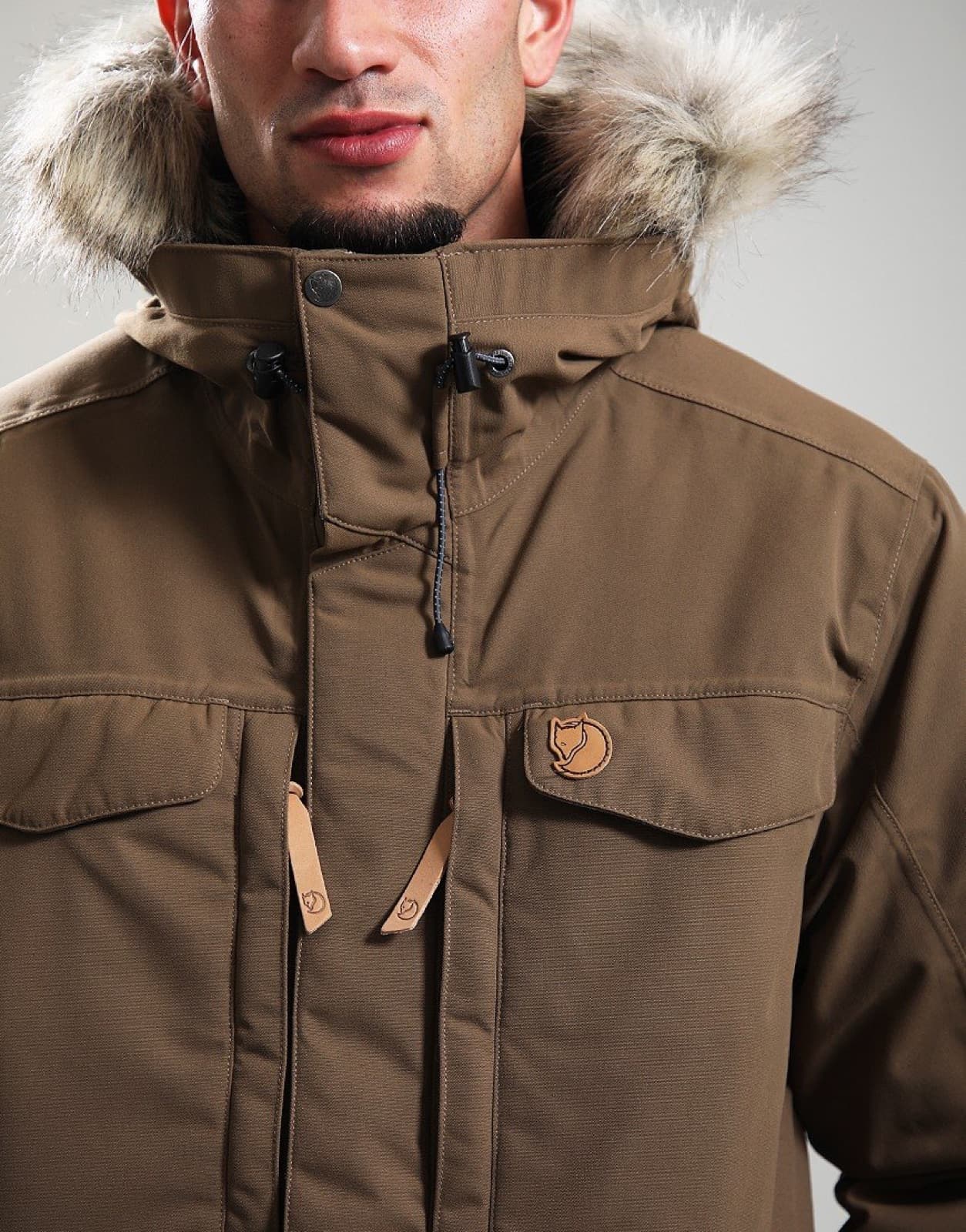
If you only want one winter coat and you live somewhere genuinely cold and wet, the Fjällräven Nuuk Parka is the strongest case in this list. It uses dense Supreme Microloft synthetic insulation rather than down, so it keeps working in sleet, under a recycled polyamide shell laminated with a polyurethane membrane for real wind and rain protection. The details are where it earns its reputation: a faux fur hood trim that cinches tight, a drawstring waist that traps warm air, and an unusually generous pocket count. Reviewers consistently rate it among the warmest and most protective winter jackets available, and its restrained Scandinavian styling means it does not look like mountain equipment in a city. The cost is bulk — it runs past two kilograms in the largest sizes, and it does not pack down.
Light and very warm: Rab Neutrino Pro and Rab Glaceon Pro
The British brand Rab is the answer if the Nuuk's weight horrifies you. The Rab Neutrino Pro uses 800 fill power down under a durable water repellent shell, and comes in at roughly 700 grams, which is a fraction of what a parka weighs while delivering comparable warmth in dry cold. That DWR finish is the trade: it sheds a shower, it does not survive a downpour, so this is a coat for cold days rather than wet ones. The Rab Glaceon Pro is the other end of the same idea — reviewers describe it as extremely warm and highly packable, and it is the jacket that gets reached for when the forecast is serious. Both suit anyone who walks, cycles or commutes rather than standing still, and both stuff into a bag when you get indoors.
The city pair: Rains Suva Hardshell Long Jacket and Rains Lohja Insulated Jacket
The Danish brand's autumn-winter 2026 collection is the most interesting thing it has done. The Rains Suva Hardshell Long Jacket is built on a three-layer performance fabric of the kind normally used in expedition outerwear, finished matte and, in Rains' own description, noiseless — so it neither shines nor rustles. It is a full-length waterproof shell with no insulation, which makes it the right coat for rain and the wrong coat for cold. Pair it with, or swap it for, the Rains Lohja Insulated Jacket, available in regular and short lengths, which handles the warmth side. Both carry a two-year warranty, which aligns with the legal warranty European consumers already hold. Rains does not publish hydrostatic head figures, which is the one thing stopping a straight comparison with technical brands.
The extreme option: Canada Goose Expedition Parka Heritage
Some people genuinely need this, and most people buying it do not. The Canada Goose Expedition Parka Heritage uses a thick layer of 650 fill power down under a polyester-cotton blend shell, and it is built for Arctic and sub-Arctic exposure rather than for a Tuesday in Manchester. Reviewers file it as the splurge pick, and the reasoning is sound: if you work outdoors in Scandinavia, northern Poland or the Alps in January, the sheer volume of insulation does something no lighter coat can match. The lower fill power is not a flaw here — it is a deliberate choice of durability and loft volume over packability. In a mild, damp winter it will cook you, and the cotton-blend shell is not a waterproof membrane.
The women's pick: Outdoor Research Coze Down Parka
Rated as the best overall women's winter jacket in independent testing, the Outdoor Research Coze Down Parka pairs 700 fill power down with a fully recycled nylon shell and lands at around 900 grams — heavier than the Rab options, lighter than any parka here. It prioritises warmth and comfort over mobility, which is the honest trade for a long down coat: it is the one to wear standing on a touchline or waiting for a train, less so for a brisk walk uphill. The recycled shell matters more than it sounds, given the direction of EU textile rules, and 700 fill sits in the sensible middle of the range — warm enough to justify the weight, not so rarefied that a repair becomes a specialist job.
What to skip, and what to know before you buy
Skip any coat sold as waterproof that only lists a durable water repellent finish — that is water resistance, and it fades. Skip down entirely if your winter is wet rather than cold; synthetic insulation like the Nuuk Parka's Supreme Microloft is the better technology for a maritime climate. Skip fill power as a headline number: 800 fill down in a thin jacket is colder than 650 fill in a thick one. Two things worth knowing across Europe. Consumers have a legal warranty of at least two years on goods that do not conform to the contract, which is worth invoking when seams fail. And with textile producer responsibility rules tightening across the bloc, brands with genuine repair services are the better long-term bet.
Comparison
Fjällräven Nuuk Parka
Dense Supreme Microloft synthetic insulation under a membrane-backed recycled polyamide shell, with a cinching faux fur hood and drawstring waist. The warmest all-rounder here, and the heaviest.
Rab Neutrino Pro
800 fill power down under a DWR-treated shell at roughly 700 grams. Exceptional warmth for the weight and highly packable, but not built for sustained rain.
Rab Glaceon Pro
The other Rab down option, described by reviewers as extremely warm and highly packable. The choice when the forecast is serious and you still have to carry the thing.
Rains Suva Hardshell Long Jacket
A three-layer expedition-grade waterproof shell with a matte, noiseless finish and a full-length city cut. No insulation, so it solves rain rather than cold.
Rains Lohja Insulated Jacket
The warmth half of the Rains autumn-winter 2026 collection, in regular and short lengths. Wear it under the Suva shell or on its own for dry cold days.
Canada Goose Expedition Parka Heritage
A thick layer of 650 fill power down under a polyester-cotton shell, built for Arctic and sub-Arctic exposure. Overkill for a mild damp winter, and not waterproof.
Outdoor Research Coze Down Parka
700 fill power down under a fully recycled nylon shell at roughly 900 grams. Rated the best overall women's winter jacket in testing, prioritising warmth over mobility.
FAQ
Synthetic, in most cases. Down has the better warmth-to-weight ratio but stops insulating when wet, and a maritime winter is damp more often than it is genuinely cold, which is why the Nuuk Parka uses Supreme Microloft.
Buy the Fjällräven Nuuk Parka if you want one coat for a cold, wet winter and you can live with the weight. Buy the Rab Neutrino Pro if you move rather than stand still. Buy the Rains Suva Hardshell Long Jacket if your problem is rain rather than cold, and the Lohja if it is the other way round. Everything else on this list is a specialist.