Galaxy S26 Ultra vs iPhone 18 Pro Max: The European View
One of these phones has been on European shelves since March and has had every reviewer in the continent crawling over it. The other was unveiled nine days ago and does not reach shops until 18 September. That asymmetry matters, so treat what follows accordingly: the Samsung Galaxy S26 Ultra is a known quantity, while the iPhone 18 Pro Max is still a spec sheet and a keynote. Both are 6.9-inch flagships at the top of their ranges, both do something genuinely new, and in Europe the differences run deeper than the operating system.
The need-to-know: two very different calendars
The Samsung Galaxy S26 Ultra was announced at Galaxy Unpacked in San Francisco on 25 February 2026 and went on sale across the UK and EU on 11 March. It has had six months of software updates, price movement and independent scrutiny. The iPhone 18 Pro Max was unveiled at Apple Park on 9 September 2026, opened for pre-order on 12 September and reaches buyers on 18 September, which means no independent reviews exist yet and Apple's own performance and battery figures are manufacturer claims until somebody measures them. If you need a phone this week, that alone is a reason to lean Samsung. If you can wait a fortnight, wait for the numbers.
Screens: brightness versus the privacy trick
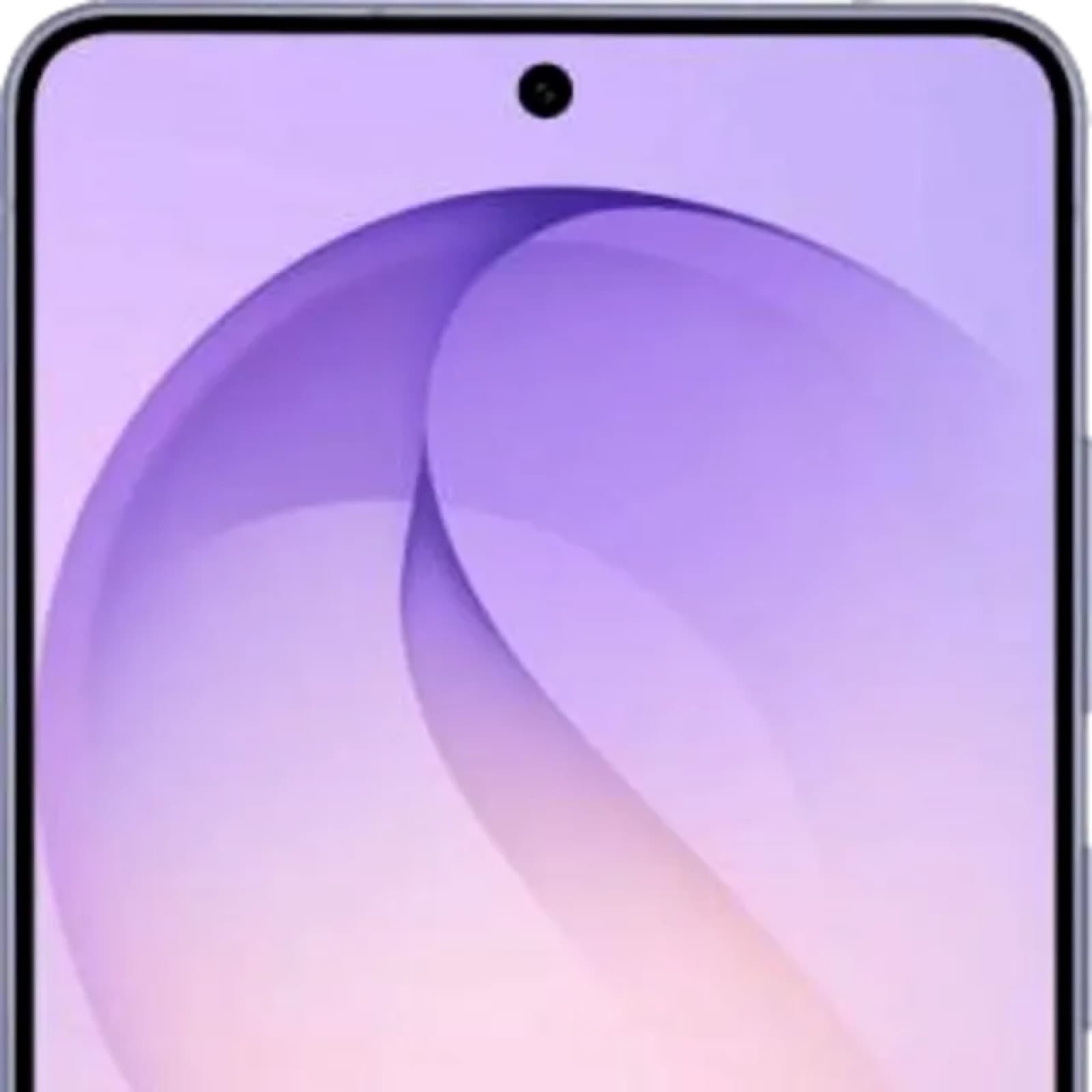
Both are 6.9-inch OLED panels and both are excellent, so the interesting difference is what they do beyond pixels. The iPhone 18 Pro Max runs a Retina XDR panel at 2868x1320 and its notable change is a shrunken Dynamic Island, the smallest since the cutout appeared on the iPhone 14 Pro, now able to stack up to three Live Activities. The Samsung Galaxy S26 Ultra runs a Dynamic LTPO AMOLED 2X at 120Hz and up to 2,600 nits, protected by Gorilla Armor 2, and adds the Privacy Display: panel-level viewing-angle control you can toggle in software and scope to individual apps or just notification pop-ups. Nothing Apple sells does that, and on a crowded commuter train it is the more useful feature.
Silicon and modems, where Europe gets a different phone
Apple's A20 Pro is built on a 2nm process and Apple quotes it as up to 40 per cent faster than the A19 Pro. Samsung ships the Snapdragon 8 Elite Gen 5 for Galaxy in the Ultra worldwide, so unlike the standard S26 and S26+, which get an Exynos 2600 outside North America, China and Japan, the Samsung Galaxy S26 Ultra is the same phone everywhere. The wrinkle is on Apple's side. The iPhone 18 Pro Max uses Apple's own C2 modem everywhere except the United States, where it carries a Qualcomm Snapdragon X80 instead. European buyers therefore get Apple's in-house radio, and it is the first generation to support 5G over satellite, paired with a new U2 ultra-wideband chip.
Cameras: a moving aperture against a moving prism
Both companies made a mechanical change this year, which is unusual. Apple fitted the iPhone 18 Pro Max with the first physical variable aperture in an iPhone, exposed through a new aperture menu in the Camera app, so depth of field becomes an optical decision instead of a computational one. Samsung went the other way and widened everything: the 200MP main sensor opens to f/1.4, up from f/1.7, and the 5x periscope to f/2.9 from f/3.4, using a new All Lens On Prism assembly. Add a 50MP ultra-wide and a 10MP 3x telephoto and the Samsung Galaxy S26 Ultra simply has more reach. Apple has the more interesting single lens; Samsung has the more complete system.
Battery, charging and the SIM tray oddity
Samsung wins the charging argument outright: 60W wired is the fastest it has ever shipped, alongside Qi2.2 wireless at up to 25W, though with no magnets in the body. Apple quotes 50 per cent in about 15 minutes for the iPhone 18 Pro Max. Capacity is where Apple pulls ahead on paper, and there is a genuine curiosity for European buyers: the physical-SIM version carries 5,391mAh while the eSIM-only version carries 5,567mAh. Since eSIM-only hardware is not universal outside the United States, the model you buy in the UK or the EU may hold slightly less charge than the American one. The Samsung Galaxy S26 Ultra sits at a flat 5,000mAh with no such split.
Ecosystem, repair and the rules that only apply here
Both phones are covered by EU ecodesign and energy-labelling rules that have applied since 20 June 2025, so both must supply spare parts to professional repairers for seven years after sales end and both carry a label showing battery endurance, repairability and ingress protection. Samsung promises seven years of OS and security updates on Android 16 with One UI 8.5; Apple does not publish a fixed number but has historically supported iPhones for a comparable span. The Digital Markets Act, applicable since 2 May 2023, also bites here: both companies must let you remove pre-installed apps and open parts of their platforms to third parties in ways they do not elsewhere in the world.
Who should pick which
Pick the Samsung Galaxy S26 Ultra if you want a stylus in the body, the longest optical zoom of the two, the fastest charging, a published seven-year update promise and a feature nobody else has in the Privacy Display. It is also the known quantity, six months into its life. Pick the iPhone 18 Pro Max if you are already in Apple's ecosystem, if the variable aperture appeals to the photographer in you, or if the largest battery capacity on paper is the deciding factor. Just remember that on 18 September nobody has independently measured any of Apple's claims, and the first reviews are days rather than months away.
Pros
- Galaxy S26 Ultra: Privacy Display, 5x periscope reach, 60W charging and an S Pen in the body
- Galaxy S26 Ultra: Snapdragon worldwide, so no Exynos lottery for European buyers
- iPhone 18 Pro Max: first iPhone with a physical variable aperture and a 2nm A20 Pro chip
- iPhone 18 Pro Max: largest quoted battery capacity of the two, with 5G over satellite
- Both: seven-year spare-parts obligations and an EU energy label under the 2025 ecodesign rules
Cons
- Galaxy S26 Ultra: Qi2.2 without magnets, and a 10MP 3x telephoto that is now the weak link
- iPhone 18 Pro Max: no independent reviews yet, so all performance figures are Apple's own
- iPhone 18 Pro Max: the variable aperture applies only to the main lens
- Both: heavy, large and priced higher than last year in a market of rising memory costs
Comparison
Samsung Galaxy S26 Ultra
On sale since 11 March 2026. A 6.9-inch LTPO panel with the world's first Privacy Display, a 200MP f/1.4 main camera, a 5x f/2.9 periscope, 60W charging, the S Pen and seven years of updates.
iPhone 18 Pro Max
On sale from 18 September 2026. A 6.9-inch Retina XDR panel, the 2nm A20 Pro, the first physical variable aperture in an iPhone, a shrunken Dynamic Island and Apple's C2 modem outside the US.
FAQ
On breadth, the Samsung Galaxy S26 Ultra, because it pairs a 200MP f/1.4 main sensor with a 50MP ultra-wide, a 3x telephoto and a 5x f/2.9 periscope. Apple's variable aperture is the more novel single idea, but it only affects the main lens and nobody has independently tested it yet.
If you are buying today, the Samsung Galaxy S26 Ultra is the safer purchase: proven, feature-rich, fast-charging and unusually useful thanks to the Privacy Display. The iPhone 18 Pro Max looks like the more interesting camera and the bigger battery, but it is nine days old and untested by anybody outside Apple. Loyalty will decide most of these purchases anyway. Patience should decide the rest.