Philips OLED+951 Review: Ambilight Goes Dolby Vision 2 Max
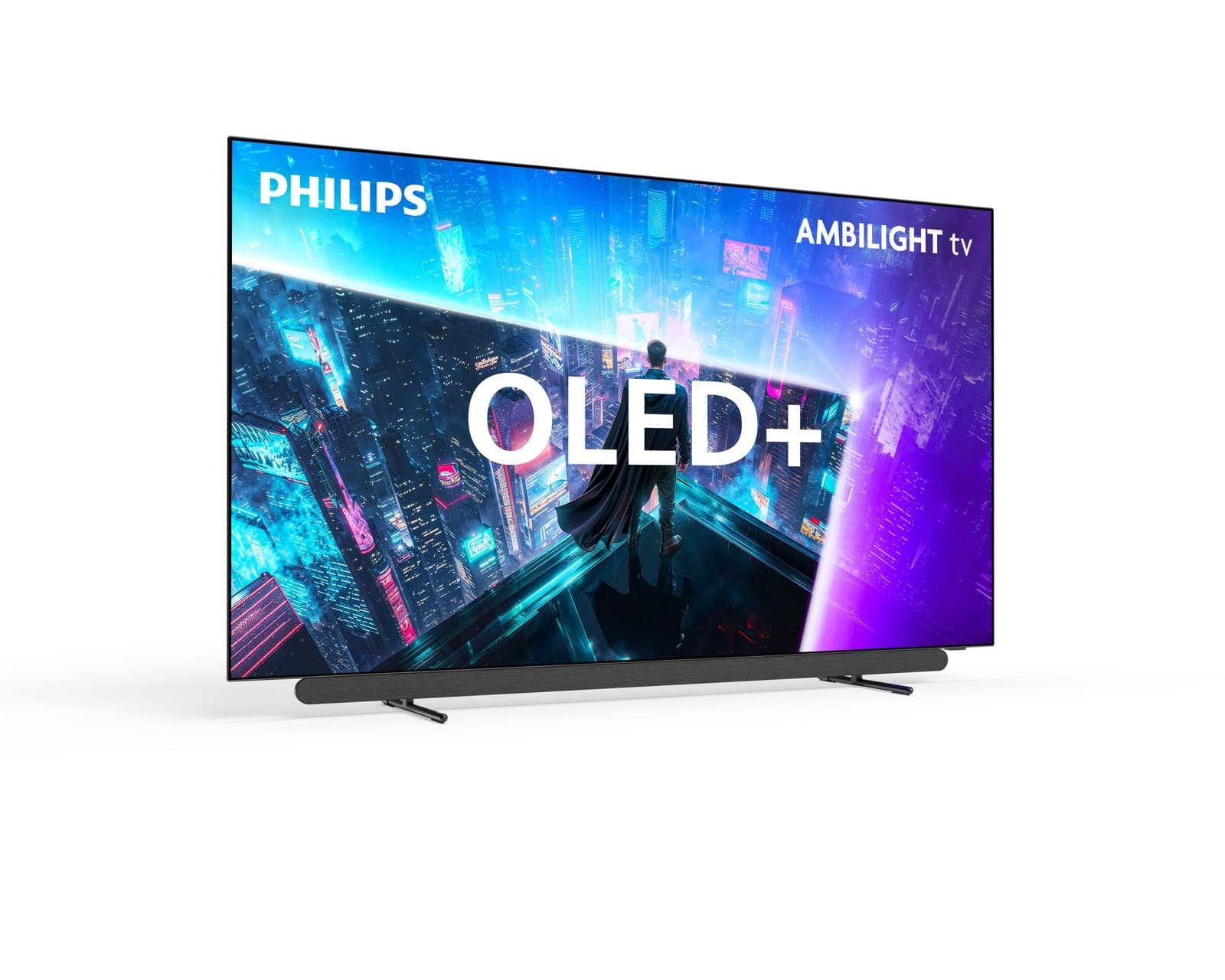
Philips has spent two decades making the one TV feature nobody else will copy: lights that spill off the back of the screen and paint your wall. For 2026 it has gone further and let those lights escape the telly entirely. The Philips OLED+951 is the flagship of the range, and it arrives with a 4,500-nit Tandem OLED panel, one of the first Dolby Vision 2 Max implementations anywhere, and a brand-new operating system. It is also a European exclusive in the truest sense. Here is the need-to-know.
The need-to-know
The Philips OLED+951 sits at the top of TP Vision's 2026 Ambilight TV range, announced in March 2026 and shown in full at IFA in Berlin at the start of September. It comes in two sizes, 65 and 77 inches; the 65-inch model went on sale first with the 77-inch following in September. Philips televisions are a Europe-and-selected-markets proposition rather than a global one, so this is a set British and mainland European buyers can actually get and Americans largely cannot. The 65-inch version was named EISA Best Premium OLED TV for 2026 to 2027. Fair warning: full independent reviews are still thin on the ground, so the picture below is built on the specification and the announcement coverage rather than settled lab verdicts.
Key specs, decoded
This is a genuine 2026 flagship spec sheet, not a rebadged 2025 one.
- META 4.0 Primary RGB Tandem 2.0 WOLED panel, quoted at up to 4,500 nits peak light output
- Ultra-low reflection treatment that Philips says tackles more than 99 per cent of on-screen reflections
- 10th Gen P5 AI Dual Engine — two processors, where the step-down OLED+911 uses one
- Dolby Vision 2 Max, plus Dolby Vision, HDR10, HDR10+ and HLG
- Four full-bandwidth HDMI 2.1 ports with VRR and ALLM, via the MediaTek Pentonic 800 chipset
- Refresh rates up to 165Hz with variable refresh rate
- Four-sided Ambilight with AmbiScape, extending to up to four compatible smart lights
- Integrated 70W 2.2-channel sound system with Dolby Atmos support
- TitanOS smart platform, replacing Google TV on Philips flagships
- Slim-bezel design with metal feet, available in 65- and 77-inch sizes
AmbiScape is the actual headline
Ambilight has always stopped at the edge of the television. AmbiScape does not. The system now talks to compatible smart bulbs — Philips Hue, IKEA and Nanoleaf among them — and extends the colour field of whatever you are watching across up to four additional lights in the room. It is the first meaningful expansion of the idea in years, and it is available across all six premium 2026 series, not held back for the flagship. Whether you love it or find it exhausting depends entirely on your tolerance for a living room that pulses along with a Formula 1 broadcast. What is not in doubt is that nobody else in Europe offers it.
What's new versus the OLED950
Three changes matter. First, the panel: the Primary RGB Tandem structure moves to its 2.0 generation with META 4.0 processing and a big claimed brightness step, alongside the reflection treatment that matters enormously in bright European living rooms with large windows. Second, Dolby Vision 2 Max, which uses content-aware processing including Authentic Motion and Precision Black — Philips is among the first manufacturers anywhere to ship it, and notably LG's 2026 flagship does not support it at all. Third, the sound system was rebuilt: the single woofer of the OLED950 is replaced by two smaller bass drivers in redesigned enclosures, which let Philips slim the cabinet without, it says, losing output.
The TitanOS question
Philips has dropped Google TV from its flagships in favour of TitanOS, its own platform. That is a real trade-off and worth thinking about before you buy. TitanOS is lighter, faster and free of the recommendation sprawl that has crept into Google TV, and it carries the major international streaming services. But it is a smaller ecosystem, Chromecast built-in behaviour changes, and app availability has historically lagged — Apple TV was a notable initial omission that Philips committed to adding. If you lean heavily on Google Assistant, Google Photos or casting from an Android phone, this is the single biggest reason to hesitate over the Philips OLED+951.
Buy it if, skip it if
Buy the Philips OLED+951 if you want the most future-proofed HDR feature set on sale in Europe, if your room is bright and the reflection handling appeals, and if Ambilight is something you already know you love. Buy it if you want four proper HDMI 2.1 ports and 165Hz gaming without paying a Samsung or LG flagship premium. Skip it if you are committed to the Google TV ecosystem. Skip it if you want a reviewed, measured, thoroughly tested set right now rather than a very promising specification. And skip it if you need a 55-inch flagship — this range starts at 65 inches.
Worth considering instead
Inside the Philips range, the OLED+911 is the interesting sideways move: the same panel generation and processor family, but with the Bowers & Wilkins 3.1-channel sound system built into a rounded speaker bar beneath the screen, plus a 48-inch option the flagship does not offer. Outside it, the LG G6 is the direct rival — comparable brightness, better smart platform maturity, no Dolby Vision 2. The Samsung S95F and S99H bring QD-OLED colour volume but no Dolby Vision at all. And the Sony Bravia 8 II remains the picture-accuracy benchmark, if you can find one before stock clears.
Pros
- META 4.0 Primary RGB Tandem 2.0 panel quoted at up to 4,500 nits peak
- Reflection treatment aimed at more than 99 per cent of on-screen reflections
- Among the first televisions anywhere with Dolby Vision 2 Max
- Four full-bandwidth HDMI 2.1 ports with 165Hz VRR and ALLM
- Four-sided Ambilight with AmbiScape, now extending to four external smart lights
- Rebuilt 70W 2.2-channel sound system in a slimmer cabinet
Cons
- TitanOS is a smaller ecosystem than Google TV and app support has lagged
- Only two screen sizes, both large — no 55-inch flagship option
- Independent measured reviews are still scarce at the time of writing
- Philips televisions are unavailable in several major markets outside Europe
- AmbiScape needs compatible Hue, IKEA or Nanoleaf lights to do anything
Comparison
Philips OLED+911
The same panel generation with a Bowers & Wilkins 3.1-channel sound bar built into the chassis and an external subwoofer output. Available from 48 to 77 inches, so far more flexible on size.
LG G6
The direct flagship rival in Europe, with a Primary RGB Tandem panel, Alpha 11 Gen 3 processing and the most mature smart platform going. No Dolby Vision 2 support, and weaker built-in audio.
Samsung S95F
QD-OLED colour volume, a slick external connection box and excellent gaming credentials. Samsung still refuses Dolby Vision entirely, which is a real omission at this level.
Sony Bravia 8 II
The accuracy benchmark for film watchers, with Acoustic Surface Audio+ that comfortably beats most rivals' built-in sound. Fewer HDMI 2.1 ports and now being cleared from stock.
FAQ
AmbiScape extends Ambilight beyond the television to up to four compatible smart bulbs from brands including Philips Hue, IKEA and Nanoleaf. You need those bulbs already; the feature itself is built into all six premium 2026 Philips series.
The Philips OLED+951 is the most interesting flagship television in Europe this year, and the only one doing something genuinely new with the room rather than just the panel. The specification is extraordinary and the Dolby Vision 2 Max support is real future-proofing. Just go in knowing that TitanOS is a leap of faith and that the independent verdicts are still arriving.