Sennheiser in 2026: The European Lineup, Model by Model
Sennheiser spent most of the past four years looking like a brand coasting on reputation. Then 2026 happened: a new flagship over-ear, a new flagship earbud, a serious audiophile wireless pair and a repairability stance that no rival has matched. It is a more coherent range than it has been in years, arriving at a moment when the consumer business itself is reportedly on the market. Here is what Sennheiser actually sells in Europe now, and which parts of it deserve your money.
Who actually makes Sennheiser these days
This trips up a lot of buyers. Sennheiser electronic SE & Co. KG still runs the professional business — microphones, meeting systems, streaming technology, monitoring — from Germany. The consumer side, meaning the headphones and earbuds most people mean by Sennheiser, is operated by Sonova Holding AG under licence from Sennheiser, a split that dates to 2021. Industry coverage through 2026 has reported that the consumer division is up for sale again, which is worth knowing if long-term firmware support matters to you. On the professional side, the Spectera wideband digital wireless platform is the current headline, with its SKM handheld transmitter shipping from September 2026 and touring with major acts.
The over-ear flagships: Momentum 5 Wireless and HDB 630
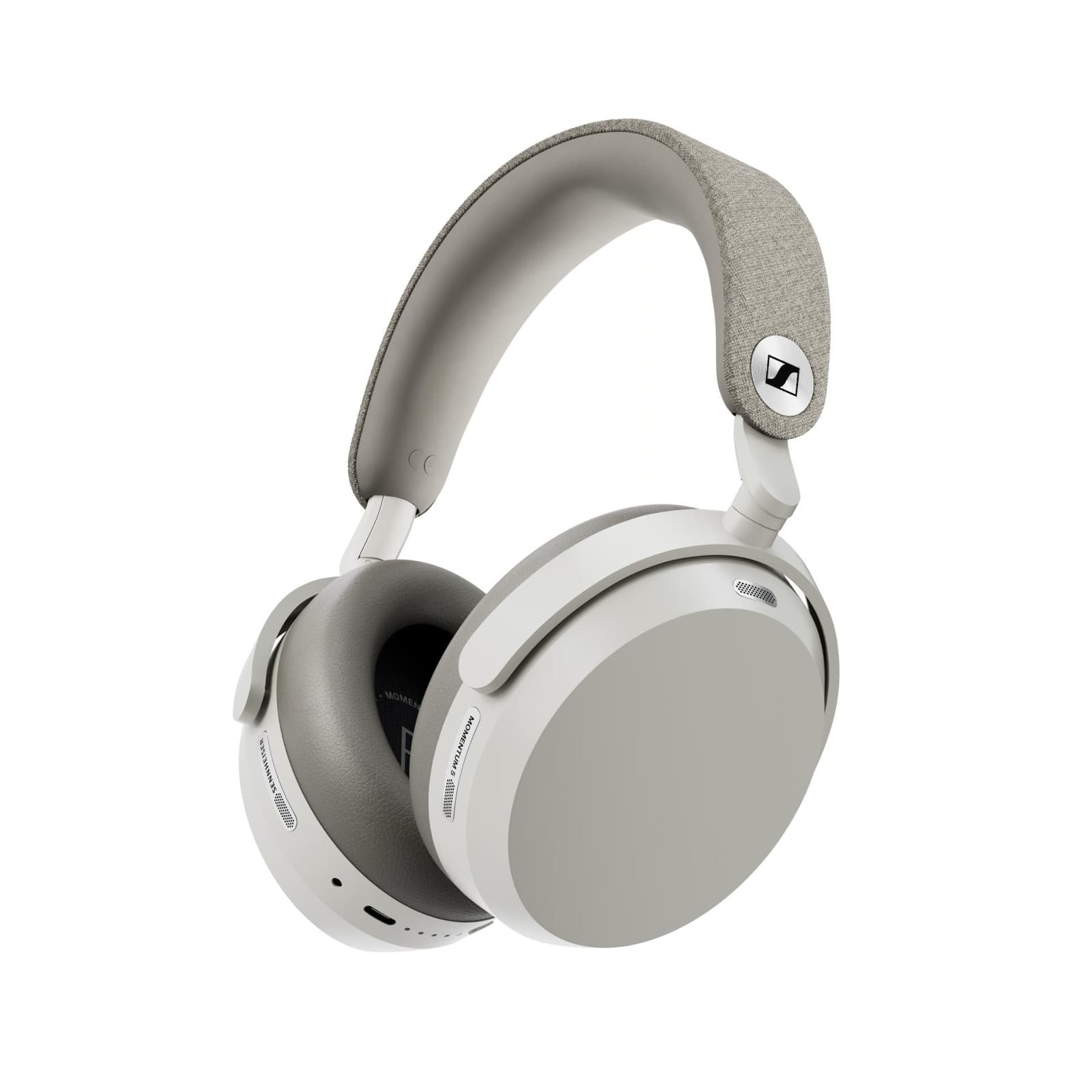
These two cover different buyers and Sennheiser sells them side by side rather than as a hierarchy. The Sennheiser Momentum 5 Wireless, announced from Hanover in May 2026, is the mainstream flagship: 42mm transducers built in Tullamore, eight microphones, 57 hours per charge with cancelling on, aptX Lossless, Dolby Atmos with head tracking, USB-C listening at 24-bit/96kHz and a user-replaceable 700mAh cell. The Sennheiser HDB 630 is the audiophile answer, bundling a BTD 700 USB-C dongle that forces aptX Adaptive onto any source including an iPhone, adding a parametric equaliser and crossfeed, and running around 60 hours per charge, dropping to 45 with the dongle in use. Its cancellation is the weaker of the two.
The earbuds: Momentum True Wireless 5 and 4
The Sennheiser Momentum True Wireless 5 began shipping on 3 September 2026 and is a genuine generational step rather than a refresh. It keeps the 7mm TrueResponse transducers made in Ireland, adds Bluetooth 6.0, aptX Adaptive and aptX Lossless, Dolby Atmos with head tracking, a revised adaptive hybrid cancellation system with four microphones per bud including bone-conduction sensors, IP54 protection, twelve hours per charge and forty with the case. Its predecessor, the Sennheiser Momentum True Wireless 4, remains on sale at steep discounts and has one advantage worth knowing: LC3, LE Audio and Auracast have worked on it since 2024, whereas on the newer model they arrive via firmware.
The mid-range, and where the range gets thin
This is the honest weak spot. The Sennheiser Accentum Wireless line covers the mid-market, and it has not been received nearly as warmly as the flagships — UK reviewers testing mid-range noise cancellers have been unimpressed, preferring Sony's cheaper alternatives at similar money. That leaves a gap between the excellent flagships and the value end of the market that Sony, Anker and EarFun currently fill more convincingly. If you want Sennheiser sound on a smaller budget, the more sensible route in Europe is a discounted previous-generation Momentum rather than stepping down a tier within the current range.
The wired side still matters
It would be easy to forget that Sennheiser's reputation was built on cables. The HD 600 series remains the reference that the Momentum transducers are explicitly voiced after, and the Sennheiser HD 620S is the modern closed-back entry point, well received on launch and versatile enough that Sennheiser and Mercedes-AMG turned it into a gaming headset at Gamescom 2026. Further up sit the HD 660S2, the HD 800 S and the HD 820 for people who own an amplifier and intend to use it. In a market obsessed with cancellation, the wired range is where Sennheiser's engineering heritage is still most obvious and, per pound, most rewarding.
Repairability as a deliberate strategy
This is the most interesting thing Sennheiser is doing, and it is a specifically European play. The Momentum 5 Wireless battery is replaceable by the owner with a small Phillips screwdriver, rated to hold at least 80 per cent of its capacity after 25,000 hours of listening, with instructions in the manual and spare cushions and cables sold separately. The Momentum True Wireless 5 goes further, with replaceable cells in both earbuds and the charging case — genuinely unusual at that size. Packaging is plastic-free and the Momentum case is around 20 per cent smaller than before. It will not sway everyone, but for buyers tired of sealed batteries dictating product lifespan, it is a real differentiator.
What to buy, what to skip, what's next
Buy the Sennheiser Momentum 5 Wireless if you want the most sound per pound in European over-ears and can live with cancellation that softens rather than silences. Buy the HDB 630 if sound quality is the only criterion and the dongle appeals. Buy the Momentum True Wireless 5 if you want premium earbuds you can keep alive past the battery's natural life. Skip the Accentum tier. As for what is next, the immediate thing to watch is the Bluetooth 6.0 and LE Audio firmware update promised for the Momentum 5 Wireless, which will decide whether that pair is Auracast-capable in practice or only on paper.
Pros
Cons
Comparison
Sennheiser Momentum 5 Wireless
The mainstream flagship: 42mm Irish-built transducers, eight microphones, 57 hours per charge, aptX Lossless, USB-C audio at 24-bit/96kHz and a battery the owner can replace.
Sennheiser HDB 630
The audiophile wireless pair, bundled with a BTD 700 USB-C dongle that brings aptX Adaptive to any source. Parametric equaliser, crossfeed and around 60 hours of battery; plain design.
Sennheiser Momentum True Wireless 5
Flagship earbuds shipping from September 2026 with Bluetooth 6.0, aptX Lossless, Dolby Atmos with head tracking, IP54, twelve hours per charge and replaceable cells in buds and case.
Sennheiser Momentum True Wireless 4
The outgoing earbuds, now heavily discounted, and the cheapest reliable route to working LE Audio and Auracast since they have supported LC3 broadcast reception since 2024.
Sennheiser Accentum Wireless
The mid-range noise canceller, and the least convincing part of the lineup. UK reviewers have been notably unimpressed compared with cheaper Sony alternatives at similar money.
Sennheiser HD 620S
The modern closed-back wired entry point, well received on launch and versatile enough that Sennheiser and Mercedes-AMG rebuilt it into a gaming headset at Gamescom 2026.
Sennheiser Spectera
The professional wideband digital wireless platform, with its SKM handheld transmitter shipping from September 2026 and already in use on major touring in-ear monitoring rigs.
FAQ
Partly. The professional business remains Sennheiser electronic SE & Co. KG in Germany, while the consumer headphone division is operated by Sonova Holding AG under licence, an arrangement dating back to 2021.
Sennheiser's 2026 range is the strongest it has been in years at the top and the weakest in the middle. The Momentum 5 Wireless and HDB 630 are both excellent for different reasons, the Momentum True Wireless 5 is the most repairable premium earbud you can buy, and the mid-range is best left alone.