Xiaomi's 2026 European Lineup, Model by Model
Xiaomi's European strategy used to be simple: launch in China, arrive here nine months later with a smaller battery and a bigger price. In 2026 that changed. The flagship reached Barcelona in February, the tablets came with it, Leica put its own name on a Xiaomi phone for the first time, and the T-series landed in May rather than October. The range is now genuinely competitive with Samsung on hardware, if not on support. Here is the lineup, model by model.
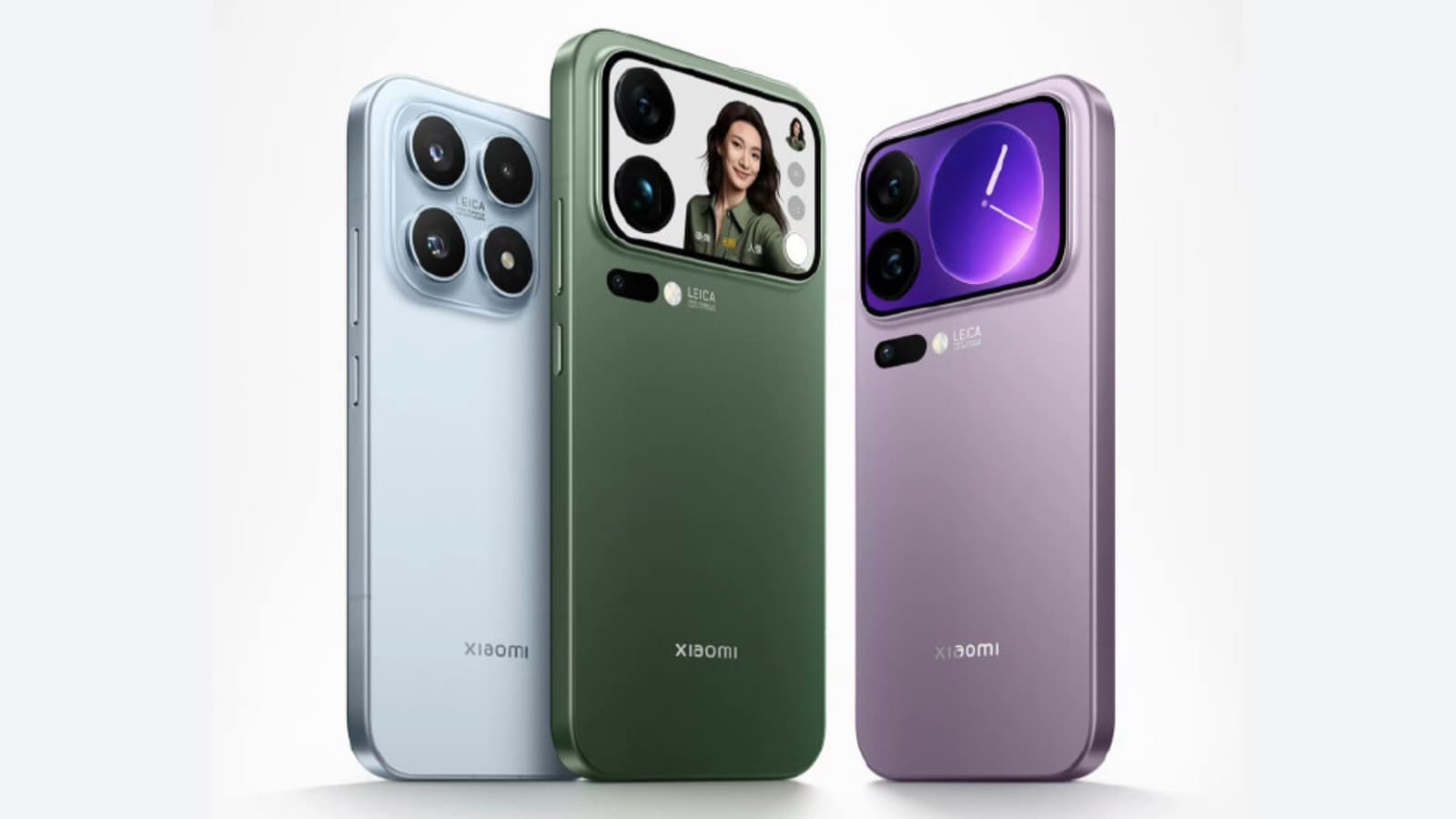
The flagships: Xiaomi 17 and Xiaomi 17 Ultra
The Xiaomi 17 series was announced in China on 25 September 2025 and reached Europe after a global launch event in Barcelona on 28 February 2026, timed to MWC. The Xiaomi 17 was the first phone anywhere with the Snapdragon 8 Elite Gen 5, built on TSMC's 3nm process, and carries a 50MP Light Fusion 950 main sensor at 23mm and f/1.67 on a 1/1.31-inch sensor, a 50MP 17mm ultra-wide and a 50MP 60mm telephoto. The European version uses a 6,330mAh silicon-carbon cell where the Chinese model gets 7,000mAh. Only the base and Ultra models came to Europe; the Pro and Pro Max stayed in China.
The Xiaomi 17 Ultra is the camera to beat
If you care about phone photography in Europe, this is the shortlist of one. The Xiaomi 17 Ultra pairs a one-inch-type 50MP Light Fusion 1050L main sensor at 23mm and f/1.7 with a 200MP HPE telephoto offering continuous optical zoom between 75mm and 100mm at f/2.4 to f/3.0, plus a 50MP 14mm ultra-wide and macro focus down to 26cm. Global units carry a 6,000mAh battery against 6,800mAh in China, with 100W wired and 50W wireless charging. Note Xiaomi's smart charging behaviour: the full 100W disengages when the screen is on to manage heat. It runs HyperOS 3 on Android 16.
The curiosity: Leica Leitzphone
Xiaomi launched a Leica Edition of the 17 Ultra in China on 25 December 2025, with a knurled frame, a red dot Leica logo, a bespoke system theme and a Control Ring, a mechanically rotating ring around the camera island that zooms between focal lengths and switches cameras. At MWC on 28 February 2026, Leica introduced the international version under its own name as the Leica Leitzphone, powered by Xiaomi, with a different back design and a smaller battery than the Chinese edition. It went on sale internationally on 6 March 2026. It is a niche object with a real mechanical control, and the only Leica-badged phone on sale here.
The value flagships: Xiaomi 17T and 17T Pro
The T-series arrived unusually early this year, on 28 May 2026. The Xiaomi 17T runs a 6.59-inch AMOLED at 1268x2756 and 120Hz on a 4nm MediaTek Dimensity 8500 Ultra, with 12GB of RAM and 256GB or 512GB of UFS 4.1 storage, in a 157.6 by 75.2 by 8.2mm body at 200g. The Xiaomi 17T Pro steps up to a 6.83-inch panel at 1280x2772 and 144Hz on a 3nm Dimensity, swaps the plastic frame for aluminium and weighs 219g. Both carry IP68 ratings, Gorilla Glass 7i, peak brightness quoted at 3,500 nits and 3840Hz PWM dimming, which is the highest-frequency flicker control in Xiaomi's range.
Tablets: Xiaomi Pad 8 and Pad 8 Pro
Xiaomi finally treats Europe as a tablet market. The Xiaomi Pad 8 and Xiaomi Pad 8 Pro went global alongside the Xiaomi 17 and 17 Ultra and are now stocked on Xiaomi's UK storefront. The Xiaomi Pad 8 is an 11.2-inch 3:2 panel at 3200x2136 and 144Hz, driven by a Snapdragon 8s Gen 4, with four Dolby Atmos speakers, a 9,200mAh battery, 45W charging and an aluminium body 5.8mm thick at around 485g, running HyperOS 3 on Android 16 with magnetic stylus support. The Xiaomi Pad 8 Pro moves to a Snapdragon 8 Elite with 8GB or 12GB of RAM, up to 512GB and a larger battery.
The volume seller: Redmi Note 15
Most of the phones Xiaomi actually sells in Europe are Redmis, and the Redmi Note 15 family is the one that matters. Xiaomi's official European and UK launch was 15 January 2026, though in practice most of the range other than the 4G Pro variant was orderable across Europe and the UK before that through Amazon directly rather than third-party resellers, which is a recurring pattern with this brand. If you want a capable Android phone without flagship spending, this is where Xiaomi's volume lives, and it is the range most likely to be discounted heavily within months of release.
What to buy, what to skip, what is rumoured
Buy the Xiaomi 17 Ultra if photography is the point, and accept that Xiaomi's software support is shorter than Samsung's seven years. Buy the Xiaomi 17T Pro if you want flagship-class screen and build without flagship spending. Buy the Xiaomi Pad 8 if you mainly watch and browse. Skip the standard Xiaomi 17 unless it is discounted, since the 17T Pro covers similar ground. As for rumours, treat them as such: reporting points to a Xiaomi 18 generation, with one leak suggesting a September 2026 unveiling and Xiaomi's own historical timing pointing to November, and a Xiaomi 18 Pro that may bring a rear OLED panel to Europe.
Pros
Cons
Comparison
Xiaomi 17 Ultra
A one-inch-type 50MP main sensor, a 200MP continuous-zoom telephoto covering 75mm to 100mm, a 6,000mAh global battery and 100W charging. The best camera phone sold in Europe this year.
Xiaomi 17T Pro
A 6.83-inch 144Hz AMOLED at 3,500 nits on a 3nm MediaTek Dimensity, in an aluminium frame with IP68 and 3840Hz PWM dimming. Flagship feel without the flagship outlay.
Leica Leitzphone
The international version of the Xiaomi 17 Ultra Leica Edition, launched 6 March 2026 with a knurled frame, a red dot logo and a mechanically rotating Control Ring around the camera island.
Xiaomi Pad 8
An 11.2-inch 3:2 tablet at 144Hz with a Snapdragon 8s Gen 4, four Dolby Atmos speakers, a 9,200mAh battery, 45W charging and a 5.8mm aluminium body weighing around 485g.
Redmi Note 15
Xiaomi's European volume seller, officially launched in the UK and EU on 15 January 2026. The range where the brand does its real business, and the one discounted fastest.
FAQ
Yes, consistently. The Xiaomi 17 uses a 6,330mAh cell globally against 7,000mAh in China, and the Xiaomi 17 Ultra carries 6,000mAh globally against 6,800mAh. Charging speeds are generally preserved, so the difference shows in endurance rather than how quickly the phone refills.
Xiaomi's European lineup in 2026 is the strongest it has ever been on hardware and still the weakest of the major brands on software longevity. Buy the Xiaomi 17 Ultra for the camera, the Xiaomi 17T Pro for the value, the Xiaomi Pad 8 for the screen. Just do not expect seven years of Android updates.