Salomon XT-6 vs ASICS GEL-Kayano 14: Tech Runner Face-Off
The tech runner is the defining sneaker category of the mid-2020s in Europe, and two shoes own it. The Salomon XT-6 dragged trail running into fashion around 2021 and has never really let go. The ASICS GEL-Kayano 14, a mid-2000s stability running shoe recirculated as a lifestyle pair, has spent the past two years becoming the most-worn retro runner on the continent. They look like cousins. Under the upper they are close to opposites — one is a genuine off-road shoe, the other is a cushioned city cruiser. Here is the intel.
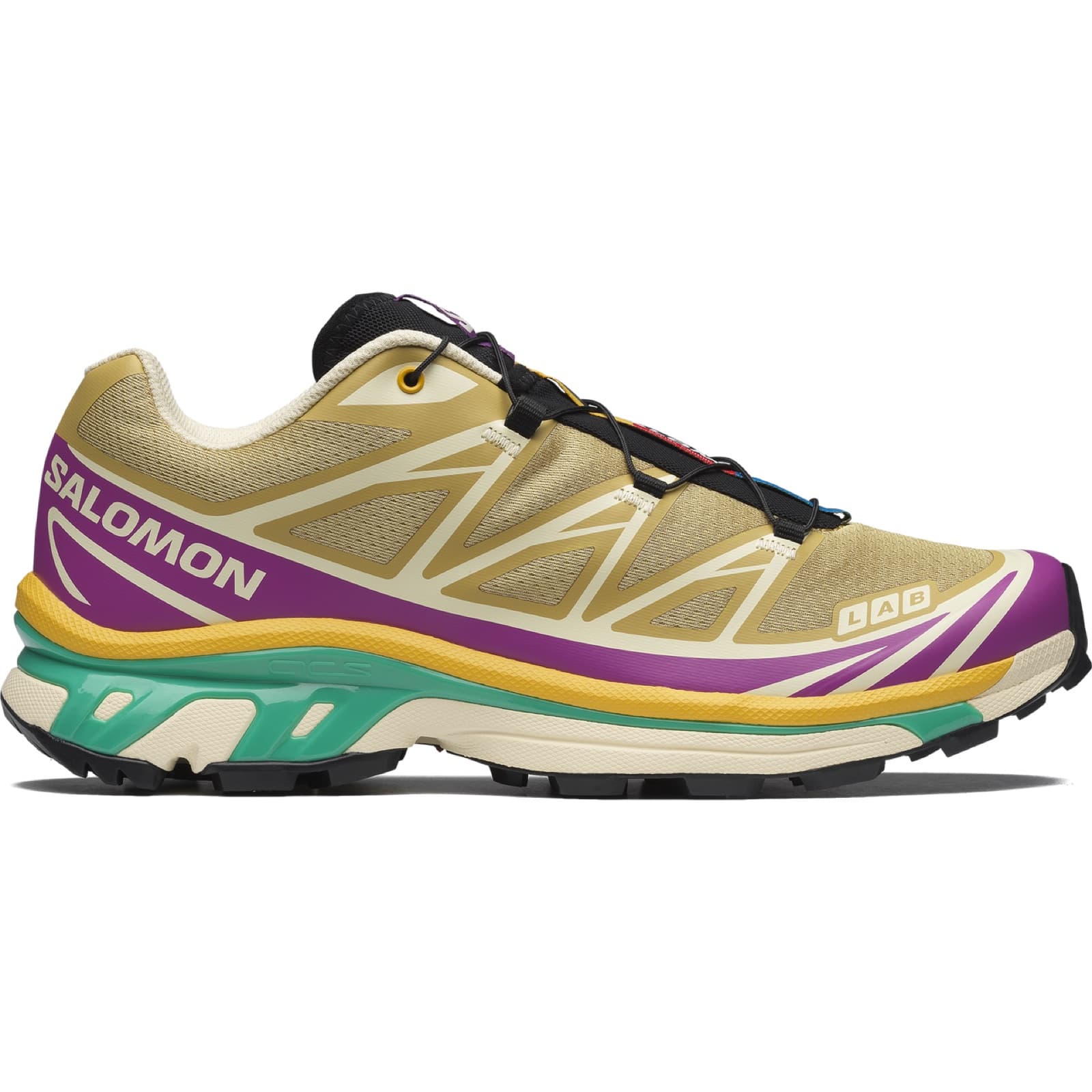
Two different shoes wearing the same outfit
The Salomon XT-6 is a trail running shoe that happened to become fashionable. It uses the Agile Chassis System — a rigid plastic structure running along and through the midsole — plus dense AC Muscle foam, Quicklace and a Contagrip outsole with deep lugs. It was designed for wet, soft ground. The ASICS GEL-Kayano 14 is the opposite journey: a 2008 road stability trainer reissued for the street, built on mesh with real leather and suede overlays, and carrying visible GEL units. One is technical equipment repurposed for pavement; the other is a road shoe repurposed as a design object. That distinction explains almost every difference that follows.
The numbers that matter
Independent lab measurements for both:
- Weight: Salomon XT-6 about 365 g; ASICS GEL-Kayano 14 about 352 g — both heavy by sneaker standards
- Stack: XT-6 around 32 mm including the insole; GEL-Kayano 14 measured 32.7 mm heel and 22.6 mm forefoot
- Drop: roughly 10.1 mm on the GEL-Kayano 14
- Cushioning: GEL-Kayano 14 returned 101 on the shock absorption scale against an 87 average for sneakers; the XT-6's dense foam offers noticeably less
- Energy return: 45.8 per cent for the GEL-Kayano 14, below the 50.1 per cent sneaker average
- Outsole: 5.5 mm Contagrip lugs versus flat road rubber with ASICS grip compound
- Lacing: Quicklace with Sensifit versus conventional laces
- Fit: both true to size; the ASICS is medium width, the Salomon narrower and more pointed
Comfort: the GEL-Kayano 14 wins, clearly
If you are on your feet all day, this is not a close contest. The ASICS GEL-Kayano 14 was designed for road running, so it has a proper heel-to-toe drop, a taller and more forgiving heel stack and actual GEL damping, and its shock absorption measures above the sneaker average. Reviewers consistently describe it as comfortable for hours of walking. The Salomon XT-6 puts a rigid chassis under dense, firm foam, because on a muddy trail the ground provides the cushioning. On tarmac it does not, and the same reviewers report sore feet after long stretches on hard surfaces. Cold weather makes it worse: the XT-6's foam stiffens measurably in low temperatures, which is not ideal for a shoe most people wear in a European winter.
Grip, weather and durability
Here the Salomon XT-6 takes it back. Contagrip with 5.5 mm lugs is a genuine wet-weather outsole, capable on wet stone, wet wood and leaf litter as well as mud, and Salomon outsoles consistently rate highly in standardised traction testing. The XT-6 also rates well for durability, with a protective upper built to survive rocks. The ASICS GEL-Kayano 14 grips well on wet and dry pavement but is fundamentally a road shoe, and its durability data is the weak point: abrasion testing rated both the toebox and heel padding poorly, with only the outsole holding up reasonably. That is the price of a mesh-and-suede lifestyle build. Neither shoe is waterproof, and neither pretends to be.
Fit and lockdown
Both fit true to size, but they hold the foot very differently. The Salomon XT-6 uses Quicklace with the Sensifit wrap, which pulls the upper evenly around the midfoot in one motion and produces essentially zero heel slip — it is one of the most secure lacing systems on any sneaker, and a genuine reason people keep buying them. The trade is a narrow, pointed last that broad feet notice. The ASICS GEL-Kayano 14 is medium width with a medium toebox and conventional laces, giving more room and more adjustability, though it has no heel tab and a stiff heel counter. For most European feet the ASICS is the easier shoe to get on with; for anyone who hates lace-tying, the Salomon is unbeatable.
Who should buy which
Buy the Salomon XT-6 if you actually go outside in weather, if you want a shoe that grips on wet cobbles and can handle a gravel path at the weekend, and if you like the security of Quicklace. Buy it if you want the technical look with the technical substance behind it. Buy the ASICS GEL-Kayano 14 if the shoe's job is to be comfortable in a city — it is the better walking shoe, the more forgiving fit, and the one that suits mild overpronation, where it ranks as a top pick. Buy it if you want the Y2K aesthetic rather than the gorpcore one. Anyone buying purely on looks should try both, because they photograph similarly and feel nothing alike.
What to know before you spend
Both sit at the premium end of the sneaker market, and both have a specific weakness worth pricing in. The ASICS GEL-Kayano 14's mesh upper and heel padding wear faster than the price suggests, so it is not a shoe to buy expecting five years of daily service. The Salomon XT-6 will outlast it comfortably, but you will feel every paving slab, and the payoff of all that chassis is stability rather than comfort. Both are heavy — over 350 grams each — which is worth knowing if you are coming from a modern foam sneaker. And both are now common enough in European cities that neither buys you any novelty.
Pros
- Salomon XT-6: Contagrip and 5.5 mm lugs give genuine wet-weather traction
- Salomon XT-6: Quicklace and Sensifit deliver near-total lockdown with no heel slip
- ASICS GEL-Kayano 14: above-average shock absorption and all-day walking comfort
- ASICS GEL-Kayano 14: medium fit, real leather and suede, and a top rating for mild overpronation
Cons
- Salomon XT-6: firm and unforgiving on tarmac, and stiffens further in cold weather
- ASICS GEL-Kayano 14: poor abrasion results for the toebox and heel padding
- Both weigh over 350 grams, which is heavy for everyday wear
Comparison
Salomon XT-6
A genuine trail shoe in fashion clothing: rigid Agile Chassis System, dense foam, 5.5 mm Contagrip lugs and Quicklace. Grippy, secure and durable, but firm underfoot on pavement.
ASICS GEL-Kayano 14
A 2008 road stability trainer reissued for the street, with GEL cushioning, a 32.7 mm heel and a 10 mm drop. Far more comfortable for city walking, but less durable.
FAQ
The ASICS GEL-Kayano 14, by a clear margin. It has a taller heel stack, a proper running-shoe drop and GEL damping that measures above the sneaker average, while the Salomon XT-6 is deliberately firm.
These two shoes look like rivals and behave like complements. The Salomon XT-6 is the one for weather, grip and lockdown, and it will outlast anything else in your rotation. The ASICS GEL-Kayano 14 is the one for comfort, easy fit and the Y2K look, at the cost of durability. If you walk a lot, buy the ASICS. If you walk outdoors a lot, buy the Salomon.