Sennheiser Momentum 5 Wireless Review: Four Years Well Spent
Sennheiser left its flagship over-ears alone for nearly four years. In that time Sony shipped two generations, Bose shipped two, Apple joined in and Bowers & Wilkins shipped three. So the Sennheiser Momentum 5 Wireless arrive into a category that has moved on considerably — and arrive, unusually, with a battery you can replace yourself using a household screwdriver. That is the sort of detail European buyers have started to care about a lot. Here is the need-to-know before you commit.
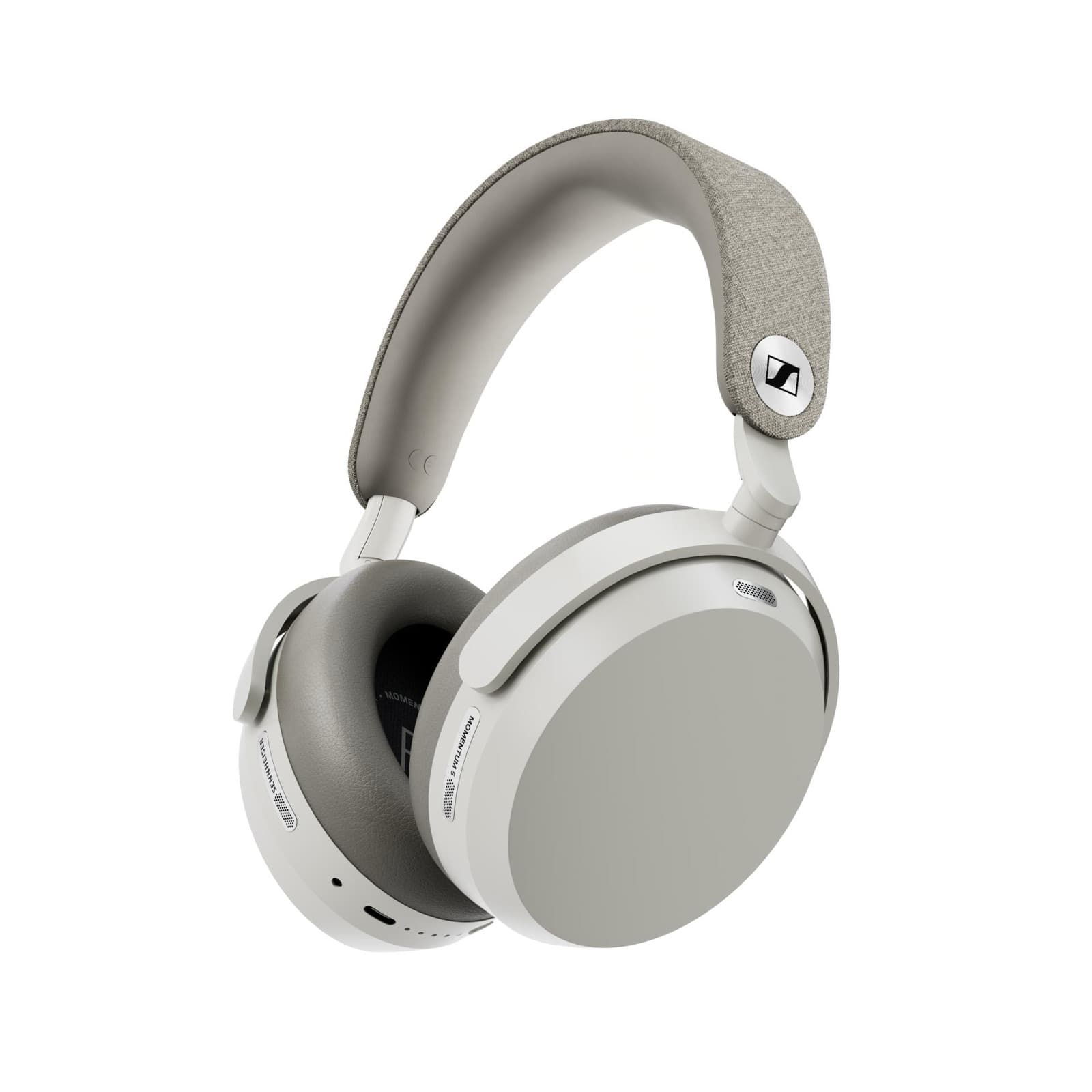
The need-to-know
The Sennheiser Momentum 5 Wireless is the fifth-generation flagship in Sennheiser's consumer over-ear line, announced from Hanover on 25 May 2026 and sold across the UK and mainland Europe through Sennheiser's own store, Amazon and the usual specialist retailers. Three colourways are offered: Black, White and a rather good-looking Denim. It sits a rung below the more audiophile-minded Sennheiser HDB 630 and competes directly with the Sony WH-1000XM6, the Bose QuietComfort Ultra Headphones (2nd Gen) and the Bowers & Wilkins Px7 S3. Price-wise it undercuts most of them, which matters, because on outright noise cancelling it does not beat them. It is aimed at the commuter who cares about tone more than silence.
Key specs, decoded
The spec sheet tells you where Sennheiser spent the four years.
- 42mm dynamic transducers carried over from the Momentum 4, built at Sennheiser's plant in Tullamore, Ireland, and voiced along HD 600-series lines
- Hi-Res Audio certification and Snapdragon Sound, with SBC, AAC, aptX, aptX HD, aptX Adaptive and aptX Lossless
- Bluetooth 5.4 at launch, engineered for Bluetooth 6.0 and LE Audio via a later firmware release
- Eight microphones — four per side, double the previous generation — for cancellation and transparency
- Stated 57 hours of playback with noise cancelling engaged; roughly two hours for a full charge
- User-replaceable 700mAh cell, rated to hold at least 80 per cent capacity after 25,000 hours of listening
- 290g, fold-flat hinges, a case around 20 per cent smaller than before, plastic-free packaging
- Wired listening over 3.5mm and over USB-C at up to 24-bit/96kHz
- Eight-band EQ, sound personalisation and Dolby Atmos with head tracking in the Smart Control Plus app
What changed since the Momentum 4 Wireless
Visually, very little. The oval earcups, the metallic ring logo and the general silhouette are all familiar, though the fabric-wrapped headband is a genuine step up in perceived quality. The real changes are underneath. Sennheiser doubled the microphone count and claims roughly three times the effectiveness against ambient voices — the chatter-in-an-open-office problem rather than the jet-engine problem. The codec ladder now reaches aptX Lossless. Dolby Atmos with head tracking arrives as a day-one firmware update rather than a hardware feature. And the battery, previously sealed, now comes out with a Phillips screwdriver. The one thing that went backwards: stated runtime dropped from 60 hours to 57. Nobody will notice.
What the Momentum 5 Wireless gets right
Reviewers converge hard on two things. The first is tone. The Momentum 5 Wireless are described consistently as rich, smooth and unusually mature, with a midrange that punches well above the asking price — vocals in particular come through with texture and warmth that pricier rivals flatten. Bass is generous rather than taut, which suits most listeners and irritates a few. Plug in over USB-C and the presentation tightens up further. The second is endurance: a stated 57 hours with cancelling active is nearly double what the Sony WH-1000XM6 and the Bose flagship manage, and it turns charging from a weekly chore into a monthly one. Call quality also draws praise, with wind and traffic handled cleanly and voices staying natural.
Where it trips up
Noise cancelling is the honest weak spot. Multiple reviews land on the same verdict: it softens the world rather than deleting it. Office hum, air conditioning and passing traffic fade well; aircraft drone and clanking gym weights still get through in a way they would not on the Sony or the Bose. The earcups fold flat but do not collapse inwards, so the case is flatter and wider than the folding rivals — awkward in a small bag. At 290g they are noticeably heavier than the 254g Sony. There is no official water resistance rating at all, which is odd in 2026. And the Dolby Atmos head tracking has been flagged as inconsistent at recentring. Build quality also splits opinion: the headband feels premium, the earcups rather less so.
Buy it if, skip it if
Buy the Sennheiser Momentum 5 Wireless if you want the most musical pair at this price, if you fly or commute long enough that charging twice a month sounds like luxury, and if the idea of replacing a worn cell yourself in five years appeals more than buying a whole new pair. Buy them if aptX Lossless on an Android phone is a box you want ticked. Skip them if your priority is outright silence on a long-haul flight — Bose still owns that, and Sony is close behind. Skip them if you need headphones that crush down into a ball for a packed carry-on, or if you want a formal IP rating for rainy walks and gym sessions.
Worth considering instead
The obvious internal rival is the Sennheiser HDB 630, which pairs a bundled USB-C dongle with the same aptX Adaptive pipeline and delivers a more reference-grade sound plus around 60 hours of battery — at a meaningful step up in price and with a plainer design. The Sony WH-1000XM6 remains the best-rounded flagship on sale, with stronger cancellation and folding hinges, but costs more and lasts barely half as long between charges. For outright quiet, the Bose QuietComfort Ultra Headphones (2nd Gen) are still the ones to beat. And the Bowers & Wilkins Px7 S3 offer the most stylish package of the lot, though their cancellation sits behind both the Sony and the Bose.
Pros
- Rich, smooth, notably expressive midrange that flatters vocals and acoustic material
- Stated 57 hours with noise cancelling on — roughly double the flagship norm
- User-replaceable battery, rated to hold 80 per cent capacity after 25,000 hours
- Full codec ladder including aptX Adaptive and aptX Lossless, plus Snapdragon Sound
- USB-C wired listening at 24-bit/96kHz as well as a 3.5mm analogue option
- Comfortable, secure fit with well-judged clamping force and a tactile touch panel
Cons
- Noise cancelling softens noise rather than removing it; Sony and Bose both do better
- Earcups fold flat but do not fold up, so the case is awkward in a small bag
- No official water or sweat resistance rating
- At 290g they are heavier than most of the flagship competition
- Dolby Atmos head tracking has been flagged as unreliable at recentring
Comparison
Sennheiser HDB 630
Sennheiser's own audiophile-leaning flagship, bundled with a USB-C dongle that forces aptX Adaptive onto any source, including an iPhone. Better sound, plainer looks, higher price.
Sony WH-1000XM6
The most complete flagship on sale in Europe: stronger cancellation, folding hinges, lighter at 254g and superb call handling. You pay more and recharge far more often.
Bose QuietComfort Ultra Headphones (2nd Gen)
Still the choice if outright silence is the only metric that matters. Bose's Quiet mode blankets low-frequency rumble better than anything here, though the tuning is bass-forward.
Bowers & Wilkins Px7 S3
The stylish British alternative, with sound close to the Sony flagship and a far classier finish. Cancellation trails both Sony and Bose, and battery life trails Sennheiser badly.
FAQ
Yes. Sennheiser designed the 700mAh cell to be swapped by the owner using a small Phillips-head screwdriver, with instructions in the manual. The company rates the original cell at 80 per cent capacity or better after 25,000 hours of listening.
The Sennheiser Momentum 5 Wireless are not the quietest headphones you can buy, and they are not the most portable. They are, at this price, very probably the best-sounding — and the combination of a 57-hour rating with a battery you can swap yourself makes them the most sensible long-term purchase in the category. If silence is your priority, look at Bose. If music is, start here.