AirPods Pro 3 vs Galaxy Buds 4 Pro: Pick Your Phone First
Two flagship earbuds, two near-identical stems, two completely different answers depending on what is in your pocket. The Apple AirPods Pro 3 have been Apple's top in-ear model since September 2025 and survived the September 2026 event untouched. The Samsung Galaxy Buds 4 Pro arrived on 11 March 2026 after an Unpacked reveal in late February. On paper they are closer than ever. In practice, the phone you already own decides most of this for you — but not all of it.
The short version
If you carry an iPhone, the Apple AirPods Pro 3 win without a serious argument: the pairing, switching, hearing health tools and heart rate integration all depend on Apple hardware, and none of it transfers. If you carry a Galaxy phone, the Samsung Galaxy Buds 4 Pro win for the mirror-image reason, and they add Auracast and a 24-bit wireless codec Apple does not offer. The interesting part is what happens when you look past the logo: Samsung has the better raw driver hardware and longer total battery, Apple has the better-rated noise cancelling and the more forgiving fit.
Design and fit
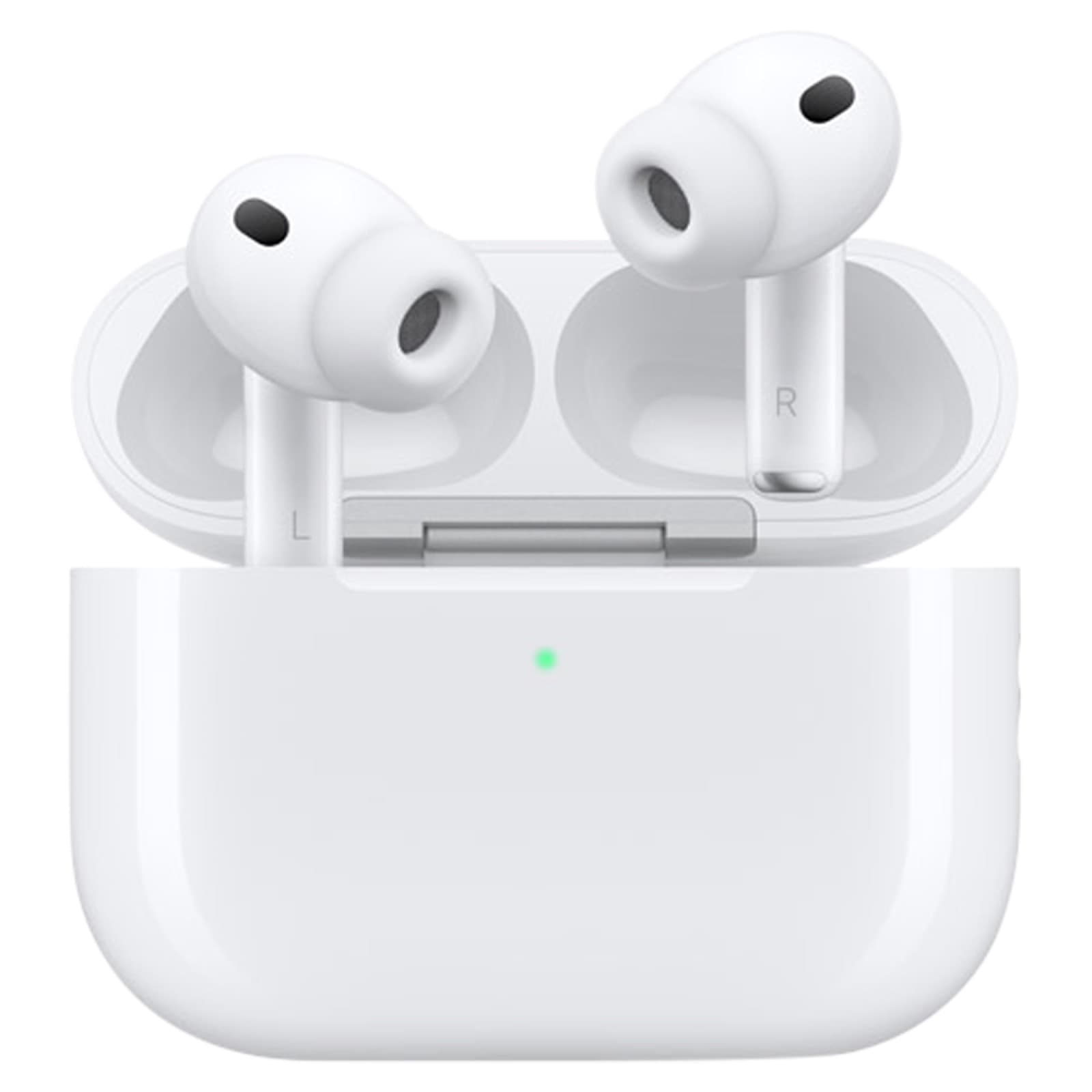
Both are white-or-black stems with silicone tips, and neither will surprise anyone. Apple kept the AirPods Pro 3 silhouette but changed the material where it counts: the ear tips now use foam-infused microspheres, thicker and firmer than plain silicone, in five sizes running from XXS to L. Reviewers report the redesign is noticeably more forgiving about which tip you choose. Samsung reshaped the Galaxy Buds 4 Pro stem with a flat metal exterior surface, dropping the light strip from the Buds 3 generation, and moved from a flip-top case to a clamshell with a transparent lid. Both cases charge wirelessly; Apple's also works with an Apple Watch charger and has a lanyard loop.
The specs that actually matter
Samsung brought more driver hardware. The Galaxy Buds 4 Pro use a two-way design with a 5.5mm planar tweeter and an 11mm woofer whose effective area Samsung says is nearly a fifth larger than the previous generation, claiming a large reduction in distortion. Apple counters with a custom high-excursion driver, a high dynamic range amplifier and a revised multiport acoustic architecture behind the H2 chip. On codecs, Samsung supports its own Seamless Codec at 24-bit/96kHz on recent Galaxy devices, plus AAC, SBC and LC3, and runs Bluetooth 6.1 with Auracast. Apple stays on Bluetooth 5.3 with AAC and no hi-res wireless option at all.
Noise cancelling and awareness
Apple claims roughly double the cancellation of the AirPods Pro 2, achieved with ultra-low-noise microphones, more computational audio and the new sealing tips. Reviewers back it, describing a clear improvement on aircraft rumble and street noise that still sounds natural rather than pressurized. Samsung's claim is more modest and more specific: a 3dB improvement in cancellation on the Galaxy Buds 4 Pro over the Buds 3 Pro, with better adaptive behavior than the standard Buds 4. Samsung also carries over voice detect, which drops the volume when you start speaking, and siren detect, which raises ambient sound when an alarm is nearby. Apple's equivalents are Conversation Awareness and Adaptive Audio.
Battery, durability and the small print
Samsung takes the endurance round. The Galaxy Buds 4 Pro are rated for up to seven hours of playback, six with cancelling on, with the case adding another 30 hours, or 26 with cancelling. Apple rates the AirPods Pro 3 at eight hours with cancelling on — better per session — but only 24 hours total with the case, down from 30 on the AirPods Pro 2. Durability is a draw at IP57 for both sets of earbuds, though Samsung's case carries no IP rating. Apple's case is rated IP57 as well. Apple also fits a heart rate sensor for workouts and a full hearing health suite, with a hearing test, hearing aid function and hearing protection.
Ecosystem: the part that decides it
This is where the comparison stops being close. The AirPods Pro 3 unlock Live Translation, Personalized Spatial Audio with head tracking, automatic device switching and hearing health features only on recent Apple hardware running current software. On Android they are competent Bluetooth earbuds and little more. The Galaxy Buds 4 Pro mirror that structure: fast pairing, hands-free assistants, head gestures and a live Interpreter feature covering 22 languages need a Galaxy device, and on other Android phones you need the Galaxy Wearable app just to reach noise control, adaptive EQ and firmware updates. Neither is a sensible cross-platform purchase.
Who should pick which
Pick the Apple AirPods Pro 3 if you own an iPhone, want the strongest-rated noise cancelling of the two, care about hearing health features, or want earbuds that a wider range of ear shapes can wear comfortably. Pick the Samsung Galaxy Buds 4 Pro if you own a Galaxy phone, want the longest total battery life, want Auracast and 24-bit wireless audio, or want live translation that works across 22 languages without paying the Apple tax. If you are on a non-Samsung Android phone, look at Sony or Bose instead, because both of these are built for somebody else's ecosystem.
Pros
Cons
Comparison
Apple AirPods Pro 3
The stronger noise canceller and the better fit, with a heart rate sensor, hearing health tools and IP57 on buds and case. Battery with the case dropped to 24 hours, and there is no hi-res wireless codec.
Samsung Galaxy Buds 4 Pro
More driver hardware, Bluetooth 6.1, Auracast and 24-bit wireless audio on Galaxy phones, plus the longest total battery of the two at 30 extra hours from the case. Cancellation gains are modest by comparison.
FAQ
Reviewers give the edge to the AirPods Pro 3, where Apple claims roughly double the cancellation of the Pro 2 and the new sealing tips do real work. Samsung claims a 3dB improvement over the Buds 3 Pro, which is a smaller step.
There is no upset here: the AirPods Pro 3 and Galaxy Buds 4 Pro are both excellent, and both are built to be excellent for one type of customer. Apple has the better cancellation and the more forgiving fit; Samsung has more driver hardware, better codecs and longer total battery. Buy the one that matches the phone you already carry, and spend the decision energy somewhere else.