Apple Watch Series 12 Review: The Sensor Finally Moved
Apple has spent several years adding software to the same heart-rate hardware. This year it rebuilt the hardware. The Apple Watch Series 12, announced on September 9, 2026 and in stores from September 18, carries an all-new Health Sensing System that samples heart rate every five seconds around the clock, paired with a new S11 chip that makes that sampling rate affordable in battery terms. Ceramic cases also return to the line for the first time in years. Here is what actually changed, and what did not.
The need-to-know
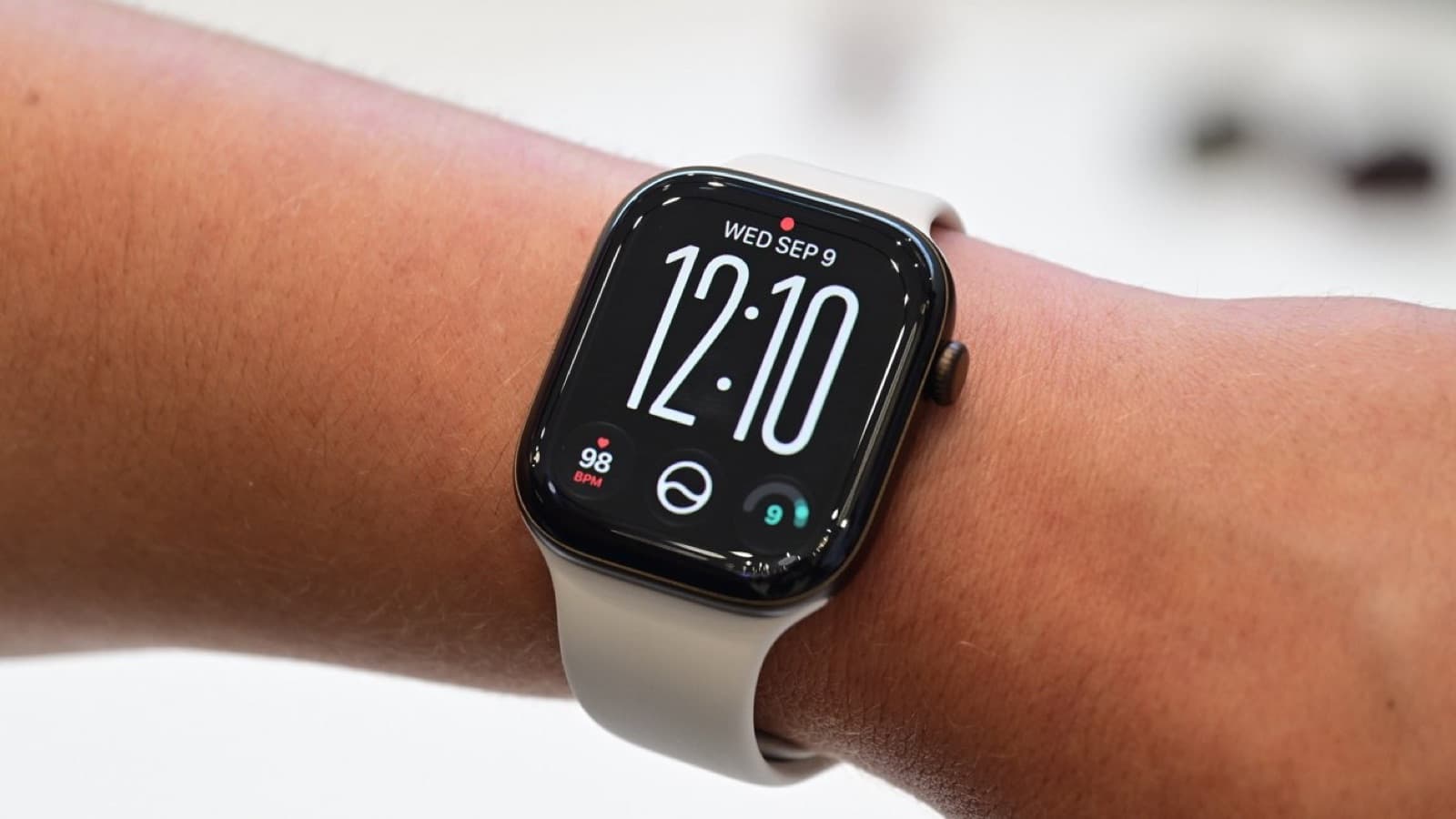
The Apple Watch Series 12 comes in 42mm and 46mm sizes and three case materials. Aluminium arrives in dark bronze, black, light gold and space gray; titanium in radiant gold and natural titanium; and ceramic, new to this generation, in pearl white and night blue. Aluminium models are now covered by Ceramic Shield 2, which Apple says is around 60 percent tougher than the Ion-X glass it replaces. Pre-orders opened on announcement day, September 9, 2026, with availability from September 18 across the US and more than fifty other markets. Apple announced the Apple Watch Ultra 4 at the same event. Expect mainstream smartwatch money for aluminium, a step up for titanium and a further step for ceramic.
Key specs, verified
- Sizes: 42mm and 46mm
- Materials: aluminium with Ceramic Shield 2, polished titanium, and ceramic in pearl white or night blue
- Chip: Apple S11, with an energy-efficient always-on processor
- Health Sensing System: larger ECG electrode surface, photodiodes arranged in a ring, larger and more power-efficient green LEDs
- Heart rate: sampled every five seconds throughout the day
- HRV: up to 24 times more frequent than the previous generation, split into recovery HRV and overall HRV
- Readiness: a daily score from 0 to 10 with four guidance states, from Recover through to Go For It
- Audio Intelligence: Sound Recognition, Live Rewind, Siri Recap and Shazam integration
- Battery: up to 24 hours everyday use, up to 10 hours of outdoor workout, and up to 12 hours added from a 15-minute charge
- Software: watchOS 27 with Siri AI, a dynamic app grid and a unified Find My app
What changed versus the Series 11
The sensor stack, the silicon and the case options. Apple redesigned the optical and electrical hardware rather than tuning it: a bigger electrode surface for ECG contact, photodiodes reorganised into a ring to catch more returning light, and brighter, more efficient green LEDs. The S11 chip is what lets that array run continuously, and coverage of the launch describes the jump in sampling frequency over the Series 11 as roughly sixty-fold. On top of that sits Readiness, a daily 0-to-10 score built from activity, sleep and the new high-frequency HRV data. Audio Intelligence is the other addition, and ceramic cases return alongside the existing aluminium and titanium. The hypertension notifications introduced on Series 11 carry forward.
What the Apple Watch Series 12 nails
It closes the most credible gap between the Apple Watch Series 12 and dedicated training wearables. Continuous five-second heart-rate sampling and far more frequent HRV readings are exactly the inputs that Whoop, Oura and Garmin have used to build their recovery models, and Apple now has them natively on the wrist with an always-on processor doing the work. Readiness turns that into one number and four plain-English recommendations, which is the right level of abstraction for most people. Audio Intelligence is the sleeper feature: Sound Recognition flags alarms, sirens and a crying baby, and Live Rewind surfaces a transcript of the previous fifteen seconds of conversation, which is a real accessibility win rather than a demo.
Where it trips up
Battery life is still rated at 24 hours, unchanged, which means a watch doing dramatically more sensing is not doing it for longer. Anyone tracking sleep is still charging daily. Apple says the Audio Intelligence features arrive later in the year rather than on day one, so the Apple Watch Series 12 ships with part of its pitch pending. The industrial design is a carryover from the Series 10 era, so nobody will notice you upgraded. Ceramic is beautiful and heavier and dearer. And with the watch only reaching buyers on September 18, independent testing of the new sensor accuracy claims had not been published at the time of writing, so those remain Apple's own figures.
Buy it if, skip it if
Buy the Apple Watch Series 12 if you already use an iPhone and want the closest thing to a training-recovery wearable that also does messages, payments and Siri. Buy it if you are on a Series 9 or older, where the sensor and chip gap is now enormous. Buy the Apple Watch Ultra 4 instead if you need multi-day battery, dive certification and the biggest screen. Skip it if you own a Series 11 and mainly want notifications and step counts, because that watch already has hypertension alerts and 5G. Skip it too if daily charging is the dealbreaker; the Series 12 does not fix that, and a Garmin or a Galaxy Watch Ultra 2 will run longer between charges.
Pros
- Genuinely new Health Sensing System with a larger ECG electrode, ring-arranged photodiodes and brighter green LEDs
- Continuous heart-rate sampling every five seconds, with HRV read up to 24 times more often than before
- Readiness gives one clear daily score and four plain-language recommendations
- Audio Intelligence adds Sound Recognition, Live Rewind and Siri Recap on the always-on processor
- Ceramic Shield 2 on aluminium models is rated around 60 percent tougher than the previous glass
- Ceramic cases return in pearl white and night blue, alongside aluminium and polished titanium
Cons
- Battery rating stays at 24 hours despite far heavier sensing duty
- Audio Intelligence features are due later in the year rather than at launch
- Exterior design is unchanged from recent generations
- Sensor accuracy claims had no independent verification at launch
- Ceramic models add weight and cost for a purely cosmetic upgrade
Comparison
Apple Watch Ultra 4
Announced at the same event, with the rugged titanium case, far longer battery life, dive certification and satellite messaging. The pick for endurance athletes, divers and anyone who resents nightly charging.
Samsung Galaxy Watch 9
Snapdragon Wear Elite silicon, Wear OS 7 and five years of updates, plus antioxidant and glycation indices. The Android answer, and it does not pair with an iPhone.
Pixel Watch 5
Gemini on the wrist, cloud-assisted GPS post-processing and a 3,000-nit domed display. Strong on software polish and Google Health integration, but Android only.
Apple Watch SE 3
The value option in Apple's line, with an always-on display and the core health and safety features. Choose it if Readiness, ECG-grade sensing and ceramic finishes are not what you are here for.
FAQ
Apple announced it on September 9, 2026 with pre-orders opening the same day. General availability began on September 18, 2026 in the US, Canada, the UK and more than fifty other countries and regions.
The Apple Watch Series 12 is the first genuinely new sensor platform Apple has shipped in years, and it lands the data that recovery-focused wearables have used to out-argue the Apple Watch for a decade. Readiness makes it legible, Audio Intelligence is quietly excellent, and the trade-off is a battery rating that stubbornly stays at a day. Series 9 owners and earlier should upgrade; Series 11 owners can wait.