Apple Watch Series 12 vs Galaxy Watch 9: Health Showdown
Both companies decided 2026 was the year to stop tuning and start rebuilding. Apple redesigned the physical heart-rate array inside the Apple Watch Series 12 and now samples every five seconds all day. Samsung swapped its home-grown chip for Qualcomm silicon in the Samsung Galaxy Watch 9 and added two health indices nobody else offers. They also, crucially, do not talk to each other's phones. Here is the honest split between the two most interesting smartwatches of the year.
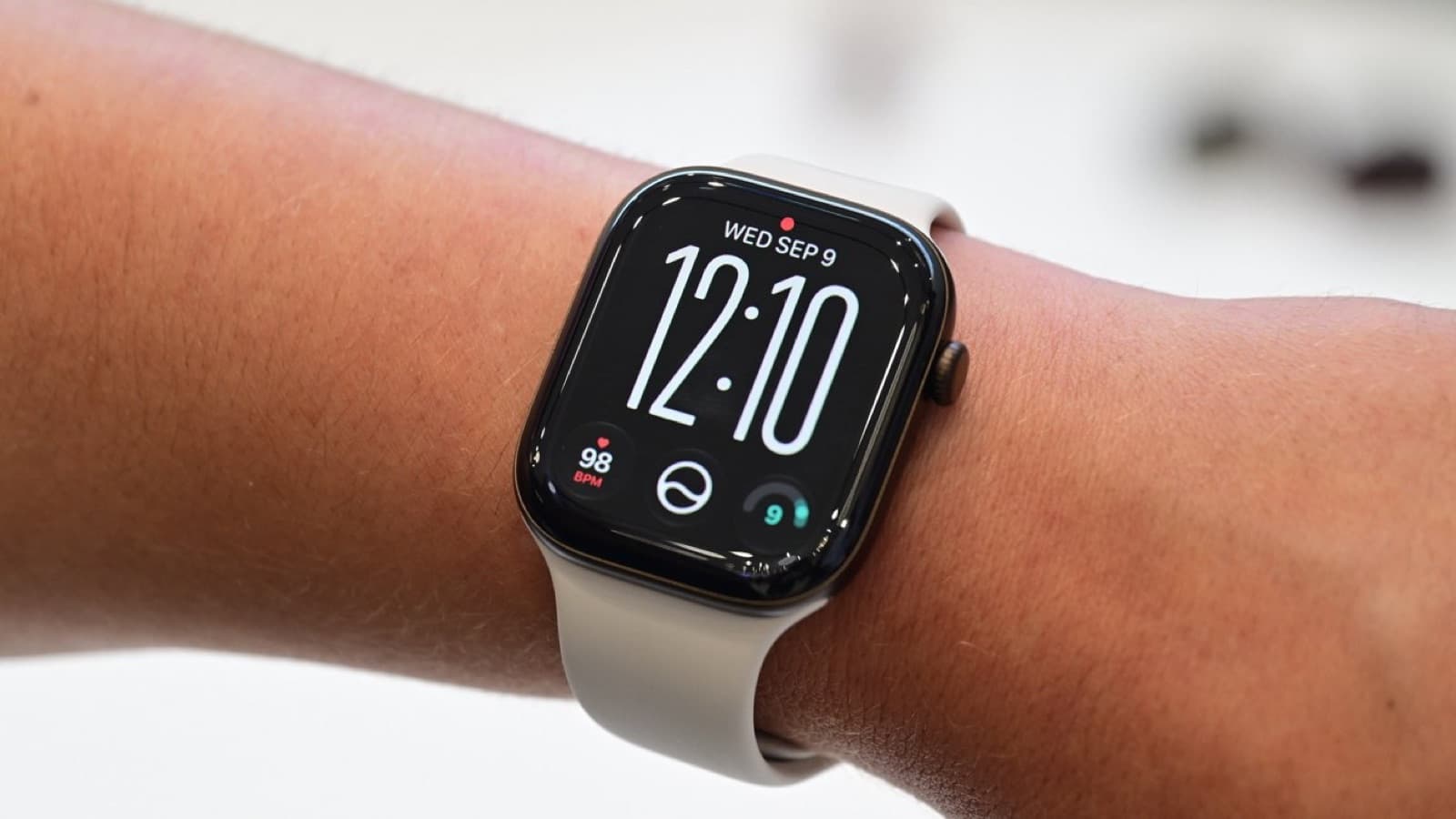
Timing, sizes and the phone in your pocket
Samsung went first, unveiling the Galaxy Watch 9 and Galaxy Watch Ultra 2 at Unpacked in London on July 22, 2026 and shipping on August 7. Apple announced the Series 12 on September 9 for availability on September 18. The Apple Watch Series 12 comes in 42mm and 46mm; the Samsung Galaxy Watch 9 in 40mm and 44mm, with no Classic variant this year, which breaks with the previous generation. The decision may already be made for you: the Apple Watch requires an iPhone, and the Galaxy Watch 9 requires an Android phone. Nothing in this comparison outweighs that constraint, so read the rest as a tie-breaker for people choosing a whole platform.
Materials and build
Samsung keeps the cushion-shaped, lug-less case it introduced on the Ultra line, in aluminium under sapphire crystal, at 8.6mm thick. The 40mm measures 42.7 x 40.4mm in Graphite and Cream; the 44mm is 46.0 x 43.7mm in Graphite and Silver. Apple offers more range: aluminium under Ceramic Shield 2, which it rates around 60 percent tougher than the Ion-X glass it replaces, polished titanium in radiant gold or natural titanium, and ceramic in pearl white or night blue, returning to the line this year. Samsung's sapphire is the harder cover glass; Apple's material choice is broader and its ceramic finishes are the more striking objects.
Health sensing, compared honestly
Apple rebuilt the hardware: a larger ECG electrode surface, photodiodes arranged in a ring to capture more returning light, and brighter, more efficient green LEDs, driven by the S11 chip's always-on processor. The result is heart rate every five seconds around the clock and HRV read up to 24 times more often than before, feeding a 0-to-10 Readiness score. Samsung's BioActive sensor combines optical heart rate, ECG and bioelectrical impedance, and the Galaxy Watch 9 layers on measurements nobody else ships: an index derived from advanced glycation end-products, an antioxidant index and a blood pressure trend feature, plus dedicated trail-running tools. Apple has the better raw sampling; Samsung has the more unusual metrics.
Silicon, software and how long support lasts
The Galaxy Watch 9 is the first Galaxy Watch to use Qualcomm's Snapdragon Wear Elite platform in place of the Exynos W1000, and the first to ship Wear OS 7 with One UI 9 Watch. Samsung also made a promise Apple has never matched: five years of OS and security updates, which on the launch window runs to 2031. The Apple Watch Series 12 runs watchOS 27 with Siri AI, a dynamic app grid, a single-handed tap gesture in the Smart Stack and a unified Find My app. Apple's advantage is Audio Intelligence, which brings Sound Recognition, Live Rewind and Siri Recap to the wrist, though the company says those arrive later in the year.
Battery and the charging habit you will form
Neither is a Garmin. Apple rates the Series 12 at up to 24 hours of everyday use and up to 10 hours of outdoor workout, with a 15-minute charge adding as much as 12 hours, which is how most people make sleep tracking work. Samsung's 40mm Galaxy Watch 9 carries a 390mAh cell, larger than pre-release reports suggested, and Wear OS devices in this class generally run a little beyond a day with the display always on. If battery life is the deciding factor, neither of these is your answer: the Galaxy Watch Ultra 2, which is 12 percent thinner with a 35 percent larger battery, or the Apple Watch Ultra 4, are the versions to shop.
The extras that might actually decide it
Samsung's Ultra 2 sibling carries EN13319 dive certification, logs depth, elapsed time and water temperature, and connects directly to third-party cycling power meters and cadence sensors, with a dedicated diving app developed with Mares due later in 2026. That is a specific, serious athlete pitch. Apple's counter is ecosystem depth: unlocking a Mac, Apple Pay, Fitness+, the AirPods handoff, and a truly enormous third-party app catalogue. Samsung offers new perforated silicone, mixed-material and textile strap ranges; Apple's band ecosystem remains the largest in the industry by a distance. For most buyers the extras are a wash and the phone decides.
Who should pick which
Pick the Apple Watch Series 12 if you carry an iPhone and want the most rigorously rebuilt sensor array on a mainstream watch, plus Readiness as a single daily number and Audio Intelligence as a genuine accessibility feature. Pick the Samsung Galaxy Watch 9 if you carry an Android phone, want sapphire crystal at this size, value the unusual metabolic and vascular metrics, and like knowing the watch is supported to 2031. Pick the Galaxy Watch Ultra 2 or the Apple Watch Ultra 4 instead if you dive, trail run or simply resent charging every night, because both step up meaningfully on endurance and ruggedness.
Pros
Cons
Comparison
Apple Watch Series 12
A rebuilt Health Sensing System reading heart rate every five seconds, the S11 chip, a 0-to-10 Readiness score, Audio Intelligence and ceramic cases. Requires an iPhone and charges daily.
Samsung Galaxy Watch 9
Snapdragon Wear Elite silicon, Wear OS 7 with One UI 9 Watch, sapphire crystal over aluminium, glycation and antioxidant indices, and five years of updates. Android only, no Classic variant this year.
FAQ
No. The Samsung Galaxy Watch 9 runs Wear OS 7 and pairs with Android phones only. Likewise the Apple Watch Series 12 requires an iPhone, so your existing handset effectively makes this decision before any spec comparison does.
The Apple Watch Series 12 is the better piece of sensor engineering and the better daily companion if you own an iPhone. The Samsung Galaxy Watch 9 is the more adventurous health device, with metabolic and vascular metrics nobody else ships and the longest written support commitment in the category. Your phone picks the winner. The good news is that in 2026 both answers are genuinely strong.