The Best Everyday Sneakers Right Now: Eight You Can Trust
An everyday sneaker has a harder job than a running shoe. It has to look right with whatever you actually wear, survive rain and subway grime, and stay comfortable through an unplanned eight thousand steps. Most of them fail at least one of those. This list sticks to eight pairs currently sold in the US where independent lab measurement backs up the hype, covering the flat and fashionable, the deliberately comfortable, and the chunky. Numbers where numbers exist, honest drawbacks throughout, and a clear note on what is cooling off.
How we would choose
Work backwards from how you use them. If you walk a lot, cushioning and stack height matter more than silhouette, and anything under about 20 mm at the heel will punish you by mid-afternoon. If you mostly commute and sit, a flat leather shoe is fine and will look better. Then check materials honestly. Genuine leather and suede age well and cost more to replace less often; coated synthetics crack. Breathability and wet grip are the two specs nobody looks at and everybody suffers from. And be realistic about width, because most of the fashionable silhouettes right now are cut narrow on purpose.
The default: Nike Zoom Vomero 5
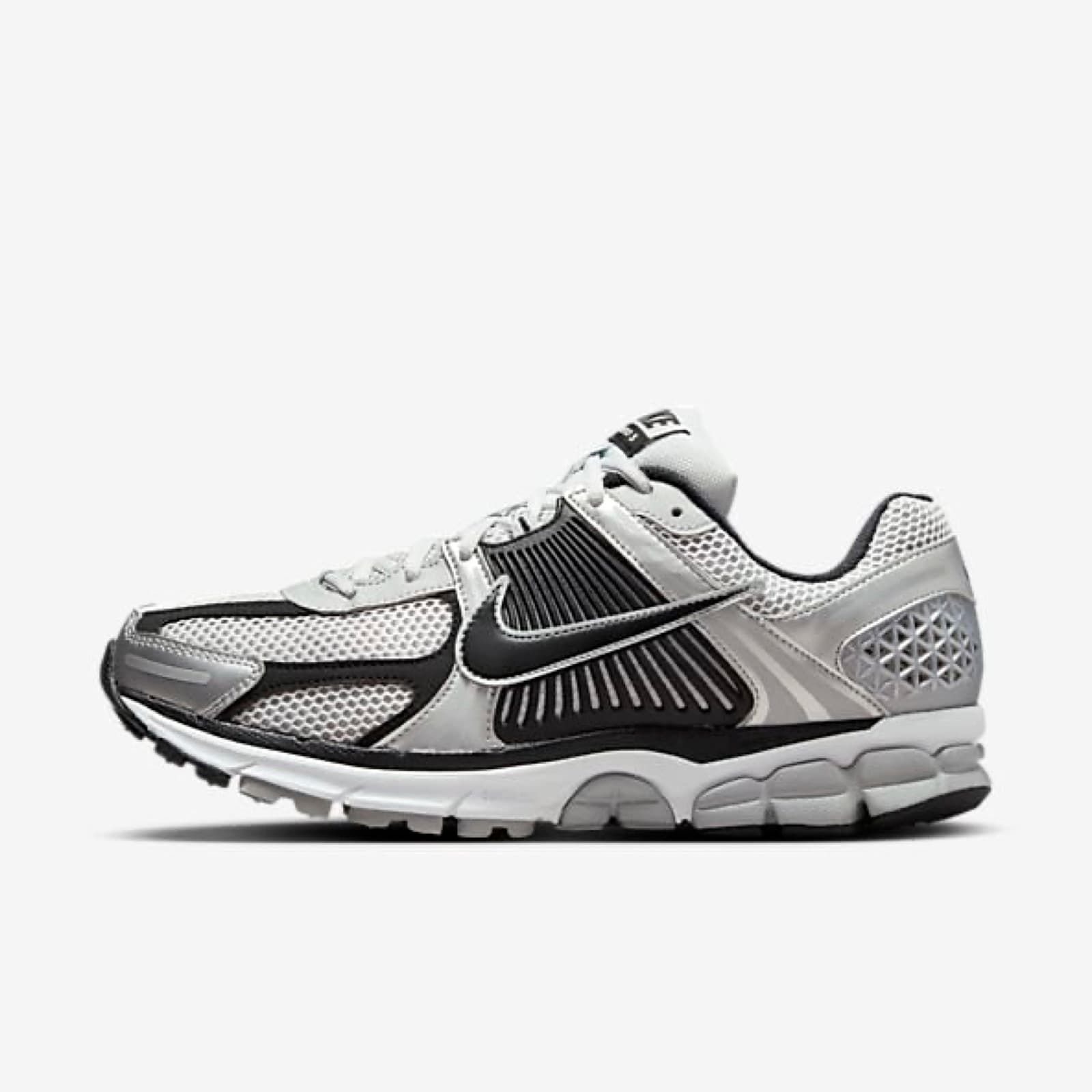
The Nike Zoom Vomero 5 has become the most useful sneaker in the category because it cheats: it is a running shoe wearing a 2000s costume. At 11.2 oz it is around a fifth lighter than the average sneaker, the thin mesh upper delivers full-length airflow and earned a perfect score in smoke-based breathability testing, and the midsole hides two Zoom Air units that push impact protection well above the norm. Bend testing puts it more flexible than average too, so it moves with the foot rather than against it. The trade-off is durability: the toebox mesh scored the lowest possible rating under abrasion testing, and the outsole can slip on wet surfaces.
The classics that still work: adidas Samba and ASICS Gel-1130
The adidas Samba is not going anywhere. Lab teardown confirms real leather and suede in the upper, a gum outsole with two-directional lugs from its indoor soccer roots, and a durability rating near the top of its class, all at 12.1 oz on a 19.3 mm heel and 11.9 mm forefoot. That stack is the problem: there is effectively no midsole, so it is a going-out shoe rather than a standing-around shoe, and breathability is poor. The ASICS Gel-1130 is the retro alternative, with a midsole measured meaningfully softer than average and the untouched 2000s runner silhouette that made it a cult item. Its leather versions breathe badly, so choose mesh.
The trend pick: adidas Taekwondo
If you want the shoe that defines 2026 rather than the one that defined 2024, it is the adidas Taekwondo. It is a genuine leather low-top on a flat gum outsole, with a lace cover that turns it into a slip-on, measured at 23.4 mm in the heel and 15.7 mm in the forefoot and weighing 10.6 oz. Two findings make it more than a fashion object: its wet traction coefficient came in around double the category average, which is a large margin, and it absorbs measurably more impact than the adidas Samba despite looking flatter. The catch is fit. Forefoot width and especially toebox height measure well below average, so high insteps need not apply.
Comfort first: Nike V2K Run and New Balance 990v6
For people whose priority is not aching by 4pm, two shoes stand out. The Nike V2K Run uses CushIon foam that posted shock absorption more than forty percent above the category average, plus strong energy return, a wide 98.2 mm heel platform for stability and a perfect breathability result, all at 11.1 oz. Its toebox tapers aggressively, so wide feet should look elsewhere. The New Balance 990v6 is the grown-up option, pairing a FuelCell midsole with an ENCAP rim that wraps the heel, on a broad 113.8 mm forefoot platform, with genuine suede confirmed by torch testing and top-rated ventilation. It is stiffer than average, which is the price of that support.
Chunky and budget: New Balance 9060 and New Balance 530
The New Balance 9060 is the chunky pick that still looks considered rather than cartoonish, with one of the thickest cushioning systems measured in its class and a midsole that resisted twisting despite being remarkably soft. It is the shoe to buy if you want visual volume without the wobble that usually comes with it. At the other end, the New Balance 530 is the value answer: minimal build, strong measured shock absorption, high ventilation and a flexible midsole, priced well below the category average. Its weakness is the upper, which took visible damage in abrasion testing, so it is not the pair to buy if you are hard on toes.
What to skip, and what is cooling off
Skip anything with a fake leather upper at a real leather price, because coated synthetics crack rather than crease and no amount of care fixes it. Skip extremely overloaded chunky sneakers, which trend reporting now describes as steadily losing attention after several dominant years, and skip characterless white basics with no detailing, which are receding for the same reason. Be wary of any low-profile silhouette if you have a high instep, because the current generation is cut tight vertically rather than just horizontally. And if you already own a Samba, the honest advice is to buy something structurally different rather than a fourth flat leather low-top.
Comparison
Nike Zoom Vomero 5
The most versatile pick. About 11.2 oz, a mesh upper with top-rated breathability and two hidden Zoom Air units for running-shoe comfort. Toebox mesh tears easily and grip suffers in the wet.
adidas Samba
The proven classic. Real leather and suede, a gum outsole with two-directional lugs, 12.1 oz and a very low 19.3 mm heel. Durable and flexible, but flat underfoot and poorly ventilated.
adidas Taekwondo
The shoe of the season. Genuine leather, a slip-on lace cover, 23.4 mm heel, 10.6 oz and outstanding wet grip. Narrow forefoot and an unusually low toebox rule out many feet.
ASICS Gel-1130
The retro runner done right, with a midsole measured softer than average and an unaltered 2000s silhouette. Leather versions breathe poorly, so stick with the mesh colourways.
Nike V2K Run
The comfort champion. CushIon foam with impact protection far above average, strong energy return, a wide stabilising heel and perfect breathability, undone by an aggressively tapered toebox.
New Balance 9060
The chunky pick with restraint. One of the thickest cushioning systems in the class, with a soft midsole that still resisted twisting, giving volume without the usual instability.
New Balance 990v6
The all-day support option. FuelCell cushioning inside an ENCAP rim on a broad platform, with genuine suede and top-rated ventilation. Stiffer than most, which is the cost of the stability.
New Balance 530
The value pick. A minimal build with strong measured shock absorption, high ventilation and a flexible midsole, priced below the category average. The upper is the weak point.
FAQ
The Nike V2K Run or the New Balance 990v6. Both measure well above average for impact protection and both sit on wide, stable platforms. Flat silhouettes such as the adidas Samba have almost no midsole and are not built for long days.
If you want one pair that does everything, the Nike Zoom Vomero 5 is the smart default. If you want the silhouette of the moment and have the feet for it, the adidas Taekwondo is the buy. And if comfort is the whole point, the Nike V2K Run and New Balance 990v6 measure better than anything else here. Everything else on this list is a matter of taste, not quality.