The Best Running Shoes Right Now: Eight Picks That Earn It
The running shoe market has never been more crowded or more confusing, largely because every brand now sells four versions of the same idea with a different suffix. So here is a shortlist rather than a catalogue: eight shoes currently on sale in the US that reviewers and lab data actually agree on, each with a specific job. There is one all-rounder, two long-run specialists, two beginner-friendly workhorses, one stability pick, one racer and one for dirt. Verified numbers throughout, no scores, and an honest note on what to skip.
How we would choose
Start with use, not brand. Decide whether you need one shoe or two, because a single pair doing easy days, long runs and speed sessions is a compromise in all three. Then check three numbers: stack height, which tells you how isolated from the ground you will be; drop, which tells you where the shoe wants you to land; and weight, which tells you how it will feel at pace. After that, fit decides everything. Width options matter more than foam names, and brands differ enormously here: New Balance and Brooks routinely offer four widths, while much of the market offers one. Finally, be honest about climate, because several current midsoles behave differently in the cold.
The all-rounder: adidas Adizero Evo SL
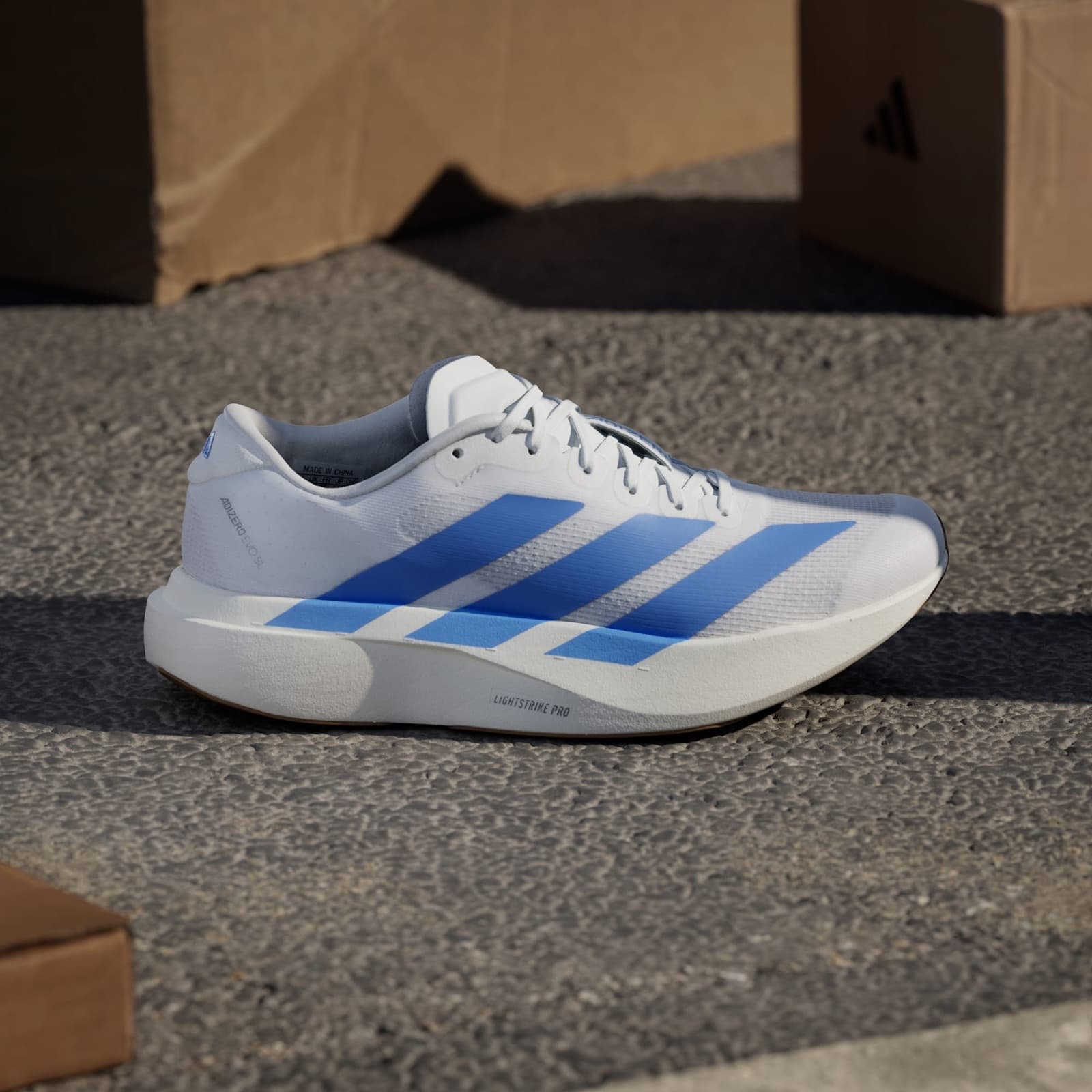
If you buy one shoe this year, buy this one. The adidas Adizero Evo SL runs 7.9 oz in a men's sample and 6.6 oz in a women's, on a 39 mm stack with a 7 mm drop, and it uses Lightstrike Pro, the same superfoam adidas puts in its marathon racer. There is no carbon plate, just a nylon shank through the midfoot for stability, which is precisely why it works across easy days, long runs and track sessions without punishing you. Runner's World has kept it in the top spot for a full year. The known niggles are real but minor: the tongue wanders mid-run, and the midfoot is wide while the toebox is not.
Long runs: HOKA Clifton Pro and New Balance 1080v15
For the runs that hurt at the end, height helps. The HOKA Clifton Pro puts roughly 42 mm of supercritical foam under the heel and 34 mm under the forefoot for an 8 mm drop, at about 9.7 oz, with a steep Meta-Rocker that keeps the stride rolling. Its drawback is a pointed toe area and weak wet-weather traction. The New Balance 1080v15 covers the same brief differently: 9.1 oz in a men's sample, a 6 mm drop, and a new Infinion supercritical foam replacing Fresh Foam X that testers describe as firmer, poppier and longer-lasting. It comes in four widths and a premium knit upper, which makes it the easier shoe to fit.
The workhorses: Brooks Ghost 18 and Brooks Glycerin 23
Brooks is where most American running stores send beginners, and the Brooks Ghost 18 is why. It runs 10.2 oz in a men's sample on a 36 mm stack with a 10 mm drop, using nitrogen-infused DNA Loft v3 that molds underfoot, and it is sold in multiple widths. The revamped jacquard mesh upper divides opinion: it looks sharp, but it runs hot and creates pressure in bunion-prone areas until it breaks in. The Brooks Glycerin 23 is the plusher sibling at 10.6 oz men's and 8.7 oz women's, 38 mm stack and an 8 mm drop, with a DNA Tuned midsole using smaller cells up front and larger ones at the heel. Its wider midfoot and toebox make it the friendlier fit.
If you need support: Nike Structure Plus
Stability shoes have historically been the dull end of the rack. The Nike Structure Plus is the first time Nike has put ZoomX superfoam over a ReactX carrier in a supportive trainer, and it sits on a maximal 42 mm heel with a 10 mm drop, weighing about 10.4 oz in a men's size nine. The guidance comes from tall midsole sidewalls and sole flaring rather than a medial post, which reviewers describe as smooth and non-intrusive. The consistent criticism is the heel: a sharp, centred bevel on a very tall shoe creates a clunky transition that reviewers found better for walking than running. Heel strikers should try before buying; midfoot landers get on with it much better.
Race day and trail: adidas Adizero Adios Pro 4 and HOKA Speedgoat 7
For a road marathon, the adidas Adizero Adios Pro 4 is the serious option: 7.1 oz in a men's sample, 39 mm stack, 6 mm drop, full Lightstrike Pro and the energy rods adidas uses instead of a flat plate. It is not a training shoe and should not be treated as one. For dirt, the HOKA Speedgoat 7 remains the default American trail shoe at 9.7 oz men's and 8.3 oz women's, with a 33 mm stack and a low 4 mm drop that keeps you connected on uneven ground. Neither is a beginner purchase. Both are what you buy once you know exactly what the shoe is for.
What to skip, and what to wait for
Skip buying a max-stack shoe as a first running shoe. A 42 mm platform asks more of your ankles than a 36 mm one, and the Brooks Ghost 18 or New Balance 1080v15 will serve a new runner better than the tallest thing in the store. Skip carbon-plated racers for daily training, because they wear out fast and mask form problems. And be cautious with any shoe whose foam firms up significantly in the cold if you train through a northern winter, which lab freezer testing has flagged on several current models. If your budget is tight, last year's version of any of these is usually the same shoe with different mesh.
Comparison
adidas Adizero Evo SL
The best single-shoe answer on the market. Lightstrike Pro superfoam, 39 mm stack, 7 mm drop and 7.9 oz, with no carbon plate, so it handles easy days, long runs and speedwork equally well.
HOKA Clifton Pro
For runners whose week is built around a long run. Roughly 42 mm of supercritical foam, an 8 mm drop and a steep rocker, at about 9.7 oz. Narrow at the toe and weak on wet surfaces.
New Balance 1080v15
The plush trainer that fits everyone. New Infinion supercritical foam replaces Fresh Foam X, at 9.1 oz with a 6 mm drop, a premium knit upper and four widths including extra-wide.
Brooks Ghost 18
The safest first running shoe in America. Nitrogen-infused DNA Loft v3, 36 mm stack, 10 mm drop, 10.2 oz and multiple widths. Runs hot and needs a short break-in period.
Brooks Glycerin 23
The roomier, plusher Brooks. A DNA Tuned midsole with graduated cell sizes, 38 mm stack, 8 mm drop and 10.6 oz men's, with an accommodating midfoot and toebox that suits broader feet.
Nike Structure Plus
Stability with actual superfoam. ZoomX over ReactX on a 42 mm platform with a 10 mm drop, guided by tall sidewalls rather than a post. Heel transition is clunky for hard heel strikers.
adidas Adizero Adios Pro 4
The road racer. 7.1 oz in a men's sample, 39 mm stack, 6 mm drop, full Lightstrike Pro and energy rods rather than a flat plate. Buy it for race day, not for training miles.
HOKA Speedgoat 7
The default American trail shoe. 9.7 oz men's, 33 mm stack and a low 4 mm drop for ground feel on technical terrain, with the grip and protection that made the line a standard.
FAQ
The Brooks Ghost 18 or the New Balance 1080v15. Both offer moderate to high cushioning without an extreme stack height, both come in multiple widths, and both are forgiving of an inconsistent stride in a way racers and max-stack shoes are not.
If you want one shoe, the adidas Adizero Evo SL is still the answer. If you want the most comfortable long-run option that fits almost any foot, the New Balance 1080v15 is it. And if you are just starting, the Brooks Ghost 18 remains the least risky purchase in the store. The rest of this list is specialisation, and specialisation only pays once you know what you are training for.