Nike Pegasus 42 Review: The Need-to-Know on Nike's Workhorse
Nike's biggest running franchise hits number 42, and for once the interesting part is not the number on the box. The Nike Pegasus 42 went on sale in the US on April 9, 2026, and it is the first Pegasus in a while to change something structural rather than cosmetic: a curved, full-length Air Zoom unit, borrowed from the pricier Pegasus Premium, now runs the length of the midsole. Nike says that buys meaningfully more energy return than the Pegasus 41. Reviewers broadly agree the ride is livelier and the fit friendlier. They also agree it is still a heavy shoe. Here is the need-to-know.
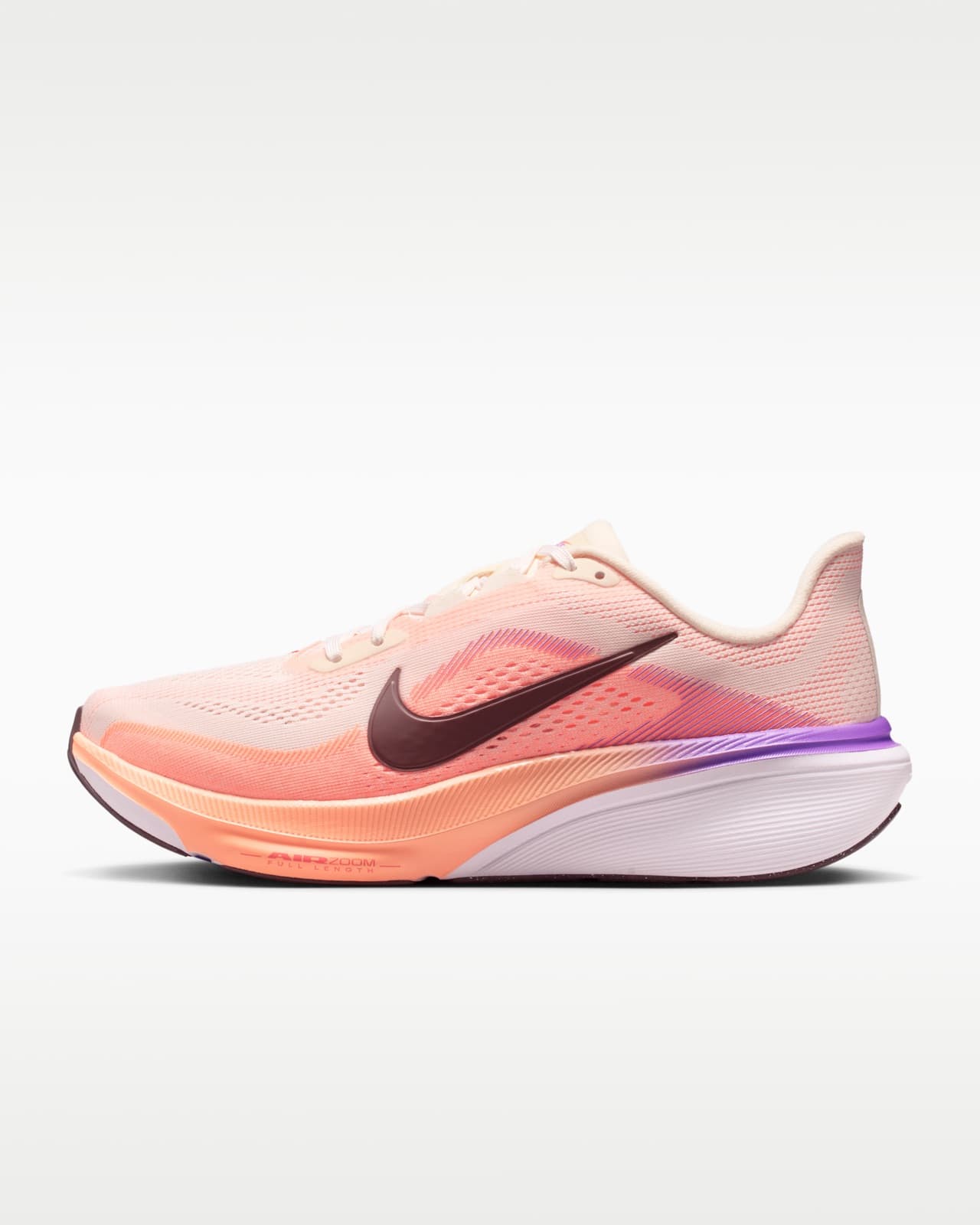
The need-to-know: a workhorse with a new engine
Nike announced the Pegasus 42 on February 24, 2026 and put it on shelves April 9 at nike.com and select US retail partners. It sits at the bottom of Nike's three-tier Pegasus ladder, beneath the ZoomX-powered Pegasus Plus and the max-stack Pegasus Premium, and it is priced in the mainstream daily-trainer tier rather than the superfoam tier. That positioning matters. The Nike Pegasus 42 is not trying to be a race shoe or a recovery cloud. It is the shoe you buy when you want one pair for easy miles, steady miles, treadmill sessions, run-commutes and a long walk around the city afterwards. Nike offers it in narrow, standard and wide in the US, which is more generous than most of its running line, and in a spread of colorways from black and grey basics to the louder volt and blue treatments Nike tends to lead with each spring.
Key specs, verified
The published numbers, plus what independent labs recorded:
- Midsole: ReactX foam carrying a curved, full-length Air Zoom unit
- Stack height (brand): roughly 37 mm heel, 27 mm forefoot
- Drop (brand): 10 mm
- Weight (brand): about 10.5 oz / 297 g in a men's sample; RunRepeat's scale recorded 10.1 oz / 286 g
- Outsole: modernized waffle rubber, rated durable in abrasion testing
- Upper: new lightweight engineered mesh, internal midfoot support system, fully molded sockliner
- Widths: narrow, standard and wide
- Fit: true to size, medium toebox, stiff heel counter
- Energy return: Nike states about 15 percent more than the Pegasus 41
- On sale: April 9, 2026, US-wide
- Intended use: daily easy and steady running, plus everyday wear
What changed from the Pegasus 41
Three things, and only one of them is marketing. First, the Air Zoom unit: the Pegasus 41 used two separate units, while the Nike Pegasus 42 runs a single curved unit the full length of the shoe, which is why the toe-off feels snappier and less segmented. Second, a modified last. Nike widened and reshaped the fit, and reviewers who found the 41 pinchy report the 42 is noticeably roomier through the forefoot without turning sloppy. Third, a spring structure under the toes that adds about 3 mm of cushioning up front without raising the stack anywhere else, paired with more toe spring. The ReactX foam carries over unchanged, which is the point of contention: it is durable and pleasant, but it is not a supercritical superfoam, and several reviews say that is the ceiling on this shoe.
What the Nike Pegasus 42 nails
Consistency, mostly. Lab work puts heel shock absorption well above average, so the landings are cushioned where most runners actually land, and the high drop suits heel strikers who find low-drop trainers harsh. The upper is the quiet upgrade reviewers keep returning to: soft, breathable enough for humid mornings, and secure without a squeeze. Traction improved over the previous version, and the waffle outsole holds up to city concrete better than the toebox mesh does. The Nike Pegasus 42 also passes the test that sells most daily trainers, which is that it looks like a normal sneaker. It does not scream running shoe, so it survives the walk to work, and with three widths it fits a wider range of feet than almost anything else Nike makes.
Where the Nike Pegasus 42 trips up
Weight, forefoot cushioning and foam ambition. At roughly 10.5 oz it is heavier than plenty of rivals with taller stacks, and reviews consistently describe it as feeling hefty at faster paces, where the moderate stack and the dense ReactX carrier do not give much back. Forefoot shock absorption tested well below the heel figure, so forefoot strikers get the least out of it. The toebox mesh scored poorly in abrasion testing, which is worth knowing if you are rough on uppers or have a toe that likes to wander. And the broader criticism is fair: at this price tier several competitors ship supercritical foam, while the Nike Pegasus 42 does not. If bounce is what you are shopping for, this is the wrong Pegasus.
Buy it if, skip it if
Buy the Nike Pegasus 42 if you are a heel striker who wants one dependable trainer for two or three runs a week, if you need a width other than standard, or if you liked the Pegasus 41 but wanted more room and a smoother toe-off. It is also a strong pick for new runners, because a moderate stack is easier to balance on than a 40 mm slab. Skip it if you count grams, if you want a shoe that makes tempo days feel fast, or if you already own a supercritical-foam trainer and would find this flat by comparison. Runners who need arch support or have significant overpronation should also look at Nike's Structure line instead, which is built for exactly that.
Worth considering instead
Inside Nike's own range, the Pegasus Plus is the answer for anyone who wants speed: full ZoomX, no plate, lighter, and far bouncier, but less durable and less cushioned for slow recovery days. The Nike Vomero 18 is the softer, taller option for runners who want protection over ground feel, using a ZoomX and ReactX dual-density midsole. Outside Nike, the adidas Adizero Evo SL is the shoe most reviewers reach for when someone asks for a light, springy do-everything trainer, and the HOKA Clifton Pro is the pick if maximum cushioning and a strong rocker matter more than a snappy toe-off. All four cost more than the Nike Pegasus 42, which is part of why the Pegasus still sells.
Pros
- Full-length curved Air Zoom unit makes toe-off smoother and livelier than the Pegasus 41
- Roomier, softer upper with a genuinely secure midfoot
- Available in narrow, standard and wide, which is rare in Nike running
- Strong heel cushioning and a high drop that suits heel strikers
- Durable waffle outsole with improved wet and dry traction
- Looks normal enough to wear all day, not just on runs
Cons
- Heavy for its stack height, and it shows when you pick up the pace
- Forefoot shock absorption lags well behind the heel
- ReactX is durable but not a supercritical foam, so energy return is only moderate
- Toebox mesh performed poorly in abrasion testing
- Nothing here for runners who need stability or guidance
Comparison
Nike Pegasus Plus
Pick this if the Pegasus 42 feels dull. Full-length ZoomX, no plate, lighter and springier for tempo work, though less protective on slow recovery days.
Nike Vomero 18
The plush alternative in the same family, with a ZoomX over ReactX dual-density midsole and a taller, softer platform for runners who want protection over ground feel.
adidas Adizero Evo SL
Lighter, bouncier and built on Lightstrike Pro superfoam with no carbon plate. The pick for one shoe that handles easy days, long runs and speed sessions.
HOKA Clifton Pro
Max-stack cushioning with an aggressive rocker and supercritical foam. Choose it if long easy miles are the goal and you do not mind a narrower toe area.
FAQ
Nike revealed the Pegasus 42 on February 24, 2026 and put it on sale April 9, 2026 through nike.com and select US retail partners. It has been widely stocked at running specialty shops since then.
The Nike Pegasus 42 is a better Pegasus than the 41 in the two ways that matter day to day: it fits more feet and it rolls through the stride more smoothly. It is still heavy, and it still declines to join the superfoam arms race. If you want a dependable, widely available, three-width trainer for everyday miles, buy it. If you want excitement underfoot, spend up within Nike's own lineup.