Patagonia Hi-Loft Nano Puff Hoody Review: The Winter Nano Puff
The standard Nano Puff is one of the most quietly ubiquitous garments in America: a 60-gram synthetic mid-layer that works from a Pacific Northwest drizzle to a Brooklyn commute. Its one honest limitation is that it runs out of warmth somewhere in the low forties. The Patagonia Hi-Loft Nano Puff Hoody is the answer to that. Same design language, same quilted grid, dramatically more insulation, and a heavier fabric package built to take abuse. It is the fall jacket in Patagonia's range that actually carries into winter. Here is what you are buying.
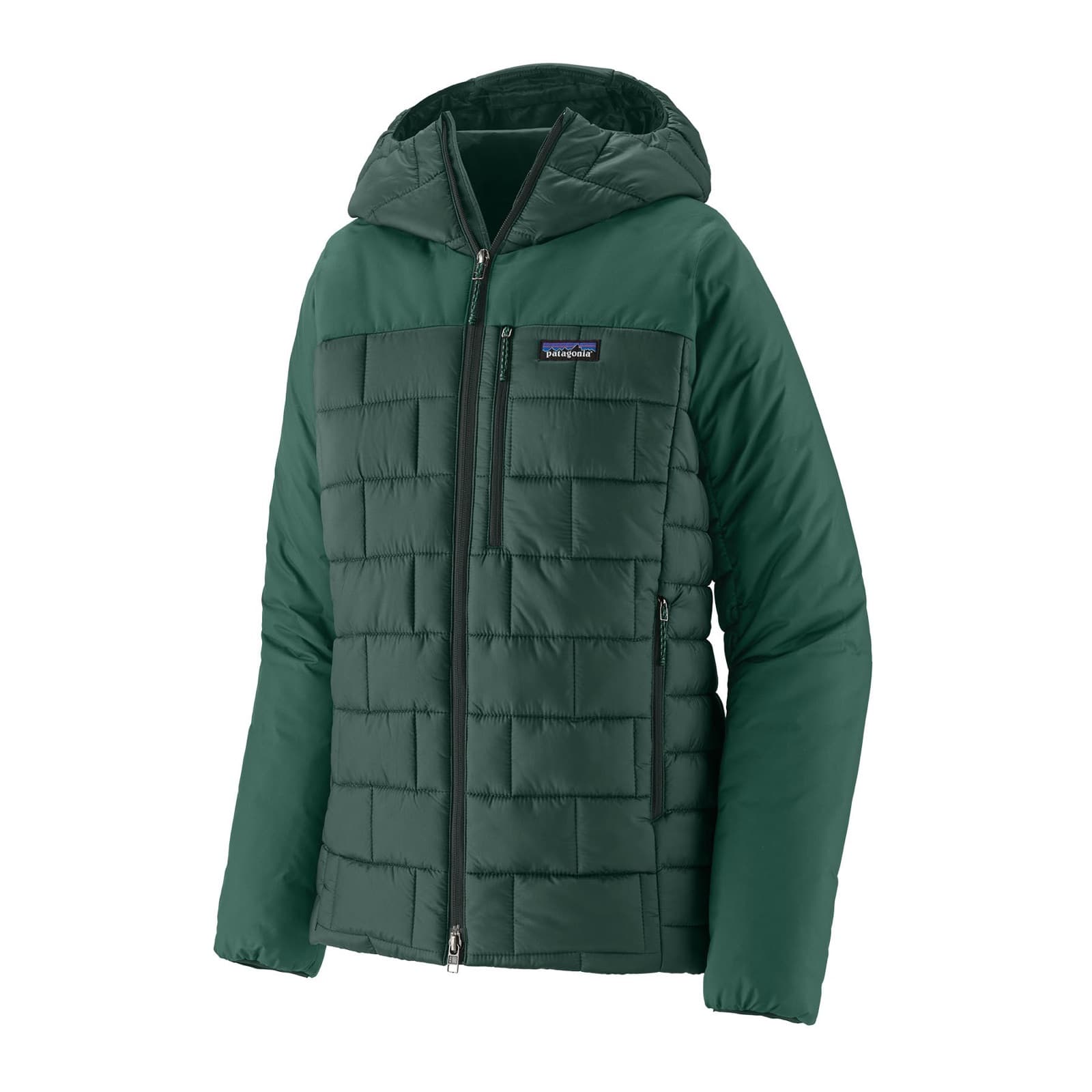
The need-to-know: the Nano Puff that keeps going in January
Patagonia sells the Nano Puff as a family. There is the jacket, the vest, the hoody, and then there is the Patagonia Hi-Loft Nano Puff Hoody, which is a different proposition entirely. Where the standard hoody is a shoulder-season layering piece, the Hi-Loft is an outer layer for genuinely cold, damp weather. It is synthetic rather than down, which matters in the wet: PrimaLoft keeps a useful amount of its warmth when soaked, whereas down collapses. Patagonia positions it for winter conditions, cold-weather fly fishing, standing around at a ski hill and everything else where you stop moving and the temperature does not stop dropping. US retailers have been listing it as a 2026 model through this season.
Key specs, verified
What Patagonia publishes for the Patagonia Hi-Loft Nano Puff Hoody:
- Insulation: PrimaLoft Silver Insulation Eco, body-mapped in 170-gram and 200-gram weights
- Insulation placement: the heavier 200-gram fill sits in the hood, front body and back body
- Shell: 100 percent recycled polyester
- Lining: 100 percent recycled polyester
- Weather protection: windproof construction with a water-resistant finish
- Durability: heavier, more abrasion-resistant face fabric than the standard Nano Puff
- Style: full-zip hoody, quilted grid construction consistent with the Nano Puff family
- Compared with: the standard Nano Puff Hoody, which uses 60-gram PrimaLoft Gold Eco in a 20-denier recycled shell
- Intended use: cold and damp conditions, winter layering, static outdoor time
Body-mapped insulation, explained
Body mapping is one of the few insulation buzzwords that means something concrete. Rather than filling an entire jacket with a single weight of synthetic fill, Patagonia puts 200 grams where you lose the most heat and stay the stillest, namely the hood, chest and back, and drops to 170 grams in the zones that move and generate heat. The practical effect is a jacket that is warmer at the core without turning the arms into sausages, which is what kills mobility in heavy synthetics. It also keeps bulk down where bulk is most annoying. Compared with the 60-gram Gold Eco fill in the standard Nano Puff, the Patagonia Hi-Loft Nano Puff Hoody is in a completely different warmth class rather than a marginally warmer one.
What changed across the whole Nano Puff line
Patagonia reworked the Nano Puff family before this season, and the changes carry through the range. The fit is slimmer, so it layers under a shell without bunching. Shoulders were lengthened and elbow room increased, which fixes the old complaint that reaching overhead pulled the hem up. The shell moved to 100 percent recycled ripstop polyester with a noticeably softer hand, and the stitching uses abrasion-resistant thread through a revised quilt pattern to keep insulation in place. The hood was rebuilt with more volume, so a beanie, a ball cap or a climbing helmet fits underneath without bunching. Reviewers of the standard hoody also flag improved shoulder mobility as one of the most useful practical gains from the redesign.
What the Hi-Loft nails
Warmth that does not quit when the weather turns wet. That is the whole argument for a heavyweight synthetic, and this is Patagonia's best expression of it short of the DAS Parka. The all-recycled shell and lining are genuine rather than token, and the brand's wider record on this category is strong: the standard Nano Puff uses recycled shell, lining and insulation, a Bluesign-approved lining, a PFC-free durable water repellent finish and Fair Trade Certified sewing, and Patagonia applies the same environmental programme across the family. Durability is the other win. The heavier face fabric is meaningfully tougher than the 20-denier shell on the standard Nano Puff, which is the most common failure point on lightweight puffies.
Where the Hi-Loft trips up
It is not a do-everything jacket. Heavyweight synthetic insulation is heavier and bulkier than equivalent down warmth, so if you are counting ounces in a pack, an 800-fill down piece will beat it comfortably. It is also too warm for most of autumn in the lower half of the country, which means for a lot of buyers it sits unused until December. The Nano Puff family in general is not breathable, and adding insulation does not help, so high-output activity in this jacket ends with you damp on the inside. And the Nano Puff hood is not adjustable, so in serious wind it cannot be cinched down the way a technical shell hood can. Pricing sits at the premium end of Patagonia's insulated range.
Buy it if, skip it if
Buy the Patagonia Hi-Loft Nano Puff Hoody if you want one warm jacket for cold, damp American winters and you would rather have synthetic reliability than down warmth-to-weight. It is the right call for anyone who stands still outdoors in the cold, and for people who have worn out a lightweight puffy and want something tougher. Skip it if your climate tops out around freezing, where the standard Nano Puff plus a fleece does the job for less. Skip it too if you are a weight-conscious backpacker, or if you need something breathable enough to keep moving in, in which case an active insulator is the better category.
Pros
- Body-mapped 170 and 200 gram PrimaLoft Silver Eco is far warmer than the standard Nano Puff
- Heavier face fabric is more abrasion-resistant than the 20-denier shell on the regular model
- Synthetic fill keeps working when wet, unlike down
- 100 percent recycled shell and lining, in line with Patagonia's wider Nano Puff programme
- Redesigned family fit adds shoulder and elbow room and a higher-volume hood
- Windproof with a water-resistant finish, so it works as an outer layer
Cons
- Heavier and bulkier than equivalent down warmth, which penalises backpackers
- Too warm for most of autumn in milder parts of the US
- Not breathable, so high-output activity leaves you damp inside
- The Nano Puff hood is not adjustable in wind
- Premium pricing within Patagonia's insulated range
Comparison
Patagonia Nano Puff Hoody
The lighter original at 60-gram PrimaLoft Gold Eco and 14.1 oz in a men's size, comfortable into the low forties. Better as a layering piece and far more packable.
Patagonia Down Sweater
800-fill down in a NetPlus shell made from recycled fishing nets, 13 oz in a men's size. Warmer for its weight, but it loses that warmth if it gets soaked.
Patagonia Micro Puff Hoody
The ultralight synthetic at 10.5 oz with PlumaFill insulation. Impressive warmth for the weight, though less weather-resistant and far less durable than the Hi-Loft.
Arc'teryx Atom Hoody
60-gram Coreloft Compact with stretch side panels, 12.5 oz in a men's size. More mobile and more breathable, but nowhere near as warm as the Hi-Loft build.
FAQ
Substantially. The standard Nano Puff carries 60-gram PrimaLoft Gold Eco throughout, while the Hi-Loft uses body-mapped 170 and 200 gram PrimaLoft Silver Eco. That is a different warmth category rather than an incremental upgrade.
The Patagonia Hi-Loft Nano Puff Hoody is the Nano Puff with the ambition turned up: body-mapped heavyweight PrimaLoft, a tougher recycled shell and enough warmth to be an outer layer rather than a mid-layer. It is bulkier than down and overkill in a mild fall. But if you want one synthetic jacket that handles a cold, wet American winter without drama, this is Patagonia's answer.