Apple's 2026 Lineup: What to Buy and What to Skip
Apple had a genuinely eventful year, which is not something you could say about 2024 or 2025. It launched its cheapest laptop ever, its first multi-die desktop silicon, its first foldable phone and its first physical camera aperture, and it raised prices across most of the range as memory costs climbed. The result is a lineup with more real choice in it than usual, and a couple of models that exist mainly to make other models look reasonable. Here is the current US range, model by model.
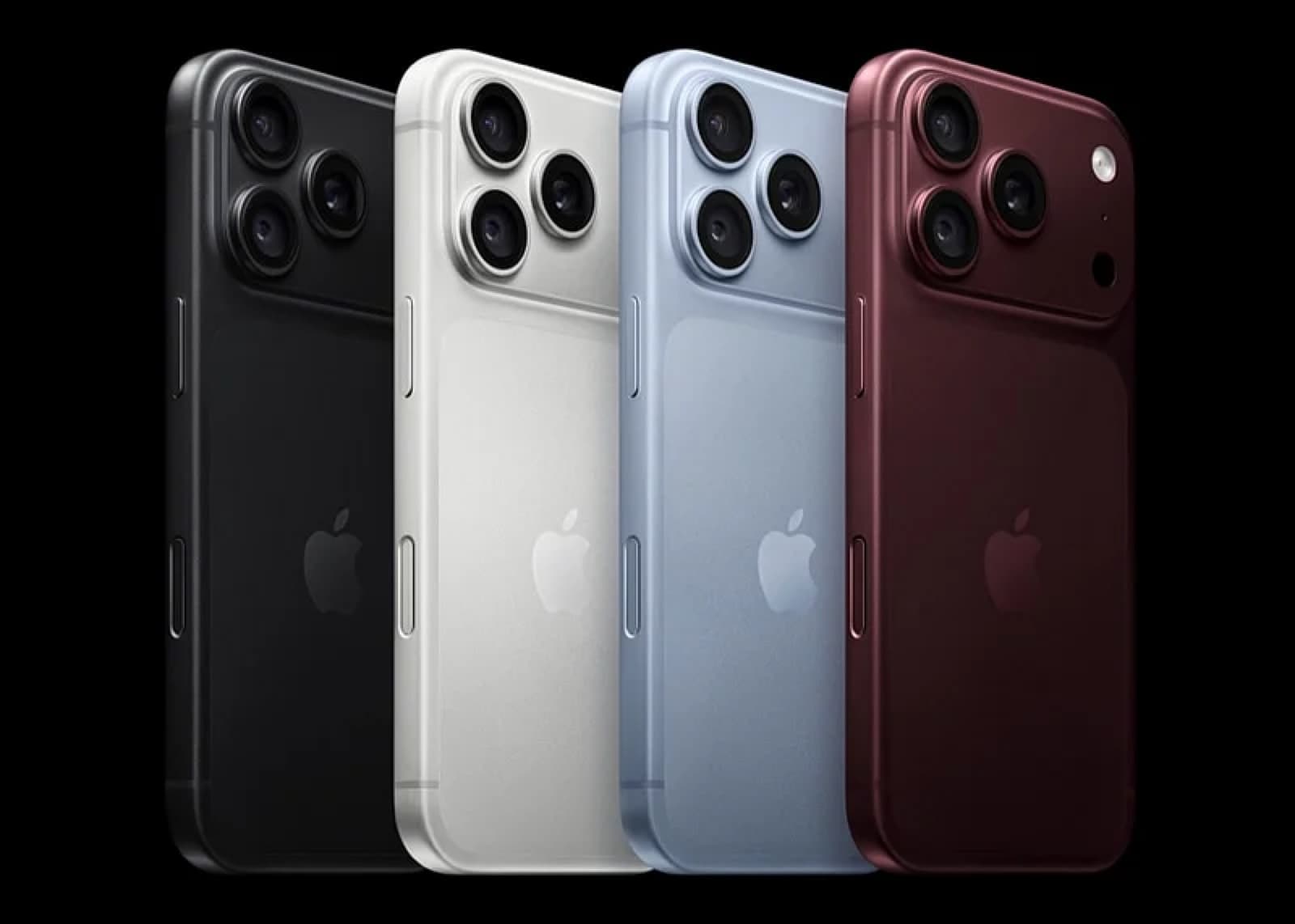
What changed at Apple this year
Three structural shifts. First, the Mac laptop line went from two tiers to three, with the new MacBook Neo sitting below the MacBook Air M5 and the MacBook Pro. Second, Apple silicon went multi-die: the M5 Pro and M5 Max use a Fusion Architecture that bonds two 3nm dies into one chip, a first for the company, and the M5 Ultra followed in August 2026 in a new Mac Studio. Third, the autumn iPhone launch changed shape entirely. Apple announced only Pro models and a foldable on September 9, 2026, with the standard iPhone 18 widely reported to be moving to a spring slot. Prices moved up across most of the range during the year.
iPhone: two Pros and a fold
The iPhone 18 Pro and iPhone 18 Pro Max went on sale September 18, 2026 at 6.3 and 6.9 inches, built on the 2nm A20 Pro with a Neural Engine doubled to 32 cores. The headline is a six-blade physical aperture on the 48MP main camera, selectable between f/1.48 and f/4.0, alongside manual shutter and white balance controls. Both have a smaller Dynamic Island that holds three Live Activities, and storage runs to 2TB. The iPhone Duo is Apple's first foldable, unveiled the same day for an October 23 release: a titanium frame, a 5.4-inch outer display and a 7.6-inch inner one, an under-screen camera, a dual-battery system rated at 24 hours, and iPad-style side-by-side multitasking in iOS 27.1. The iPhone Air continues as the thin option.
Mac laptops: three tiers, finally
The MacBook Neo, announced March 4 and on sale March 11, 2026, is the interesting one. It is the first Mac built on an A-series chip, using binned A18 Pro silicon left over from iPhone 16 Pro production, with 8GB of memory, a notchless 13-inch Liquid Retina display at 500 nits, two USB-C ports and fanless cooling. iFixit called it Apple's most repairable laptop in fourteen years. Above it, the MacBook Air M5 doubled base storage to 512GB and added the N1 chip with Wi-Fi 7, while keeping a 60Hz screen. At the top, the MacBook Pro 14-inch M5 Pro and its 16-inch sibling bring dual-die silicon, Thunderbolt 5 with a dedicated controller per port and a 120Hz mini-LED XDR display.
Desktops: Mac Studio and Mac mini
Apple refreshed the desktop line around the same silicon generation. The Mac Studio M5 Ultra arrived in August 2026 as the workstation option, alongside an M5 Max configuration; the M5 Max supports up to 128GB of unified memory with bandwidth up to 614GB/s on the 40-core GPU variant, and doubles the media pipeline with two video encode engines and two ProRes engines. The Mac mini moved to M5 Pro during 2026, which makes it a genuinely serious small desktop rather than an entry point. If you want maximum performance per dollar in a Mac, the mini remains the smart buy, and the Studio is for people whose work is bottlenecked by memory bandwidth rather than clock speed.
Apple Watch: Series 12, Ultra 4 and SE 3
This is where Apple did its most substantive engineering. The Apple Watch Series 12, announced September 9 and available September 18, 2026, carries an all-new Health Sensing System with a larger ECG electrode surface, ring-arranged photodiodes and brighter green LEDs, driven by the S11 chip. Heart rate is sampled every five seconds all day and HRV up to 24 times more often, feeding a 0-to-10 Readiness score. Ceramic cases return. The Apple Watch Ultra 4 takes the same sensor platform into a 49mm titanium case with roughly two days of battery, up to 45 hours of extended workout tracking, 100m water resistance and satellite communications. The Apple Watch SE 3 remains the value option with an always-on display.
iPad, Vision Pro and audio
The iPad Pro M5 continues as the flagship tablet, and it shares the M5 generation's biggest structural change: a Neural Accelerator inside every GPU core, which is why on-device AI work is dramatically faster than on M4 hardware. Lower-storage iPad Pro configurations use a binned 9-core version of the chip. The Vision Pro M5 gained an enhanced display controller that renders around 10 percent more pixels through the micro-OLED panels with refresh rates up to 120Hz, and it is the only Apple headset that supports the larger on-device model behind the more expressive Siri voices. AirPods Pro 3 remain the default earbuds, and iOS 27 finally added a custom equaliser natively.
What to buy, what to skip
Buy the MacBook Air M5 if you need one laptop for everything, or the MacBook Neo if the machine is for a student, a second desk or an institution that repairs its own hardware. Buy the iPhone 18 Pro if photography is why you carry a phone, and buy the Apple Watch Series 12 if you are on a Series 9 or older. Skip the iPhone 18 Pro if you own an iPhone 17 Pro and shoot casually. Skip the Apple Watch Series 12 if you own a Series 11, which already has hypertension notifications and 5G. And skip any 8GB Windows-class comparison with the MacBook Neo; it is a genuinely capable machine, but 8GB is 8GB.
What is rumoured, clearly labelled
Two things are widely reported rather than confirmed, so treat them as such. The first is the iPhone release cadence: multiple outlets report that Apple is splitting the line so that the standard iPhone 18 and a new entry model arrive in a spring window rather than alongside the Pro phones, which would explain why September 2026 brought only Pro models and the iPhone Duo. The second is the next silicon generation, with an Apple M6 already the subject of supply-chain reporting. Neither has been announced. What is confirmed is that the iPhone Duo will support the Apple Pencil, though not at launch, which is a notable reversal for Apple.
Pros
Cons
Comparison
iPhone 18 Pro Max
Apple's best phone, with a physical variable aperture on the main camera, the 2nm A20 Pro and the longest battery figures the company has published. Heavy at 249g, and priced a tier above last year.
iPhone Duo
The first foldable iPhone, announced September 9, 2026 for an October 23 release. A 7.6-inch inner display, an under-screen camera, dual batteries and iPad-style multitasking in iOS 27.1.
MacBook Neo
Apple's cheapest laptop ever, built on binned A18 Pro silicon with 8GB of memory and a notchless 13-inch display. Fanless, colourful, and the most repairable Mac laptop in fourteen years.
MacBook Air M5
The default Mac for most people, with 512GB base storage, doubled SSD speeds, the N1 chip and Wi-Fi 7. Still fanless, still silent, still stuck on a 60Hz display with no touch.
MacBook Pro 14-inch M5 Pro
Apple's first dual-die laptop silicon, with a 120Hz mini-LED XDR display and Thunderbolt 5 backed by a dedicated controller per port. The machine to buy if your workloads run for hours.
Apple Watch Series 12
A rebuilt Health Sensing System reading heart rate every five seconds, the S11 chip, a Readiness score and Audio Intelligence. Ceramic cases return; the 24-hour battery rating does not move.
Apple Watch Ultra 4
The same new sensors in a 49mm titanium case with around two days of battery, up to 45 hours of extended workout tracking, 100m water resistance and built-in satellite communications.
Mac Studio M5 Ultra
The workstation Mac, introduced in August 2026. The M5 Max configuration reaches 128GB of unified memory and a doubled media pipeline with two video encode and two ProRes engines.
FAQ
The MacBook Neo entry laptop, the iPhone Duo foldable, dual-die M5 Pro and M5 Max silicon, an M5 Ultra Mac Studio, and an Apple Watch Series 12 with an entirely redesigned Health Sensing System.
Apple's 2026 range is broader and stranger than usual, in a good way. The MacBook Neo and the iPhone Duo are the first genuinely new products in years, and the Apple Watch Series 12 sensor rebuild is the most substantive engineering the company shipped. The MacBook Air M5 remains the safest purchase in the lineup, and the iPhone 18 Pro is worth it only if you take pictures seriously.