Google's 2026 Pixel Lineup: What to Buy and What to Skip
Google now does its entire hardware year in one evening. On August 12, 2026, at Made by Google in New York, it announced four phones, a watch, a tracker and a new colourway, then put almost all of it on sale eight days later. The through-line is Gemini Intelligence, which blends cloud Gemini models with on-device Gemma models across every product. The other through-line is restraint: this is a refinement year everywhere except the telephoto camera. Here is the current US range, model by model.
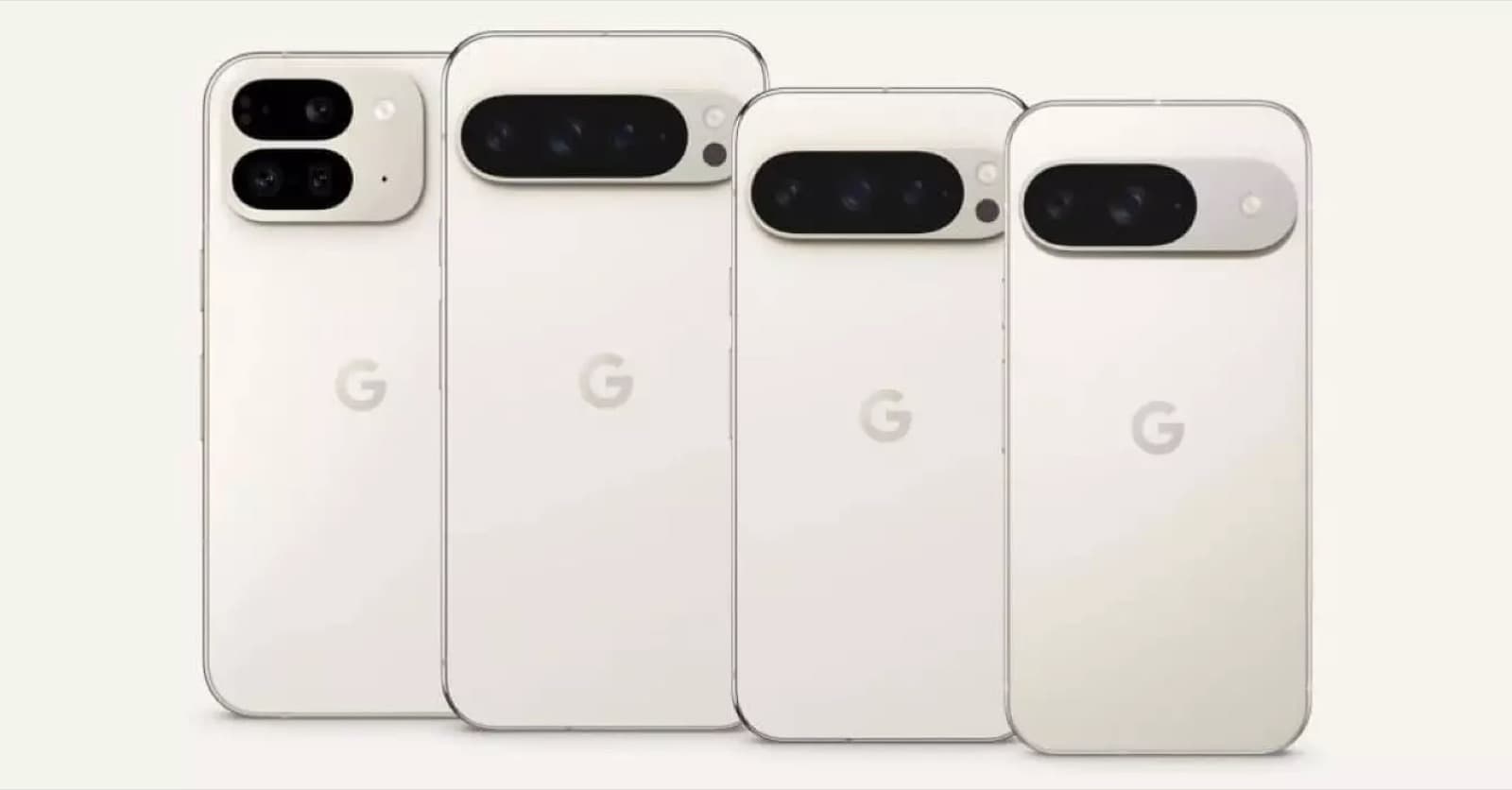
What changed at Google this year
Three things, and one of them is genuinely overdue. Tensor G6 arrives on a 3nm TSMC process with a new seven-core layout built from one Arm Cortex C1-Ultra core and six C1-Pro cores, and an Imagination PowerVR CXTP GPU tuned for efficiency. Google confirmed it is not a 2nm chip, contrary to earlier reports. More importantly, Samsung's Exynos modem is gone, replaced by a MediaTek part, which Google connects directly to the signal-hunting battery drain that has plagued Pixels for years. Third, the Titan M3 security module now includes post-quantum cryptography. Everything ships on Android 17 with Gemini Intelligence and Proactive Assistance, the successor to Magic Cue.
Pixel 11: the sensible one
The Pixel 11 keeps the shape introduced with the Pixel 9, with flat sides, rounded corners and a camera bar separate from the frame. The glass over the lenses now extends to the right edge, covering the flash and making the bar symmetrical. The display stays at FHD+ 1080p with a 120Hz refresh rate. The rear camera moves to a new 48MP sensor with a larger 1/1.56-inch area, while the 13MP ultra wide, 10.8MP 5x telephoto and 10.5MP front camera all carry over from the Pixel 10. Colours are Hibiscus, Frost, Pistachio and Obsidian. It runs the same Tensor G6 and the same Gemini features as the Pro models, which makes it the value pick of the range.
Pixel 11 Pro and Pixel 11 Pro XL
The two Pro phones are 6.3 and 6.8 inches and share everything but size. Both use a new Samsung M16 OLED panel that Google says is brighter, more colour-accurate and less power-hungry at the same resolution, with peak brightness around 3,600 nits on the Pixel 11 Pro XL. The telephoto is the real upgrade: a 48MP 5x lens on a physically larger sensor with better optics, pushing AI-assisted Pro Zoom to 120x, up from 100x. The main camera is a new 50MP wide-angle unit. Colours are Canyon, Olive, Fog and Obsidian, with only Obsidian getting a matte frame. The rear temperature sensor from previous Pro models has been dropped.
Pixel 11 Pro Fold
Google's foldable keeps the shape of the previous two generations with slightly revised dimensions: 10.1mm thick folded and about half that unfolded. Magnets near the hinge and at the outer edge snap the halves together and add resistance so it does not fall open in a bag. The cover display grows to 6.5 inches with thinner bezels and now gains LTPO for a 1-120Hz range; the inner panel stays at 8.0 inches and 120Hz LTPO, and both peak at 3,600 nits. The rear camera uses the same larger 48MP wide sensor as the Pixel 11, and the flash module houses an array of RGB LEDs powering a new lighting feature called HiLight. It comes in Obsidian and Olive.
Pixel Watch 5 and the small stuff
The Pixel Watch 5 went on sale August 20, 2026 in 41mm and 45mm, keeping the domed Actua 360 display at 320ppi and up to 3,000 nits under 3D Gorilla Glass 5. Inside, a Snapdragon W5 Gen 2 and 3GB of memory make Gemini usable on the wrist, and batteries rise slightly to 332mAh and 465mAh. The headline feature is cloud GPS post-processing, which reprocesses tracks after a workout using 3D building models and atmospheric corrections for roughly double the route accuracy in cities and under tree cover. Alongside it, Google added a new Olive finish for the existing Pixel Buds Pro 2 and introduced the Pixel Tag, its own item tracker.
What to buy, what to skip
Buy the Pixel 11 unless you specifically want the 48MP telephoto or the LTPO panel; it shares the chip, the software and the seven-year update window with its expensive siblings. Buy the Pixel 11 Pro XL if long-reach photography is the reason you own a phone. Buy the Pixel Watch 5 if you are on Android and want the most polished Wear OS experience. Skip the Pixel 11 Pro XL if you own a Pixel 10 Pro XL and shoot mostly at 1x, because battery life is flat and almost everything else will arrive as a Feature Drop. Skip the 41mm Pixel Watch 5 if you track sleep, since the smaller cell makes overnight wear tighter.
The honest weaknesses
Two, and both are longstanding. Tensor G6 still trails current Apple and Qualcomm silicon in single-core and multi-core CPU performance, and the graphics gap is wider, with no hardware ray tracing in the PowerVR GPU. If you game seriously on a phone, Google is not the answer and has not been for six generations. The second is battery: the Pixel 11 Pro XL cell actually shrank slightly to 5,115mAh and reviewers report endurance flat against the previous year. What offsets both is software. Seven years of OS updates, Gemini Intelligence, Best Capture and Looks, and Google Health with an optional AI coach add up to a device that stays useful far longer than its benchmarks suggest.
Pros
Cons
Comparison
Pixel 11
The value pick. Tensor G6, Gemini Intelligence, a new 48MP main sensor, a 10.8MP 5x telephoto and a 120Hz FHD+ display, with the same seven-year update commitment as the Pro models.
Pixel 11 Pro
The 6.3-inch Pro, with the new Samsung M16 LTPO panel, the larger 48MP 5x telephoto and 120x Pro Zoom in a body that is far easier to hold than the XL. The one most people should pick.
Pixel 11 Pro XL
The 6.8-inch flagship with peak brightness around 3,600 nits, up to 16GB of memory and 1TB of storage. Heavy at 226g, and its battery endurance is flat versus the previous generation.
Pixel 11 Pro Fold
Google's foldable, now 10.1mm folded with an LTPO 6.5-inch cover display and an 8.0-inch inner panel, both peaking at 3,600 nits. Hinge magnets keep it shut in a bag.
Pixel Watch 5
Snapdragon W5 Gen 2 with 3GB of memory makes Gemini genuinely usable on the wrist, and cloud GPS post-processing roughly doubles route accuracy in cities and under tree cover.
Pixel Buds Pro 2
Carried over rather than replaced this year, with a new Olive finish added at the August event. Still the natural pairing for a Pixel phone and the Gemini features that come with it.
Pixel Tag
Google's own item tracker, introduced alongside the Pixel 11 range. It plugs the most obvious remaining gap in the Pixel accessory line for anyone on Android.
FAQ
Google announced the Pixel 11, Pixel 11 Pro, Pixel 11 Pro XL, Pixel 11 Pro Fold, Pixel Watch 5 and Pixel Tag at Made by Google in New York on August 12, 2026. Pre-orders opened the same day and US availability began August 20.
Google's 2026 hardware year is a tidy one: one event, one chip, one AI story across every device. The Pixel 11 Pro XL gets the only major hardware upgrade in the telephoto, the Pixel 11 is the smart buy, and the Pixel Watch 5 finally has enough memory to run Gemini properly. Buy Pixel for cameras, software and longevity, not for benchmarks.