Nike Lineup 2026: Every Running Shoe, Explained Model by Model
Nike currently sells a running wall so confusing that specialty stores have started drawing diagrams. There are three Pegasus models, three Vomeros, two Structures, a carbon trainer, a short-distance racer and two marathon shoes, and the names do not tell you which is which. The logic is actually simple once you know the code: the more ZoomX and Air Zoom a shoe contains, the higher up the ladder and the higher the price. Here is the whole 2026 US lineup, model by model, with what changed and what to avoid.
Read the foam, not the name
Three materials explain Nike's entire hierarchy. ReactX is the durable everyday training foam, the workhorse that appears in the cheaper models. ZoomX is the PEBA-based superfoam: very light, very bouncy, less durable, and reserved for premium trainers and race shoes. Air Zoom units are pressurised air chambers moulded into the midsole that absorb impact and snap back. Where a shoe sits in the range is determined almost entirely by how much ZoomX and Air Zoom it contains. A model named Plus generally means superfoam has been added. A model named Premium generally means superfoam plus a full-length Air Zoom unit and the highest price in that family.
The Pegasus family: 42, Plus and Premium
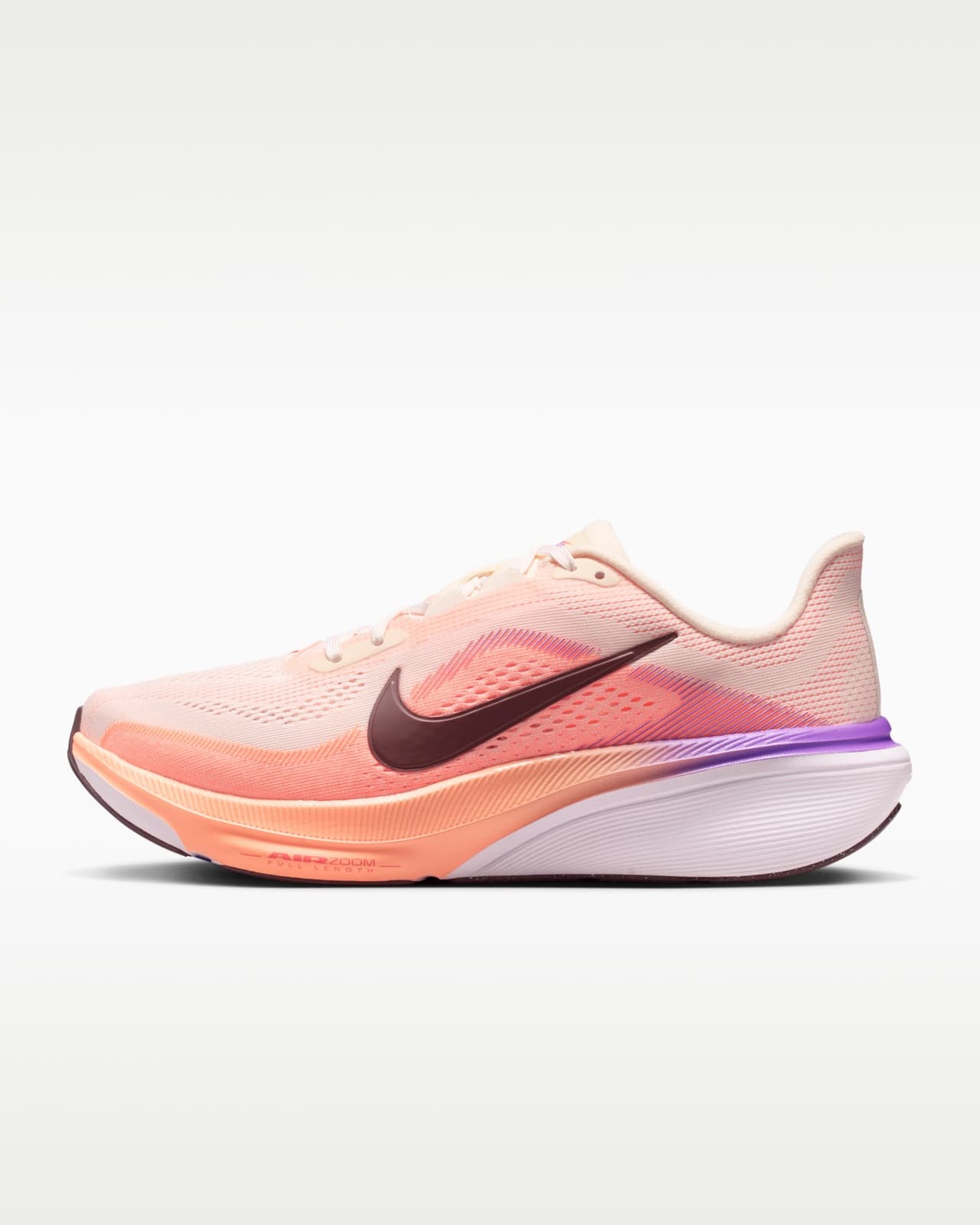
The Nike Pegasus 42 is the anchor and the most important shoe Nike makes, on sale in the US from April 9, 2026. It uses ReactX with a new curved, full-length Air Zoom unit, a 10 mm drop and roughly 37 mm of heel stack, and Nike claims meaningfully more energy return than the Pegasus 41. It is moderate, versatile, sold in three widths and the cheapest way into current Nike technology. The Nike Pegasus Plus swaps to a full ZoomX midsole with no plate and an 8 mm drop, making it the tempo option: lighter, springier, less protective on slow days. The Nike Pegasus Premium stacks ZoomX over ReactX with a full-length Air Zoom unit for maximum cushioning, and it is heavy.
The Vomero family: cushioning in three doses
Vomero is Nike's plush line and the answer for anyone who finds the Pegasus too firm. The Nike Vomero 18 is the sensible one, using a ZoomX and ReactX dual-density midsole on a 10 mm drop, sitting noticeably taller than earlier Vomeros with a roomy engineered mesh upper. The Nike Vomero Plus moves to full-length ZoomX and replaces the discontinued Invincible as Nike's max-cushion daily trainer, softer and lighter than the 18, though runners who already feel unstable in tall shoes should be careful with it. The Nike Vomero Premium sits at the top, combining ZoomX with two separate Air Zoom units, one in the heel and one in the forefoot, on a wider, more stable base.
Stability: Structure 26 and Structure Plus
The Nike Structure 26 is the no-frills support trainer: full-length ReactX, a midfoot support system wrapping the arch, an internal band and large outsole rubber segments for a wider, inherently stable base. It sits at the same price as the Pegasus 42 and is solid value for runners who need guidance. The Nike Structure Plus is the more interesting shoe and the first time Nike has put ZoomX superfoam into a stability model, layered over a ReactX carrier on a 42 mm platform with tall sidewalls providing the guidance. Reviewers rate its stability highly and its heel transition poorly, describing a sharp bevel that makes it better for walking than hard heel-striking.
Speed and race day: four very different shoes
The Nike Zoom Fly 6 is the accessible carbon trainer, pairing ZoomX with an SR-02 carrier and a full-length carbon Flyplate for weekly speed sessions rather than racing, and it suits midfoot and forefoot strikers better than heel strikers. The Nike Streakfly 2 is the short-distance racer, upgraded to PEBA ZoomX with a full-length Flyplate on a low 4 mm drop, built for the mile through 10K. The Nike Vaporfly 4 is the versatile marathon racer, trimmed for weight with a more curved plate for leverage. The Nike Alphafly 3 is the maximum-effort option, with dual Air Zoom units and a widened plate sandwiched in continuous ZoomX.
The lifestyle side: Zoom Vomero 5 and V2K Run
Nike's most culturally significant sneakers right now are old running shoes. The Nike Zoom Vomero 5 has become one of the most recommended everyday sneakers in the US, at around 11.2 oz with a mesh upper that earned top marks in breathability testing and two Zoom Air units hidden in the midsole, giving it running-shoe comfort in a millennium silhouette. Its weakness is a fragile toebox mesh. The Nike V2K Run is the cushioning champion of the pair, using CushIon foam that measured over forty percent above the category average for impact protection on a wide, stabilising heel platform, though its toebox tapers sharply.
What to buy, what to skip
Buy the Nike Pegasus 42 if you want one dependable trainer, especially if you need a narrow or wide fitting. Buy the Nike Vomero 18 if you want more cushioning without going max-stack, and the Nike Zoom Fly 6 if you want carbon without racing. Skip the Nike Pegasus Premium unless you specifically want maximum cushioning and accept the weight, since the Vomero line does plush better. Skip the Nike Alphafly 3 unless you are genuinely racing a marathon, because the Vaporfly 4 suits a wider range of runners. And for anyone chasing bounce on a budget, the honest answer is that Nike does not currently have one.
Comparison
Nike Pegasus 42
The lineup anchor. ReactX plus a curved full-length Air Zoom unit, 10 mm drop, three widths and the lowest price of the current Nike technology tier.
Nike Vomero Plus
Full-length ZoomX max-cushion trainer that replaced the Invincible. Softer and lighter than the Vomero 18, though tall-shoe wobblers should approach it carefully.
Nike Structure Plus
Nike's first stability shoe with ZoomX superfoam, guided by tall sidewalls on a 42 mm platform. Excellent support, clunky heel transition for hard heel strikers.
Nike Zoom Fly 6
The accessible carbon trainer. ZoomX over an SR-02 carrier with a full-length Flyplate, built for weekly speed sessions rather than treated as a race-day shoe.
Nike Vaporfly 4
The all-round marathon racer, trimmed of unnecessary foam with a more curved carbon plate. Suits more runners and paces than the more aggressive Alphafly 3.
Nike Zoom Vomero 5
The lifestyle crossover. Around 11.2 oz with top-rated breathability and two hidden Zoom Air units, undermined only by a toebox mesh that tears easily.
FAQ
The Pegasus 42 uses ReactX with a full-length Air Zoom unit. The Pegasus Plus swaps to full ZoomX superfoam with no plate for a faster feel. The Pegasus Premium adds ZoomX over ReactX plus a full-length Air Zoom unit for maximum cushioning.
Nike's 2026 lineup is deep, well-differentiated and badly named. Decode the foam and it becomes straightforward: ReactX for value and durability, ZoomX for bounce, Air Zoom for cushioning and propulsion. The Pegasus 42 is still the shoe most people should buy, the Vomero line is where the comfort lives, and the Vaporfly 4 remains the most sensible race shoe in the range.