Sonos Arc Ultra vs Bose Lifestyle Ultra Soundbar Compared
Sonos and Bose have been circling each other in living rooms for a decade, and 2026 gave them a fresh fight. The Sonos Arc Ultra remains the company's flagship bar, built around a transducer technology Sonos calls Sound Motion and a 9.1.4 layout. The Bose Lifestyle Ultra Soundbar landed in May 2026 as the first major Bose soundbar redesign in more than ten years. Same ambition, very different engineering philosophies — and one of them asks you to buy more boxes.
The short version
The Sonos Arc Ultra is the more complete single-box purchase: more drivers, a taller channel count, and a multiroom system waiting around it. The Bose Lifestyle Ultra Soundbar is the front end of a modular home theater that only reaches its full 7.1.4 potential once you add the matching subwoofer and a pair of wireless speakers. Bose brings better room calibration through a phone microphone and a more insistent focus on dialogue; Sonos brings a deeper ecosystem, portable surrounds and headphone handoff. Neither decodes DTS:X, which remains the most annoying thing they have in common.
Drivers and channel layouts
The Sonos Arc Ultra uses 14 Sonos-engineered drivers, including a Sound Motion woofer that shrinks the transducer while increasing bass output, plus clusters of tweeters with waveguides at both ends. Sonos rates the result at 9.1.4. The Bose Lifestyle Ultra Soundbar uses a nine-driver array: six full-range drivers of which two fire upward and four face forward, a dedicated center tweeter and two proprietary PhaseGuide drivers that steer sound horizontally into spaces where no speaker exists. On its own it is a 5.0.2 system; add the Lifestyle Ultra Subwoofer for 5.1.2, and two Lifestyle Ultra Speakers to reach 7.0.4 or 7.1.4.
Setup, calibration and dialogue
Bose has the edge on tuning. CustomTune, the technology formerly branded ADAPTiQ, uses an iOS or Android device as the reference microphone to analyze room dimensions, surfaces and seating, and reviewers describe the overall setup as easier than most competing systems, with occasional app hiccups when adding the wireless speakers. SpeechClarity applies adjustable AI-driven dialogue enhancement, and reviewers rate voice intelligibility as the Bose system's standout quality even before it is engaged. Sonos answers with Trueplay tuning, now available from both iOS and Android, a redesigned center channel architecture and an adjustable Speech Enhancement setting in the app.
Connections, streaming and what is missing
The Bose Lifestyle Ultra Soundbar covers HDMI ARC and eARC, Wi-Fi, Bluetooth 5.3, Google Cast, Apple AirPlay, Spotify Connect, Alexa and Alexa Plus in the US, and ships with an eARC-capable HDMI cable. The Sonos Arc Ultra connects over HDMI eARC with Bluetooth line-in, works with the Sonos app, Sonos Voice Control and Amazon Alexa, and pulls from more than a hundred streaming services. Both stop short in the same place: neither supports DTS:X or any DTS variant, which reviewers have flagged as a genuine limitation for anyone with a disc-heavy library. Neither offers HDMI passthrough either.
Expansion and the cost of a full system
This is where the two philosophies separate. The Sonos Arc Ultra expands with a Sub, a Sub Mini or a pair of Era speakers as rears, and under the Sonos 27 software a matched pair of portable Sonos speakers can serve as temporary wireless surrounds and then go back to being portable. It also supports handing the soundtrack to compatible Sonos headphones. The Bose route is more prescriptive: the Lifestyle Ultra Subwoofer for low end and two Lifestyle Ultra Speakers for surround and height duty. Reviewers note Bose does not currently claim dual subwoofer support, which previous Bose systems allowed, and that omission matters in larger rooms.
Who should pick which
Pick the Sonos Arc Ultra if you want the most capable single bar in the box, if you already own or plan to own Sonos speakers, or if the idea of moving a portable speaker into surround duty for movie night appeals. Pick the Bose Lifestyle Ultra Soundbar if dialogue clarity is your top priority, if you want room calibration that actually measures your space, or if you like the idea of buying the system in stages. Skip both if your collection leans on DTS:X soundtracks, and skip Bose specifically if you were counting on running two subwoofers in a large open-plan room.
The fine print
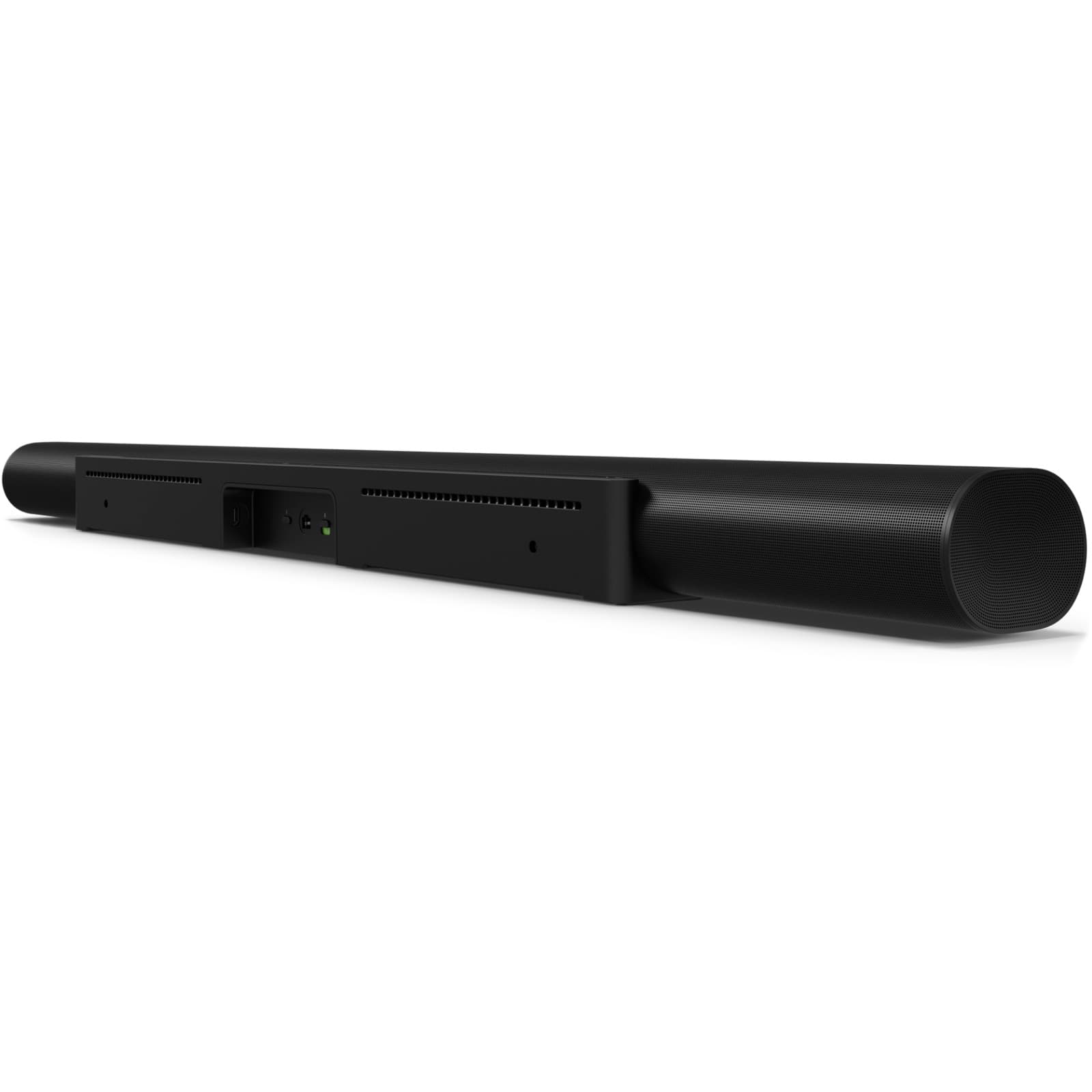
A few practical notes. The Bose bar is long, at roughly 43 and a half inches wide and under three inches tall, and Bose positions it for televisions of 55 inches and up; reviewers also flagged angled HDMI ports as an odd design decision. The Sonos Arc Ultra has a curved profile, a matte finish and a wrap-around grille, with touch controls hidden on a ledge behind the bar so they do not interrupt the front face. Both are sold in black and white. And Sonos now sits the Beam Ultra beneath the Arc Ultra, which is worth knowing if the flagship is simply too much bar for your furniture.
Pros
Cons
Comparison
Sonos Arc Ultra
Fourteen drivers, a Sound Motion woofer and a 9.1.4 layout make it the stronger single-box buy, with Trueplay tuning, portable surrounds under Sonos 27 and headphone handoff. No DTS:X and no HDMI passthrough.
Bose Lifestyle Ultra Soundbar
Nine drivers including PhaseGuide steering, CustomTune room calibration using your phone and adjustable SpeechClarity dialogue enhancement. Reaches 7.1.4 only with the matching subwoofer and speakers, and offers no dual-sub support.
FAQ
The Sonos Arc Ultra, on hardware alone: 14 drivers and a 9.1.4 layout against nine drivers and a 5.0.2 configuration for the Bose. The Bose closes the gap once the Lifestyle Ultra Subwoofer and two wireless speakers are added.
Both bars are premium and both are honest about what they are. The Sonos Arc Ultra gives you more sound out of one enclosure and an ecosystem that grows in unusual directions; the Bose Lifestyle Ultra Soundbar gives you better calibration, clearer dialogue and a staged upgrade path that ends in a full 7.1.4 system. Decide whether you are buying a soundbar or starting a system, and the answer arrives by itself.