Sonos Beam Ultra Review: Real Height Drivers, At Last
Five years is a long time to leave a soundbar alone, and the Beam Gen 2 had started to show it. The Sonos Beam Ultra, announced on 1 September 2026 alongside the Sonos 27 operating system, is the replacement that compact-soundbar buyers have been asking for: physical up-firing drivers instead of virtualized height, nine amplifiers instead of five, and a channel layout Sonos describes as true 7.1.2. It is not a cheap step up from the old Beam, and a couple of omissions will annoy home cinema buyers. Here is the intel.
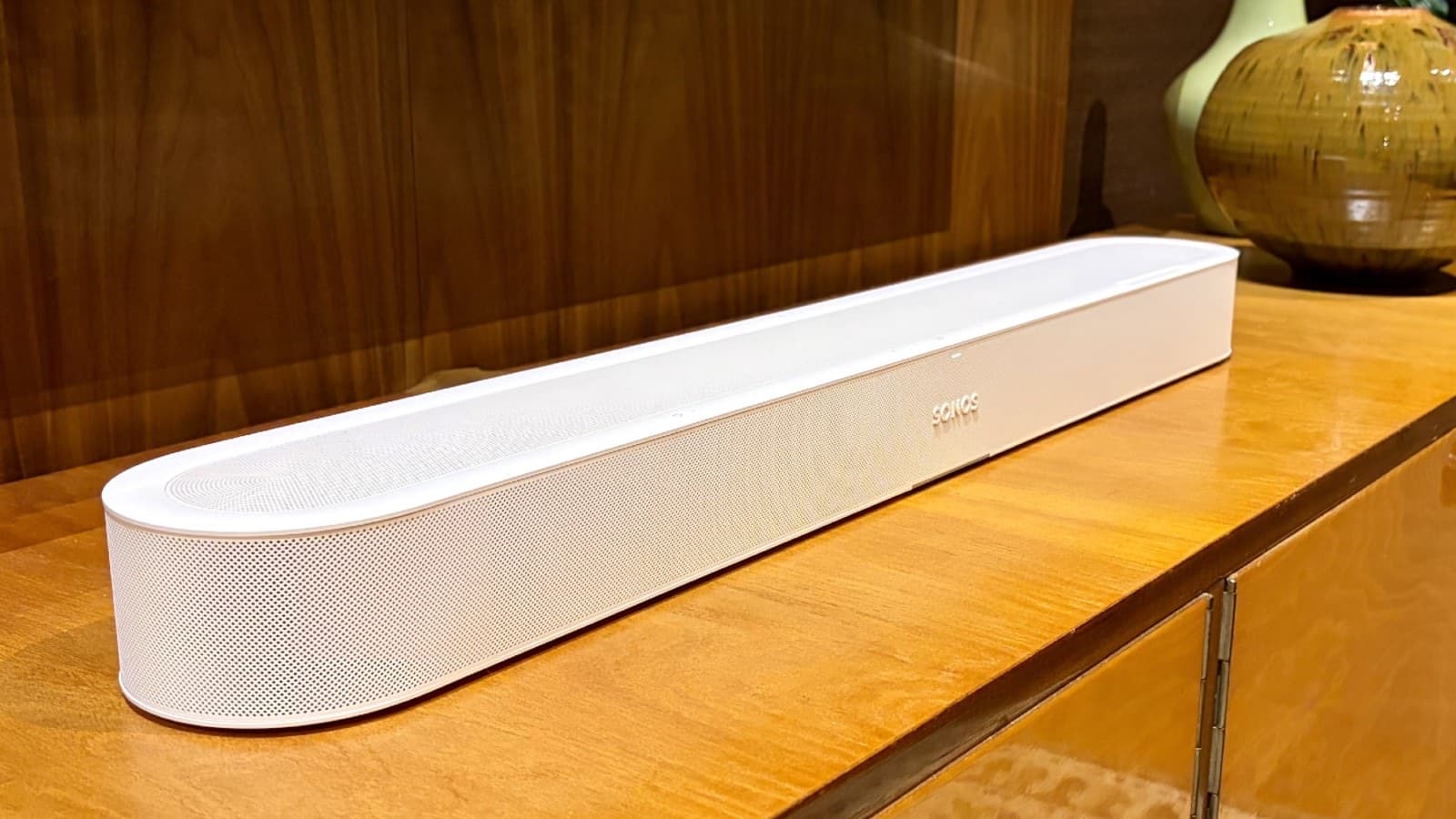
The need-to-know
The Sonos Beam Ultra is Sonos's new mid-size soundbar, slotting between the entry-level Ray and the flagship Arc Ultra. Sonos opened pre-orders on 1 September 2026 at its own store and select US retail partners, with general availability from 29 September. It comes in black or white with a matte finish. Importantly, it does not replace the Beam Gen 2, which stays on sale as the more affordable Dolby Atmos option — so Sonos now has four soundbars rather than three. The Beam Ultra is for rooms where an Arc Ultra is physically too long or too much bar for the television, but virtualized height has stopped feeling like enough.
Key specs
What Sonos has confirmed about the Beam Ultra:
- Nine custom drivers with nine amplifiers: five tweeters and four low-profile woofers
- Two tweeters fire upward through directional horns for Dolby Atmos height; two fire sideways for stereo width; one faces forward for the center
- Sonos describes the result as a true 7.1.2 Dolby Atmos presentation
- Redesigned center channel plus AI Speech Enhancement with four selectable levels, and Night Sound
- Trueplay room correction, now available from both iOS and Android devices
- HDMI eARC and ARC, Wi-Fi 6, Bluetooth 5.3 and Apple AirPlay 2
- USB-C accepts an analog source through the optional line-in adapter, or wired Ethernet through the combo adapter
- Dolby Atmos via Dolby Digital Plus and Dolby TrueHD, plus Dolby Digital, multichannel PCM and DTS Digital Surround
- 29.53 inches wide, 2.48 inches high, 4.13 inches deep; wall-mountable
What changed versus the Beam Gen 2
The Beam Gen 2 used five Class D amplifiers, a single center tweeter, four elliptical mid-woofers and three passive radiators, and produced its Atmos height entirely through processing. The Sonos Beam Ultra adds physical height transducers, which is a structural change rather than a firmware one. Driver count rises from five to nine, and side-firing tweeters now widen the stereo image. The bar grew: it is longer and slightly slimmer than the Beam Gen 2, at almost identical weight. Connectivity gains Wi-Fi 6 and Bluetooth. Dialogue control is new, with four levels of AI Speech Enhancement instead of a single on-off toggle, and Trueplay now runs on Android as well as iOS.
What the Beam Ultra nails on paper and in early listening
Journalists who heard the Sonos Beam Ultra at launch demonstrations in Berlin and New York consistently flagged the same thing: the width. Reports describe positional Atmos effects landing well off to the sides, with a sense of scale that outruns the bar's physical size and, in several accounts, some larger soundbars too. Directional accuracy, bass warmth and vocal clarity were all singled out as improvements over the Beam Gen 2. The system features matter as much as the sound, though. Sonos 27 lets a matched pair of portable Sonos speakers act as wireless rear channels and then go back to being portable speakers, and TV Audio Swap pushes the soundtrack to compatible Sonos headphones.
Where it trips up
Two omissions are hard to defend at this tier. There is no DTS:X support, despite DTS Digital Surround being on the format list, which matters if your library leans on physical discs. And there is still a single HDMI connection with no passthrough, so every source has to go through the television first. The price jump over the Beam Gen 2 is substantial, which pushes the Beam Ultra into a bracket where Bose and Samsung both sell nine-driver Atmos bars, and Samsung includes a wireless subwoofer in the box. Full reviews were still landing at launch, so long-term sound judgements were not yet available when pre-orders opened.
Buy it if, skip it if
Buy the Sonos Beam Ultra if you already own Sonos speakers and want a compact bar that grows into a real system — portable surrounds, a Sub, headphone handoff and all. Buy it if your TV cabinet cannot take an Arc Ultra. Skip it if you want the most hardware for the money, because rivals bundle subwoofers at similar prices. Skip it if you play physical media encoded in DTS:X, which the Beam Ultra simply will not decode. And skip it if the Beam Gen 2 already does what you need, since Sonos is keeping it on sale precisely for that reason.
Worth considering instead
The Sonos Arc Ultra remains the flagship, with 14 drivers, a Sound Motion woofer and a 9.1.4 layout, and is the right answer for larger televisions and bigger rooms. Bose's Smart Ultra Soundbar takes a similar nine-speaker approach with two up-firing drivers, ADAPTiQ calibration and AI Dialogue Mode, and Bose includes the calibration headset in the box. Samsung's HW-QS700F ships a wireless subwoofer alongside a 3.1.2 bar and integrates with Samsung televisions through Q-Symphony. And the older Sonos Beam Gen 2 is still there if virtualized height is good enough.
Pros
- Dedicated up-firing tweeters replace virtualized height processing
- Nine drivers and nine amplifiers, up from five on the Beam Gen 2
- Side-firing tweeters widen the image well beyond the bar itself
- Four levels of AI Speech Enhancement for dialogue control
- Trueplay tuning now works from Android as well as iOS
- Portable Sonos speakers can serve as temporary wireless surrounds
Cons
- No DTS:X decoding, which will rule it out for some disc collections
- One HDMI connection and no passthrough
- A significant price step above the Beam Gen 2 it sits beside
- Rivals at similar money include a wireless subwoofer in the box
Comparison
Sonos Arc Ultra
The flagship, with 14 drivers, the Sound Motion woofer and a 9.1.4 spatial layout. The better choice for large televisions and bigger rooms, and the bar to beat if physical size is not a constraint.
Bose Smart Ultra Soundbar
A nine-speaker Atmos bar with two up-firing drivers, ADAPTiQ room calibration and AI Dialogue Mode. Bose supplies the calibration headset, and the bar can use Bose open earbuds as personal surround channels.
Samsung HW-QS700F
A 3.1.2-channel Atmos bar with dedicated height channels, wireless Atmos and Q-Symphony pairing with Samsung televisions. Crucially, a wireless subwoofer is included, which changes the value equation entirely.
Sonos Beam Gen 2
Still on sale and still capable, delivering Dolby Atmos through virtualization rather than physical height drivers. The sensible pick if you want into the Sonos system without stretching to the Ultra.
FAQ
Sonos opened pre-orders on 1 September 2026 through its own store and selected retail partners, with general availability from 29 September 2026. It launches in black and white, the same two finishes as the rest of the Sonos soundbar range.
The Sonos Beam Ultra is the upgrade the compact Beam needed, and the shift from virtualized height to physical up-firing drivers is a real architectural change rather than a badge. Whether it is worth the jump depends on how much you value the Sonos system around it, because on raw hardware per dollar, Bose and Samsung both make a noisy case at the same money.